

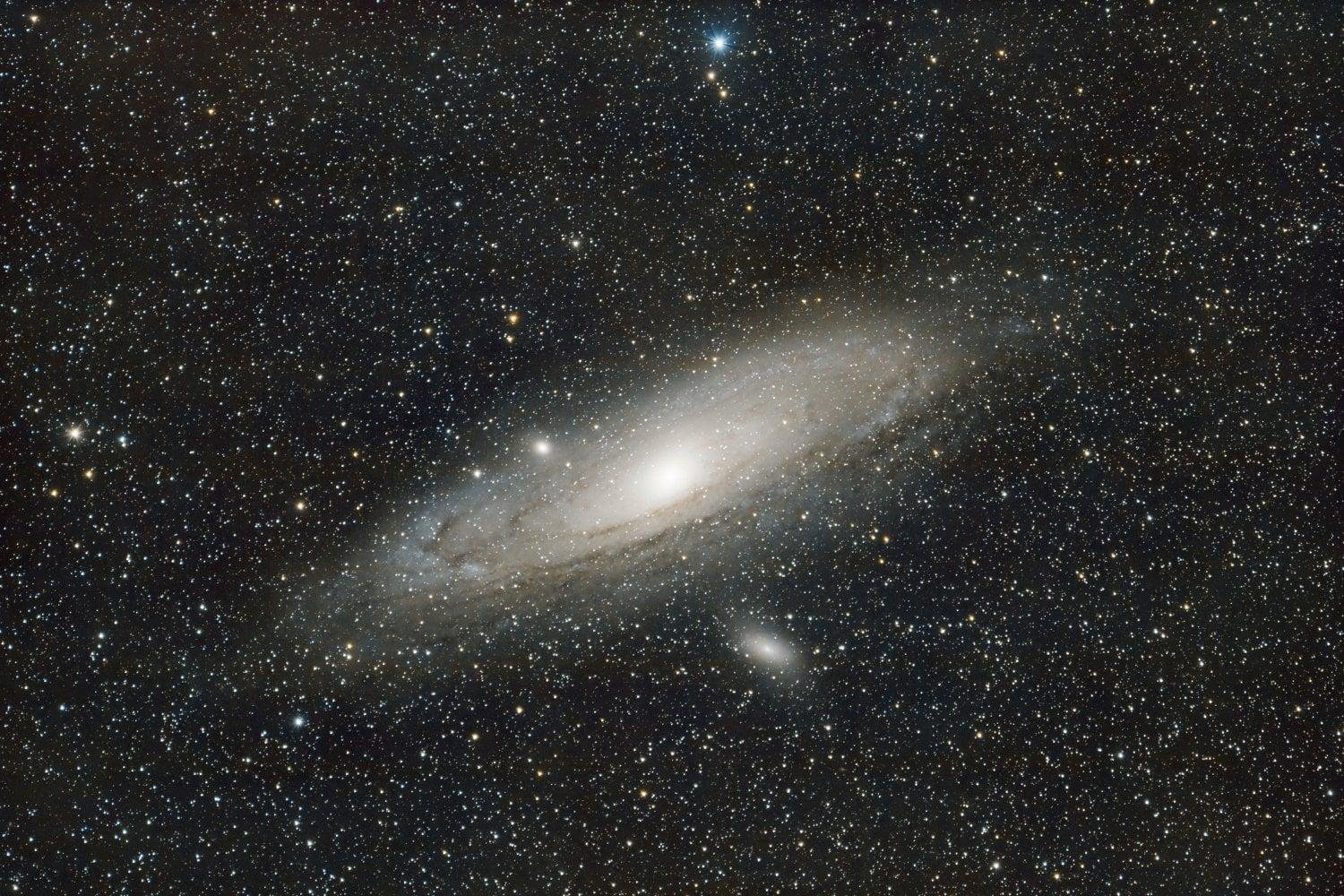
Astronomers have reconstructed an extraordinary stellar collision 2.5 million light-years away. Using observations from the James Webb Space Telescope and several other observatories, researchers confirmed that a smaller star spiralled into a giant supergiant, producing a single object nicknamed Bao.
Two stars in the neighbouring Andromeda galaxy have become one—and astronomers have managed to reconstruct how it happened.
In a research announcement published on November 18, NASA and the Space Telescope Science Institute presented evidence of an unusual stellar merger known as AT 2025abao. The event involved a giant, ageing star and a smaller companion that gradually spiralled into it before disappearing into its core.
The resulting object has been nicknamed Bao.
What makes this discovery particularly important is not simply that two stars merged. Astronomers were able to study the system before, during and after the event, combining observations from several space-based and ground-based telescopes.
The data helped researchers reconstruct a process that is normally extremely difficult to observe directly.
A giant star swallowed its smaller companion
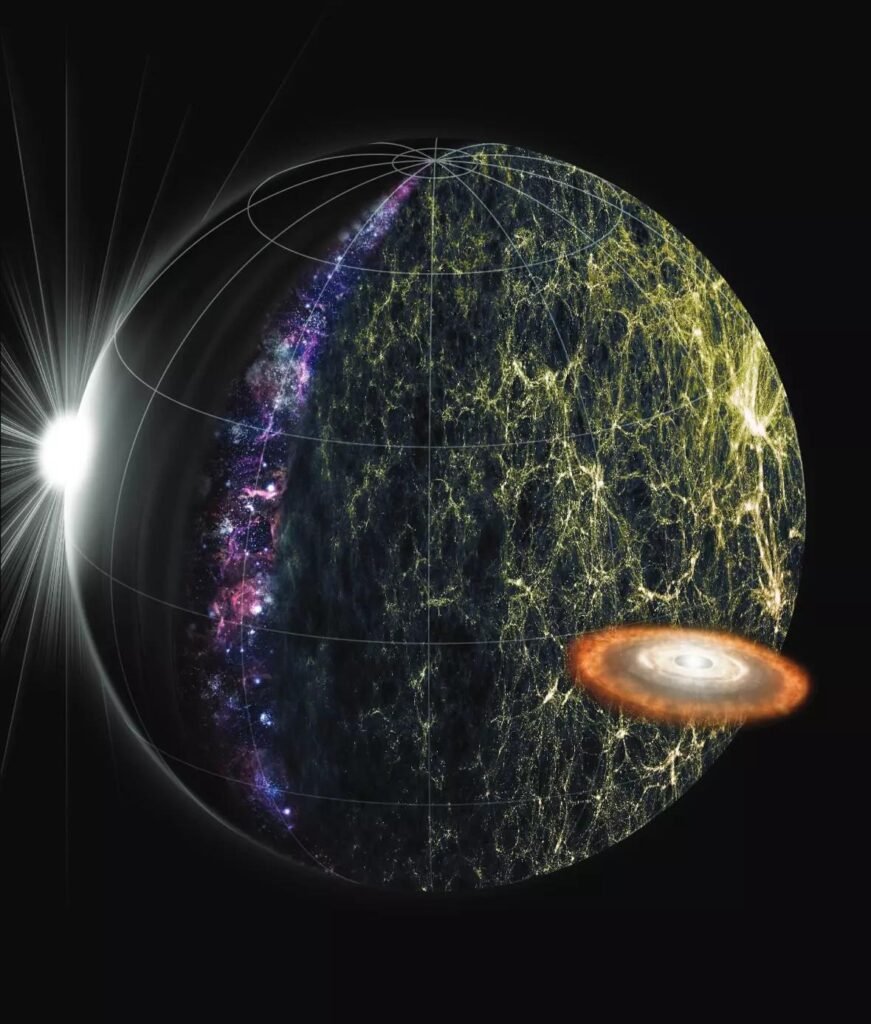
The merger took place on the outskirts of the Andromeda galaxy, approximately 2.5 million light-years from Earth.
Before the event, the system consisted of two stars orbiting one another.
The larger star, informally called Big Bao by the research team, was estimated to have approximately seven times the mass of our Sun. Its radius was around 350 times that of the Sun, while its brightness was approximately 18,000 times greater.
Its companion, Little Bao, was considerably smaller, with an estimated mass of around 0.7 solar masses.
As the smaller star moved closer to the giant, it began interacting with the outer layers of its companion. Material was stripped away, gas spread into the surrounding environment, and the smaller star gradually lost orbital energy.
Eventually, it spiralled into the giant’s interior.
Researchers concluded that Little Bao did not escape the encounter. Instead, it was dragged into the core of Big Bao, leaving behind a single merged object.
The merger happened faster than expected
One of the most interesting aspects of the discovery is how quickly the final transformation unfolded.
The two stars had previously spent a long period orbiting each other. However, once the smaller companion began interacting with the giant’s outer surface, the process leading to their merger accelerated.
The researchers estimated that the final evolution involved approximately seven orbits, equivalent to around seven years.
The eruption itself was much faster.
According to the research team, the object’s brightness increased dramatically and reached its peak within approximately a week.
This behaviour surprised scientists because they had expected an outburst involving such an extended star to develop over a much longer period.
The event offers a rare opportunity to study how energy, gas and dust behave when one star becomes engulfed by another.
How the James Webb Space Telescope helped solve the mystery

The discovery was not based on a single photograph.
Astronomers combined observations collected over several years using different instruments and observatories.
The system first attracted attention in February 2023, when researchers noticed unusual changes in infrared observations from NASA’s now-retired NEOWISE mission.
Further observations in 2024 indicated that the object was brightening and releasing dust.
In July 2025, NASA’s SPHEREx mission detected a significant change in the object’s brightness across visible and infrared wavelengths.
The Zwicky Transient Facility subsequently detected the eruption on October 17, 2025.
The most important confirmation came from the James Webb Space Telescope.
On December 24, 2025, Webb observed the system only 47 days after the eruption had peaked. Its infrared measurements allowed researchers to examine the dust surrounding the object and compare the observations with simulations of the merger.
The team also used observations from other facilities, including Gemini North in Hawaii and additional infrared and optical instruments.
By combining these measurements, researchers could reconstruct the system’s evolution rather than relying on a single observation made after the event.
What is common-envelope evolution?
The process behind the merger is known as common-envelope evolution.
It occurs when a star in a binary system expands enough to engulf its companion. The smaller object then moves through the outer layers of the larger star, interacting with gas and losing orbital energy.
This process can have different outcomes.
In some systems, both stars may survive after losing material, leaving behind a much tighter binary system. In others, the smaller companion can spiral all the way into the core of the larger star, producing a merger.
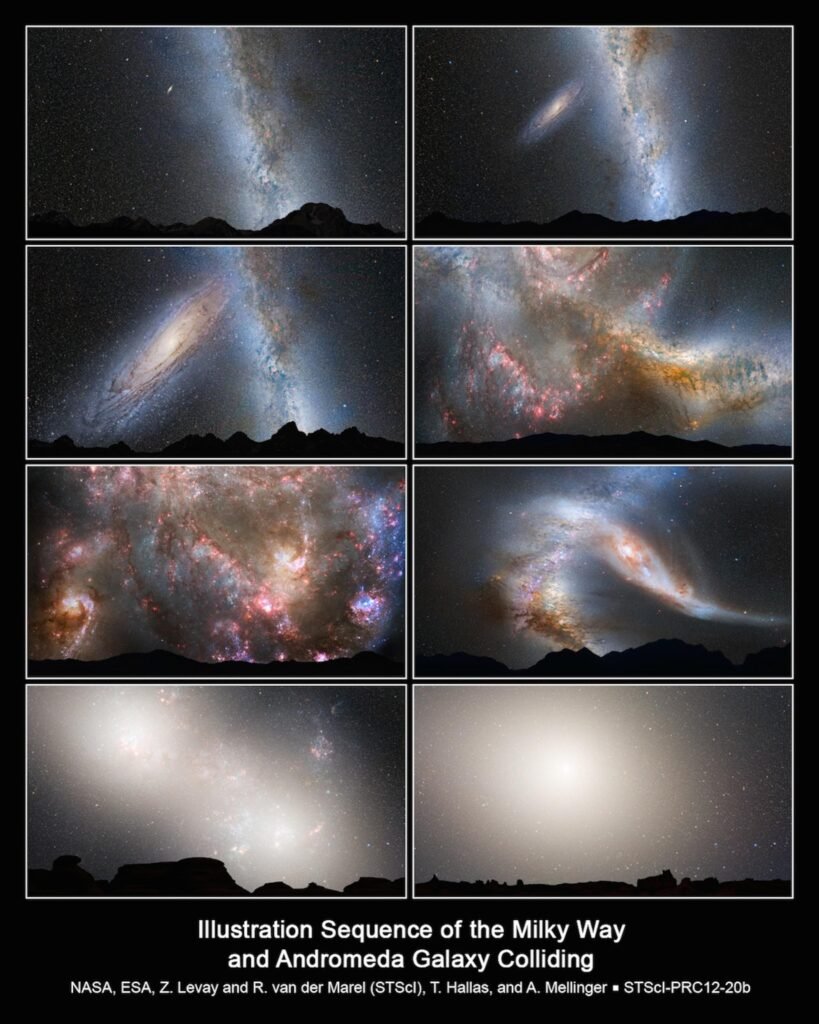
These events matter because they help explain how some of the universe’s most extreme objects form.
Depending on the circumstances, surviving stellar systems can eventually become sources of supernovae, neutron stars, black holes and gravitational waves.
Understanding how much energy is transferred and how much material escapes during the common-envelope phase is therefore an important problem in astrophysics.
Why this discovery matters for future astronomy
The Bao system gives researchers a rare opportunity to measure the efficiency of common-envelope evolution using observations collected around the time of the event.
In many previous cases, astronomers had to work backwards from objects that had already transformed, attempting to reconstruct events that might have happened hundreds or millions of years earlier.
Here, the team was able to follow the system as it changed.
The researchers believe this approach could become even more valuable as new observatories collect larger volumes of astronomical data.
NASA’s Nancy Grace Roman Space Telescope is expected to conduct extensive surveys that will identify many changing objects across the sky. Some of these could reveal additional stellar mergers and other short-lived astronomical events.
That could give scientists more opportunities to study how stars interact, evolve and sometimes disappear into one another.
A new star, but an unfinished story
Although the merger has been confirmed, astronomers still have questions about what Bao will look like over the longer term.
The merged object is expected to evolve as it settles after the violent interaction. Future observations will help researchers understand its structure, temperature and eventual fate.
The discovery also demonstrates the value of combining different telescopes.
Webb provided crucial infrared observations, but the breakthrough depended on years of measurements from multiple facilities and the ability to connect them through scientific modelling.
For astronomers, Bao is more than a spectacular cosmic collision. It is an unusually detailed record of how one star can consume another—and a new way to investigate some of the most dramatic transformations in the universe.


