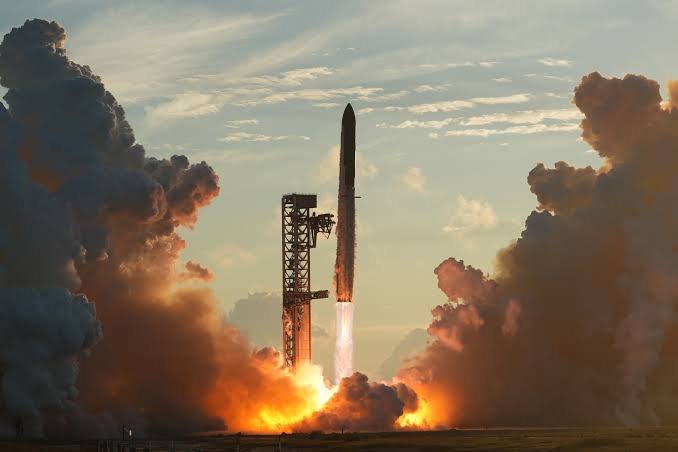
Starship reaches orbit for the first time: SpaceX enters a new phase of giant-rocket development. SpaceX’s Starship has reached Earth orbit for the first time, completing one of the most important milestones in the rocket’s development.
The September 28 Flight 14 was not flawless. One Super Heavy engine shut down during ascent and the mission ended earlier than originally planned. Nevertheless, Starship reached orbit and deployed 26 Starlink V3 satellites.
The result moves Starship beyond another experimental milestone and toward its intended role as a reusable system for orbital launches, lunar missions and, eventually, deep-space exploration.
Flight 14 was fundamentally different
Starship Flight 14 launched from Starbase, Texas, on September 28 at 7:48 a.m. local time.
It was the program’s first orbital attempt.
Previous integrated Starship flights had intentionally followed suborbital trajectories. This mission was designed to place the upper stage into Earth orbit and demonstrate a much broader set of orbital operations.
The vehicle also carried 26 Starlink V3 satellites, making the mission the first Starship flight to deliver a meaningful payload into orbit.
An engine problem did not end the mission
One of the key events occurred during the vehicle’s ascent.
According to SpaceX, one of Super Heavy’s 33 Raptor 3 engines shut down during the initial climb. The vehicle nevertheless continued its trajectory, while the Starship upper stage ignited its six engines and continued toward orbit.
That demonstrates an important feature of a multi-engine rocket: the architecture can potentially tolerate an isolated engine failure without immediately losing the mission.
But it also remains an engineering issue that must be investigated.
Reuters reported that the engine problem contributed to the shortened mission and that the cause was under investigation.
26 Starlink V3 satellites reached orbit

Caption: Starship during Flight 14, its first mission to reach orbit and deploy Starlink V3 satellites.
ALT: SpaceX Starship Flight 14 launching toward orbit
Image title: SpaceX Starship Flight 14 – orbital debut
One of the most concrete achievements of Flight 14 was the deployment of 26 Starlink V3 satellites.
That changes the character of the mission.
Starship was no longer simply demonstrating whether the vehicle could reach space. It was delivering an operational payload to orbit for the first time.
The new-generation Starlink satellites are intended to increase the capacity of SpaceX’s satellite network.
If Starship eventually becomes a high-frequency orbital launcher, it could therefore have a direct impact on the pace at which Starlink can expand.
The mission ended earlier than planned
Before launch, SpaceX expected the mission to last roughly 10 hours, with Starship flying at an altitude of approximately 275 kilometers and completing about six orbits.
The actual mission ended much earlier following the propulsion issue.
That distinction matters.
Starship did reach orbit and deploy satellites.
But it did not complete the entire planned mission profile.
For a development program, both facts need to be reported together.
Why the orbital milestone matters
SpaceX is developing Starship as a fully reusable transportation system.
The architecture consists of the Super Heavy booster and the Starship spacecraft, with the long-term goal of repeatedly transporting people and cargo to Earth orbit, the Moon and Mars.
Reaching orbit is therefore a fundamental requirement.
It allows SpaceX to begin testing the vehicle in the environment where its intended operational missions will actually take place.
NASA is watching closely
Starship is also important to NASA’s Artemis program.
NASA has selected a Starship-derived system as part of its plans for returning astronauts to the lunar surface.
However, reaching orbit is only one requirement.
A crew-capable lunar system must demonstrate:
- reliable launches;
- safe flight;
- controlled return;
- rapid or practical reuse;
- orbital propellant transfer;
- crew-support systems;
- lunar landing capabilities.
Reuters reported that the engine issue on Flight 14 could affect timelines associated with lunar missions, although the successful orbital milestone represents significant progress.
The next question is no longer simply whether Starship can reach orbit
The bigger challenge is repeatability.
A single successful orbital mission is an important demonstration.
But SpaceX’s broader economic model requires frequent launches with increasingly reusable hardware.
The long-term test will therefore be whether Starship can repeatedly:
launch → reach orbit → deliver payloads → return → be inspected and refurbished → fly again.
That is considerably harder than achieving orbit once.
Starlink could become one of Starship’s biggest customers

The 26 Starlink V3 satellites carried on Flight 14 provide an early demonstration of the relationship between the rocket and SpaceX’s satellite business.
If Starship eventually supports higher launch cadence and larger payload volumes, SpaceX could use the vehicle to accelerate the deployment of future Starlink generations.
Flight 14 was the first real demonstration of that model.
Industry impact
Starship’s progress matters beyond SpaceX.
The launch industry is increasingly focused on reducing the cost and turnaround time of orbital missions.
Reusable rockets are already changing the economics of launch, but Starship is attempting to scale the concept much further with a significantly larger vehicle.
If SpaceX eventually demonstrates reliable and rapid reuse, launch providers, satellite operators and government space programs could all be affected.
But that remains a future possibility rather than an established outcome.
What happens next?
The next major step will be the investigation of the Flight 14 propulsion issue and the preparation of subsequent Starship tests.
SpaceX needs to demonstrate that the orbital performance can be repeated while improving the vehicle’s recovery and reuse capabilities.
Future flights will therefore be important not simply because they launch again, but because they will show whether the system is becoming more reliable and operationally repeatable.
Starship has cleared one of the biggest technical milestones in its development.
On September 28, 2026, the vehicle reached Earth orbit for the first time and deployed 26 Starlink V3 satellites.
But the mission was not flawless. An engine problem shortened the flight and highlighted the remaining propulsion and reliability challenges.
Flight 14 therefore marks the beginning of a new phase rather than the completion of the Starship program: the challenge now is to turn a successful orbital demonstration into a repeatable, reusable launch system.
Editorial note: The story does not describe Flight 14 as a flawless success. It distinguishes the successful orbital milestone from the parts of the planned mission that were not completed.