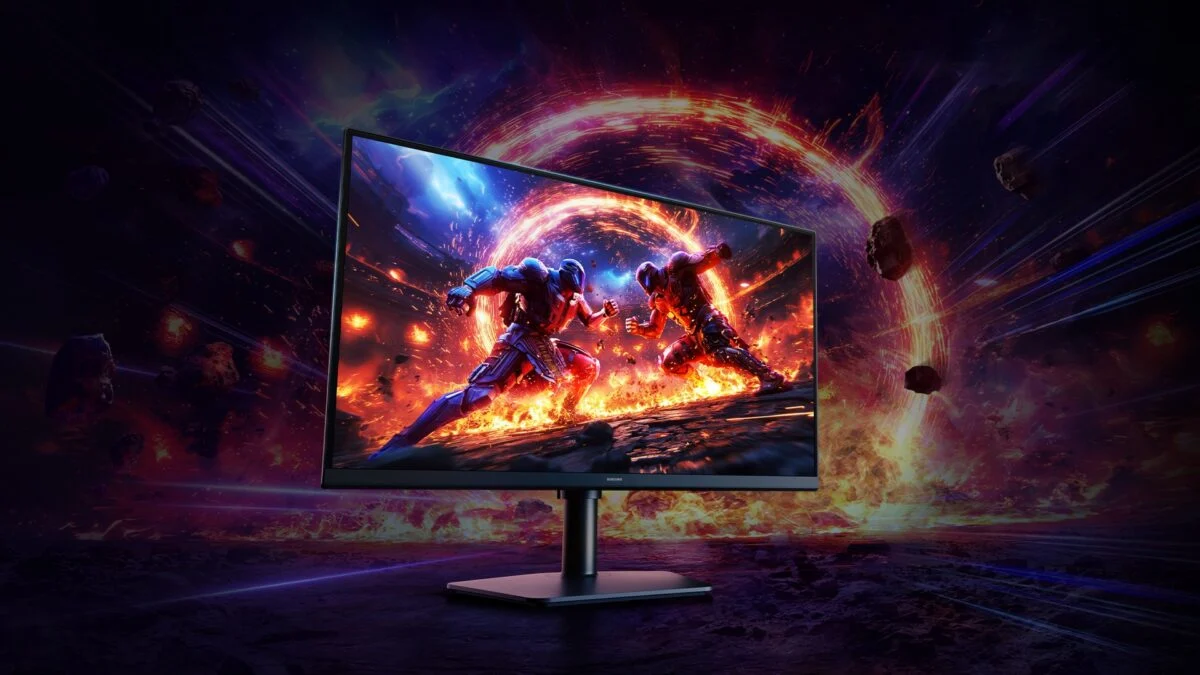
Samsung has pushed gaming monitor technology into previously unexplored territory with a new version of its Odyssey G6 that can reach an extraordinary 1,100Hz refresh rate.
Yes, 1,100Hz.
For comparison, 144Hz monitors that once represented premium gaming hardware are now relatively common. 240Hz and 360Hz displays have become serious options for competitive players, while 500Hz and 600Hz monitors already exist.
But 1,100Hz is an entirely different category.
Samsung unveiled the new display at Gamescom 2026 in Cologne, Germany, as part of its next-generation Odyssey lineup. The model is the 27-inch Odyssey G6 G60H, built around a Fast IPS panel.
There Is a Very Important Catch
Before getting too excited, there is an important detail.
The Odyssey G6 does not run at 1,100Hz at its maximum resolution.
At its native 2560 × 1440 QHD resolution, the monitor reaches up to 600Hz.
To activate the full 1,100Hz refresh rate, users have to switch the display to 1280 × 720, or HD.
Samsung achieves this through its Dual Mode technology.
In other words, the monitor sacrifices a significant amount of resolution to achieve an extreme refresh rate.
That trade-off makes much more sense for competitive gaming than for cinematic AAA titles.
A professional Counter-Strike 2 or Valorant player may prefer lower resolution if it means higher frame rates and lower motion latency.
Every Frame Lasts Less Than a Millisecond
At 1,100Hz, each refresh takes roughly 0.91 milliseconds.
That is incredibly fast.
In theory, a higher refresh rate allows a display to update the image more frequently, producing smoother motion and potentially improving motion clarity.
But there is a major requirement:
Your PC needs to generate roughly 1,100 frames per second to take full advantage of 1,100Hz.
A monitor cannot magically create 1,100 unique frames if the computer is producing only 300 FPS.
That is why the technology is much more relevant to highly optimized esports games than demanding modern AAA titles.
OLSI FEÇI
Tom’s Hardware notes that the monitor reaches 600Hz at native QHD resolution and 1,100Hz when operating at 720p.
600Hz at QHD Is Still Insane
Even if we ignore the 1,100Hz headline, the Odyssey G6 remains an exceptionally fast gaming monitor.
Its 27-inch Fast IPS panel runs at 2560 × 1440 and up to 600Hz, with a claimed 1ms response time.
For most gamers, 600Hz is already far beyond what they need.
But esports does not always operate under the principle that “good enough is enough.”
When professional players can potentially gain even a small advantage in motion clarity or latency, manufacturers have a reason to keep pushing display technology forward.
That is why the gaming monitor industry has entered another refresh-rate arms race.
Samsung Is Not Competing on Speed Alone
Interestingly, Samsung is not building its entire Odyssey strategy around the 1,100Hz number.
The company unveiled several new displays at Gamescom, including large OLED models and monitors offering multiple combinations of resolution and refresh rate.
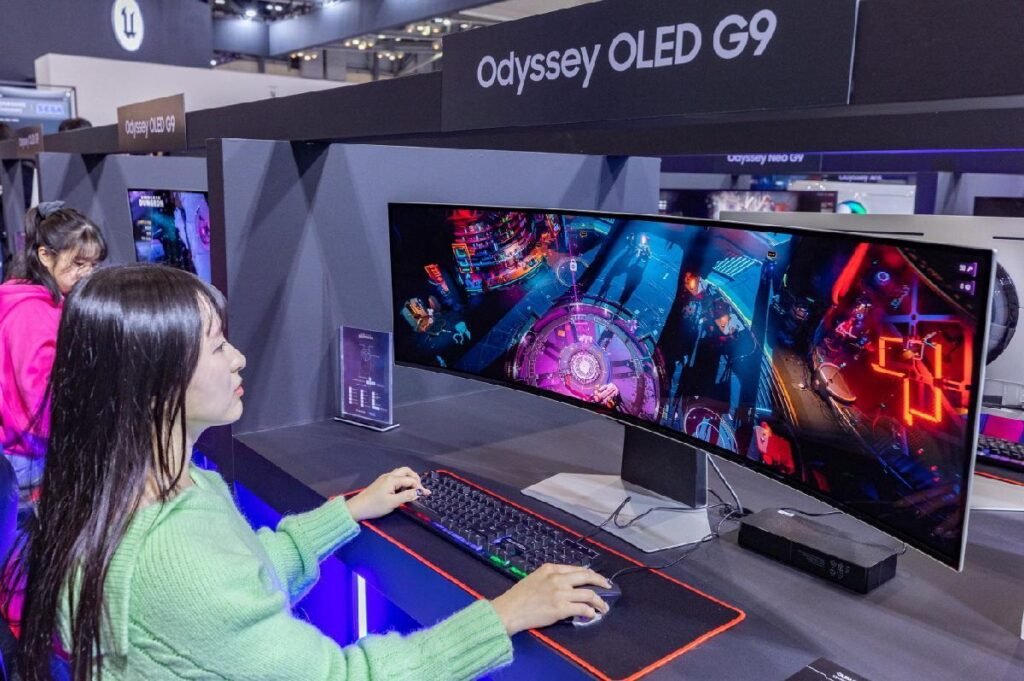
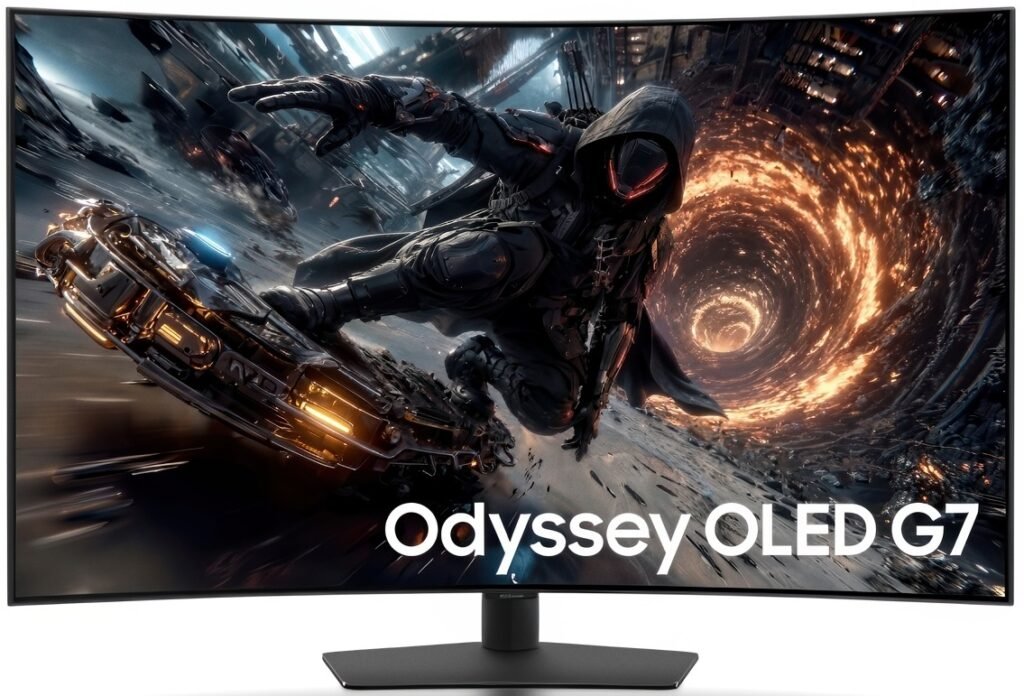
One of them is the 49-inch Odyssey OLED G9, which features a Dual QHD 5120 × 1440 resolution and can reach 360Hz at its full resolution.
In a lower-resolution mode, it can reach up to 720Hz.
Samsung also introduced a 32-inch Odyssey OLED G8 designed around high-resolution gaming and multiple display modes.
The strategy is becoming clear:
Instead of forcing users to choose between resolution and speed, give them both and let them switch depending on the game.
Dual Mode Could Be the Bigger Trend
The Dual Mode concept may ultimately be more important than the 1,100Hz headline itself.
Rather than locking a monitor into one resolution and refresh rate, Dual Mode allows users to change how the display operates.
For example:
QHD + 600Hz
for modern games and everyday gaming,
and
HD + 1,100Hz
for extreme competitive esports.
That gives a single monitor two very different personalities.
A gamer playing a visually demanding single-player game can use the higher resolution.
A competitive player who cares about every possible millisecond can switch to the ultra-fast mode.
Can Human Eyes Even See the Difference?
That is going to be one of the biggest questions surrounding this monitor.
If the jump from 60Hz to 120Hz is so noticeable, does that mean 1,100Hz is nearly ten times better?
No.
The benefits of refresh rate are not linear.
The jump from 60Hz to 120Hz is highly noticeable.
The move from 120Hz to 240Hz can still be noticeable, particularly in gaming.
But as refresh rates continue climbing, the perceptual improvements become smaller for the average user.
That does not make ultra-high refresh rates useless.
Competitive players with extremely fast reactions and very high frame rates may benefit more than casual gamers.
But for most people, 1,100Hz is likely to be more of a demonstration of technological capability than a necessity.
There Is Another Problem: Your GPU
And this may be the biggest limitation.
To fully exploit 1,100Hz, the computer needs to produce an extreme number of frames.
That is possible in highly optimized esports titles running at low resolution.
But generating 1,100 FPS in a modern AAA game with ray tracing and high graphical settings is an entirely different challenge.
That means the G6 is not really designed for the average gamer.
It is aimed at the extreme competitive player.
What About Input Latency?
Refresh rate is only one part of the gaming monitor equation.
Response time, input latency, processing latency, VRR performance and panel behavior also matter.
Samsung lists a 1ms response time for the Odyssey G6 and support for AMD FreeSync Premium and NVIDIA G-SYNC.
Those technologies help synchronize the monitor with the GPU and reduce issues such as screen tearing.
So Samsung is not simply putting a huge number on the box.
It is building a monitor specifically designed for high-performance competitive gaming.
Samsung Is Turning the Monitor Into a Platform
The new Odyssey lineup also reflects a broader change in gaming hardware.
Modern monitors are no longer simply screens.
They are becoming part of the gaming platform itself.
Refresh rate.
HDR.
VRR.
OLED.
Dual Mode.
DisplayPort 2.1.
HDMI 2.1.
And increasingly sophisticated features designed to make one display useful across multiple types of gaming.
That matters because gamers rarely play only one type of game.
Someone might play Call of Duty at night, watch Netflix afterward and use the same monitor for work during the day.
A modern display has to handle all of it.
OLED Is Becoming a Major Part of the Strategy
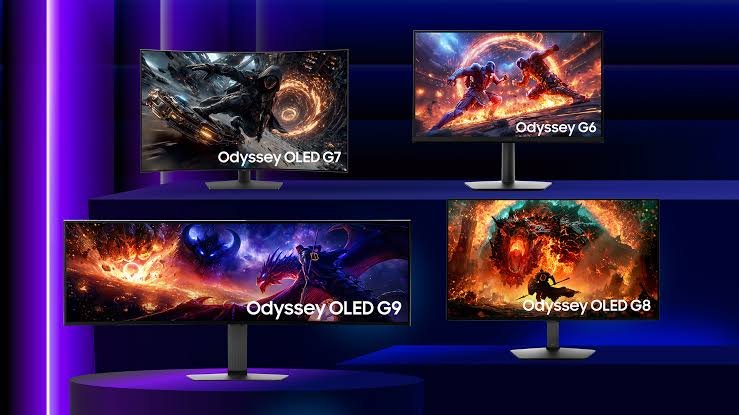
The rest of Samsung’s new lineup is arguably even more interesting from a display-technology perspective.
Samsung introduced a 49-inch Odyssey OLED G9 capable of 360Hz and up to 720Hz in Dual Mode.
It also introduced a 32-inch Odyssey OLED G8 with multiple refresh-rate configurations depending on the selected resolution.
This shows that Samsung is trying to balance:
- resolution;
- refresh rate;
- contrast;
- screen size;
- response time;
- and flexibility.
From that perspective, the 1,100Hz G6 is only the most viral part of a much larger strategy.
When Will It Be Available?
Samsung says the 1,100Hz Odyssey G6 will be available globally in the second half of 2026.
Pricing has not yet been announced.
Availability of the other Odyssey models will vary by market.
That means the G6 could become one of the first commercially available 1,100Hz gaming monitors.
Is 1,100Hz Marketing or a Revolution?
A little of both.
The 1,100Hz figure is obviously a powerful marketing tool.
It is the kind of number that immediately grabs attention.
But the technology behind it is not simply marketing.
600Hz at QHD is genuinely extreme performance.
Dual Mode provides a useful option for a specific category of players.
And the fact that a consumer gaming monitor is entering 1,000Hz territory shows just how quickly display technology is advancing.
A decade ago, 144Hz looked extreme.
Now Samsung is talking about 1,100Hz.
What Happens Next?
This may be the most interesting part.
If Samsung can reach 1,100Hz, it is only a matter of time before other manufacturers try to beat it.
We could see 1,200Hz.
1,440Hz.
Perhaps even higher numbers.
But the real question will be:
Are monitors actually getting better, or are the numbers simply getting bigger?
That will depend on how refresh rate combines with resolution, response time, latency and real-world image quality.
For now, Samsung has done what it does particularly well:
It has taken existing display technology, pushed it toward an extreme and created a product that has the entire industry talking.
And this time, the number really is ridiculous:
1,100Hz.
Not at 4K.
Not at QHD.
But at 720p.
And that is exactly what makes this monitor both impressive and absurd.
For professional esports players, it could become a new competitive weapon.
For everyone else?
It may simply be the most entertaining way yet to tell your friends how fast your gaming monitor is.