

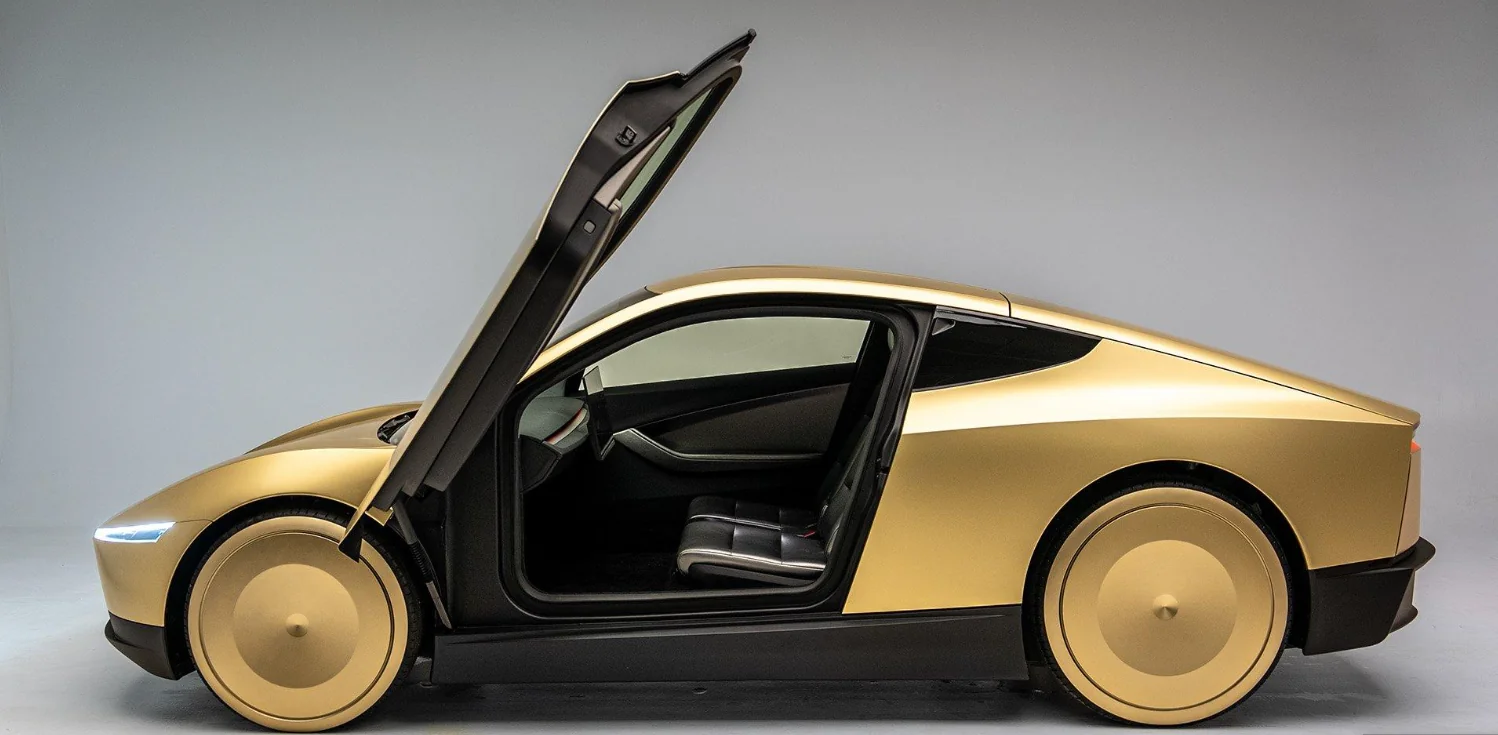
Tesla is planning a major expansion of its German factory, with the ambition of producing up to one million Cybercab robotaxis annually. Construction could begin in 2027, but the project faces questions over autonomous-vehicle demand, regulation, automation and long-term employment.
Tesla is preparing a €3 billion expansion of its Gigafactory in Grünheide, near Berlin, as the company looks to turn its Cybercab autonomous vehicle into a major part of its future business.
The planned investment, announced on November 16, would add a new production facility at Tesla’s only European factory. The company says the expanded site could eventually produce up to one million Cybercabs per year.
The scale of the ambition is striking. If the project reaches its proposed capacity, Grünheide could become Germany’s largest car factory by production capacity, overtaking Volkswagen’s Wolfsburg site.
But there is an important qualification: Tesla is announcing a long-term production target, not confirming that one million robotaxis will actually be built or sold every year. The Cybercab has not yet reached large-scale commercial production.
The project therefore represents both an industrial investment and a major bet on the future of autonomous transport.
What Tesla is planning in Germany
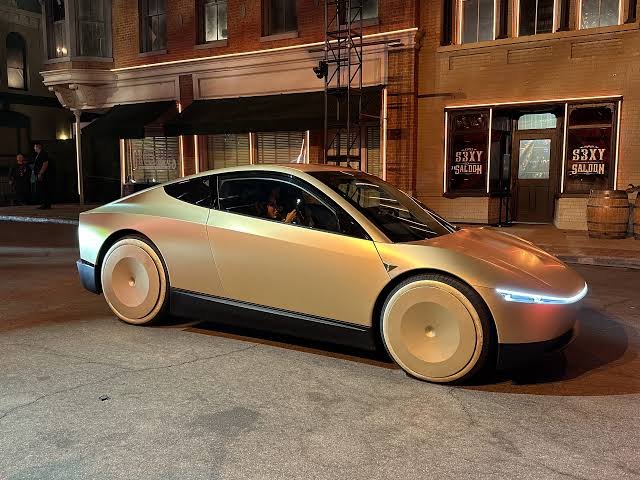
Tesla intends to submit a building-permit application for the overall project before the end of 2026.
According to the company’s statement to Reuters, construction is scheduled to begin in the first half of 2027, with production targeted for 2029.
The initial phase is expected to create several hundred jobs connected to construction and production planning. Tesla has not provided a complete long-term employment forecast for a facility operating at its intended capacity.
The expansion would add to the existing Grünheide operation, which opened in March 2022 and currently manufactures vehicles including the Model Y.
Tesla is also aiming to begin battery-cell production at the German factory around the middle of 2027. That could strengthen the site’s role in the company’s European manufacturing network.
However, the Cybercab facility is a separate and much more ambitious part of the expansion. Its success depends on whether Tesla can develop a viable market for large numbers of autonomous vehicles.
Why Cybercab matters to Tesla
The Cybercab is part of Tesla’s strategy to move beyond conventional electric-vehicle sales and develop a business around autonomous transportation.
Rather than simply selling a car to an individual driver, Tesla wants to make vehicles capable of operating as robotaxis — transporting passengers with minimal or no human intervention, depending on the regulatory framework and technical capabilities.
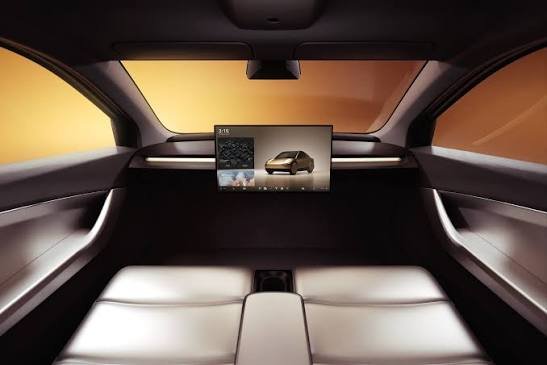
Interior concept of an autonomous Cybercab vehicleThat model could create a different source of revenue. A vehicle could potentially be used for multiple passenger journeys throughout the day rather than remaining parked for much of its lifetime.
For Tesla, the potential opportunity is substantial: a large fleet of autonomous vehicles could generate revenue through transportation services, while the company could also sell vehicles to fleet operators.
But the business model depends on several conditions being met.
The technology must operate safely in complex real-world environments. Regulators must approve the relevant level of autonomous operation. Insurance, liability, vehicle maintenance and passenger safety must be addressed. And customers must be willing to trust a vehicle without a human driver.
A factory capable of producing large numbers of robotaxis does not, by itself, solve any of those challenges.
The biggest question: Can Tesla sell and operate that many robotaxis?
Tesla’s target of up to one million Cybercabs annually is a statement of intended production capacity, not a confirmed sales forecast.
The distinction is important because the company is planning infrastructure for a market that is still developing.
Autonomous transport has attracted significant investment from technology companies and automotive manufacturers, but commercial deployment remains uneven. Different cities and countries have different rules, road conditions and requirements for driverless services.
Even if the vehicle performs well technically, Tesla would need to establish operating networks, secure permissions and build enough customer demand to justify production on this scale.
There is also a difference between producing a vehicle that can assist with driving and one that can operate as a fully driverless taxi. The latter requires a higher level of technical reliability and regulatory approval.
Tesla has not demonstrated through this German expansion announcement that all of those requirements have already been met.
Germany’s automotive industry faces a difficult transition
The investment comes at a challenging time for Germany’s traditional automotive sector.
Volkswagen, Mercedes-Benz and BMW have been dealing with high costs, weaker demand in some markets and stronger competition from Chinese manufacturers.
Reuters reports that the major German automakers have been cutting jobs and considering plant closures as they adjust their businesses.
Tesla’s proposed expansion therefore stands out as a rare large-scale growth announcement in a sector facing pressure.
However, the comparison between Tesla and traditional manufacturers should not be reduced to factory size alone. The companies have different product strategies, production structures and levels of automation.
The Cybercab project is particularly dependent on the success of a new vehicle category. Conventional cars already have established buyers and distribution networks; autonomous taxis require a different commercial ecosystem.
That makes Tesla’s investment potentially transformative, but also more exposed to uncertainty.
More production does not necessarily mean more jobs
Tesla says the expansion will create additional employment, with several hundred workers expected during the first stage of construction and production planning.
Yet the long-term employment impact remains unclear.
Automotive-sector analyst Matthias Schmidt told Reuters that Germany should examine how much of the investment will translate into sustainable employment and how much work will be automated.
This is a significant issue for the German economy. Modern automotive factories increasingly rely on robotics, software-controlled production and automated logistics.
A factory producing a very large number of vehicles may not require a proportionate increase in its workforce.
The question is therefore not simply how many cars the site will manufacture, but how much economic value and stable employment the investment will create locally.
Environmental and labour tensions remain
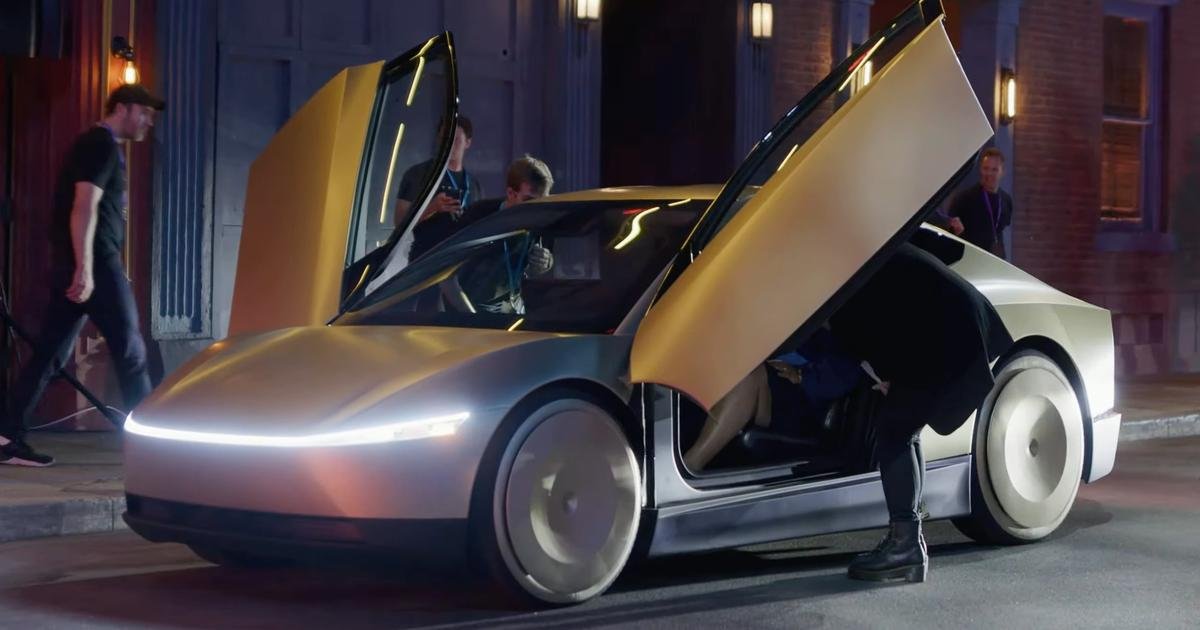
Tesla’s Grünheide factory has already faced controversy.
The company has encountered environmental protests linked to the site and repeated disagreements with Germany’s powerful IG Metall manufacturing union.
The union has accused Tesla of practices it considers hostile to organised labour, while Tesla has rejected those accusations and said the union is pursuing its own interests.
These tensions could become more important as the factory expands.
A project of this size requires construction approvals, local infrastructure, water and energy planning, environmental oversight and cooperation with the workforce.
Even when a company announces a large investment, the practical process of securing permits and building a facility can take time.
The project’s timetable should therefore be viewed as Tesla’s current plan, not a guarantee that every stage will proceed exactly as scheduled.
Cybercab could reshape Tesla’s European strategy
The proposed German expansion suggests Tesla wants Europe to become more than a market for selling electric cars. It could become a major manufacturing base for its autonomous-transport ambitions.
If the Cybercab becomes commercially successful, the company could use Grünheide to supply vehicles for European operations and potentially other markets.
That would give the factory a different role from its current focus on conventional electric vehicles.
However, the plan also exposes Tesla to several risks: delays in autonomous-driving development, regulatory restrictions, weaker-than-expected demand and the cost of building production capacity before the market is fully established.
The investment is therefore not simply a bet on manufacturing efficiency. It is a bet on the speed at which autonomous transportation can become a commercially viable industry.
Tesla’s €3 billion plan is one of the most ambitious industrial announcements in Germany’s automotive sector this year.
The company wants to begin construction in 2027 and start Cybercab production in 2029, with a proposed capacity of up to one million vehicles annually.
If successful, the expansion could strengthen Germany’s position in a new generation of automotive technology. But the scale of the target should not be confused with confirmed production, sales or regulatory approval.
The decisive test will come outside the factory walls: whether autonomous vehicles can operate safely, legally and profitably at scale.
Until that happens, Grünheide’s planned Cybercab facility remains a major industrial wager on a future that Tesla believes is approaching — but has not yet fully demonstrated.


