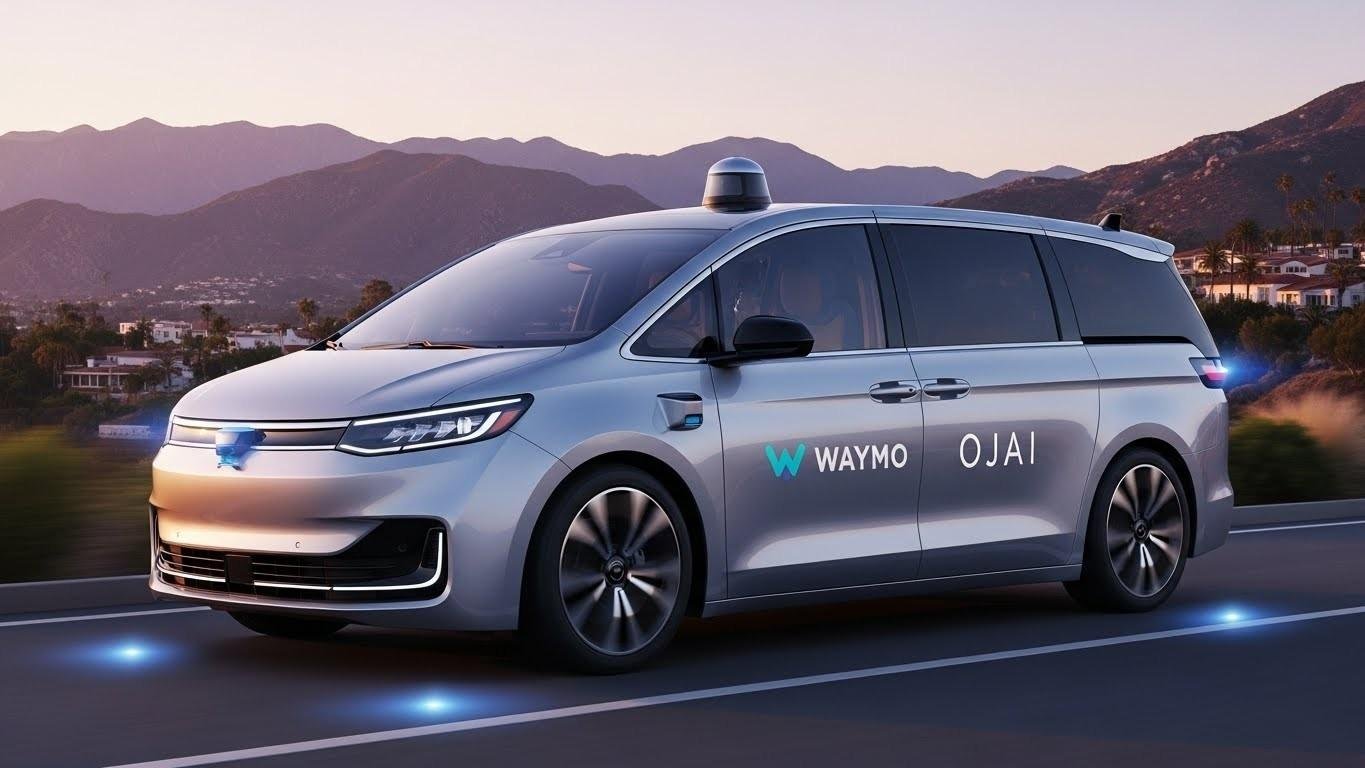
Waymo has revealed one of the most important lessons from its decade-long push toward fully autonomous driving: building a truly driverless vehicle is not simply a matter of putting a more powerful AI model behind the wheel.
The autonomous-driving company says it has now accumulated more than 200 million fully autonomous miles, giving it an unusually large real-world dataset from vehicles operating without a human driver.
Based on that experience, Waymo has published ten key lessons that it says now shape the way it develops autonomous-driving AI.
One of the most significant conclusions is also one of the most controversial.
Cameras are powerful, but cameras alone are not enough for safe, fully autonomous driving at scale.
That position puts Waymo directly into one of the biggest technology debates in the automotive industry, particularly as companies such as Tesla continue to pursue different approaches to autonomous driving.
200 Million Autonomous Miles Change the Conversation
Autonomous driving is often demonstrated through carefully selected videos showing vehicles navigating impressive scenarios.
But demonstrations are not the same as operating millions of miles in the real world.
Waymo says its experience comes from more than 200 million fully autonomous miles, accumulated across the cities where its robotaxi service operates.
That gives the company an enormous amount of real-world information about how autonomous systems behave around pedestrians, cyclists, emergency vehicles, unusual road layouts, construction zones, bad weather and countless other situations.
The company says these miles have helped validate ten fundamental principles for building AI capable of safely operating vehicles without a human backup.
The significance is difficult to overstate.
A human driver can make a mistake and immediately correct it.
An autonomous vehicle has to identify the situation, understand what is happening, predict what other road users might do and choose an appropriate action — all within extremely tight time constraints.
That requires more than a powerful language or vision model.
It requires an entire engineered system.
Waymo Rejects the Camera-Only Approach
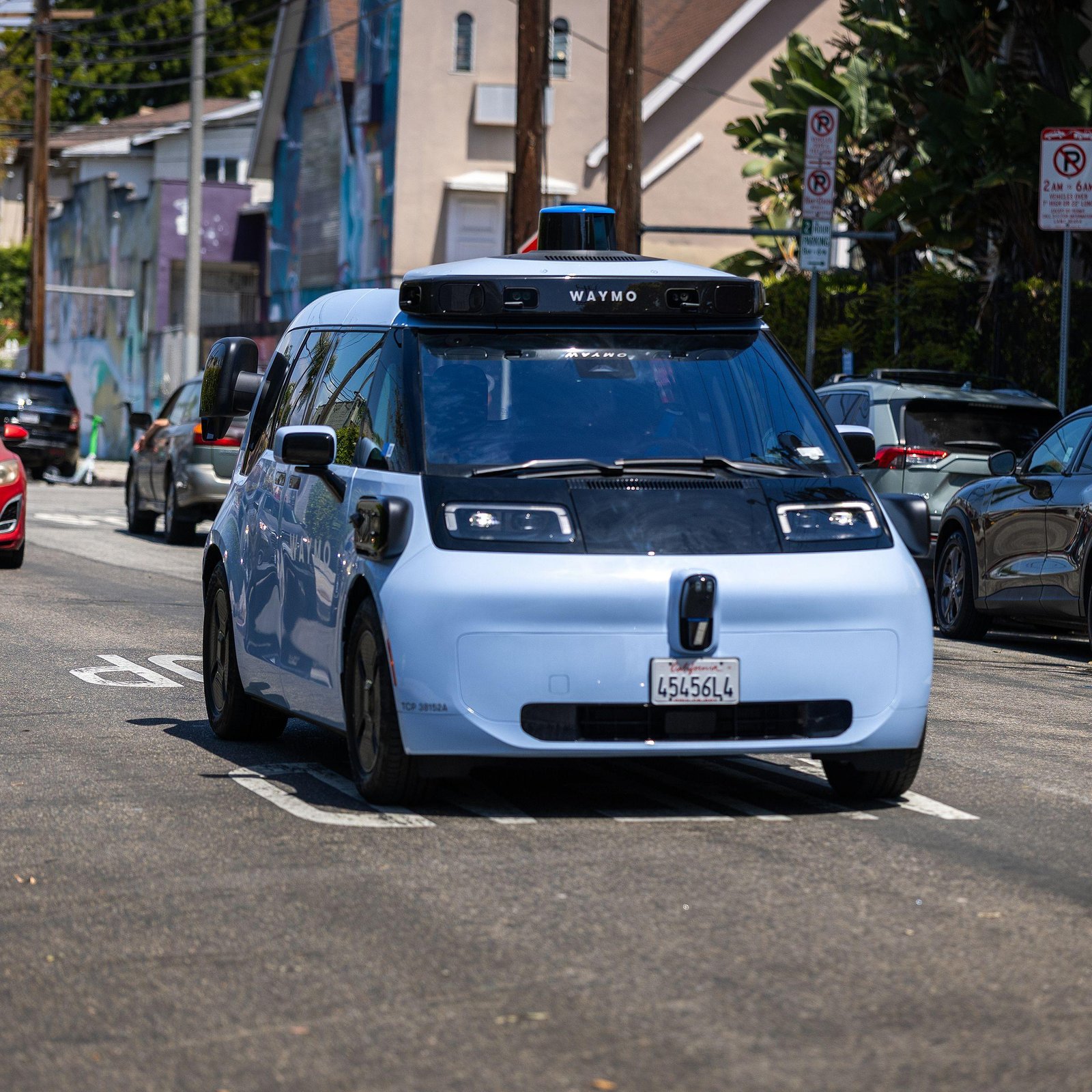
One of Waymo’s strongest conclusions concerns sensors.
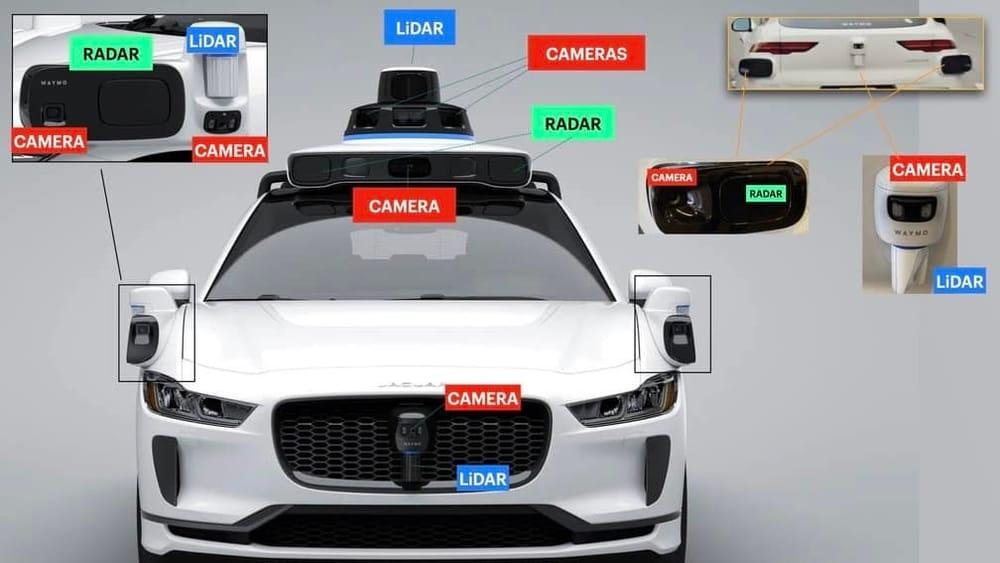
The company argues that cameras alone cannot provide enough redundancy for fully autonomous driving at scale.
Instead, Waymo uses a combination of cameras, lidar and radar.
The idea is that each sensor type provides a different view of the environment.
Cameras provide rich visual information.
Lidar can help measure the three-dimensional structure of the environment.
Radar can provide additional information about objects and movement.
Together, they create multiple sources of information that can complement one another.
Waymo argues that this sensor fusion is essential for building a system capable of operating safely without a human driver.
The position is particularly notable because it contrasts with Tesla’s long-standing emphasis on camera-based perception.
The debate has become one of the defining technical disagreements in autonomous driving.
AI Is Not a Shortcut to Full Autonomy
Another important message from Waymo is that artificial intelligence does not eliminate the need for traditional engineering.
As AI models become increasingly capable, it is tempting to assume that a sufficiently advanced model could simply learn how to drive from enough data.
Waymo argues that the reality is more complicated.
A safe autonomous vehicle needs predictable behavior, redundant sensing, extremely low latency and rigorous validation.
It also needs to operate under physical constraints that do not exist in ordinary software.
A chat-bot can make a mistake and generate another answer.
A vehicle traveling at highway speed does not have that luxury.
This is why Waymo says safety is not simply the output of its technology.
Safety is the reason behind the technology choices themselves.
Simulation Is Becoming a Second Reality
Waymo is also using simulation to solve one of the biggest problems in autonomous driving: some dangerous situations are too rare to wait for them to happen naturally.
The company has developed large-scale simulation systems that allow its autonomous-driving technology to experience billions of virtual miles.
Waymo’s World Model, introduced earlier this year, is designed to create highly realistic simulated driving environments and scenarios.
The system can reproduce situations based on real-world events and generate new variations for testing.
That creates an important development loop.
Real-world driving produces data.
That data improves the AI system.
The improved system can then be tested against millions or billions of simulated scenarios.
The results can feed back into the real-world system.
This combination of physical and virtual testing could become one of the most important technologies in autonomous vehicle development.
The Computer Inside the Vehicle Is Critical
Autonomous driving also requires enormous computing power inside the vehicle itself.
Unlike many cloud-based AI applications, a robotaxi cannot simply send every decision to a remote data center and wait for a response.
The vehicle has to react immediately.
Waymo recently provided a look at the computing system inside its vehicles and said it has increased its onboard compute capability by roughly 20 times over the past eight years.
The company says its autonomous-driving computer must meet three major requirements: it needs to be responsive, ruggedized and energy efficient.
That is a very different challenge from building a conventional AI server.
A data center can consume enormous amounts of electricity and operate in a controlled environment.
A vehicle has to work in heat, cold, vibration, rain and constantly changing road conditions while remaining power efficient.
Autonomous Driving Is Becoming a Systems Engineering Race
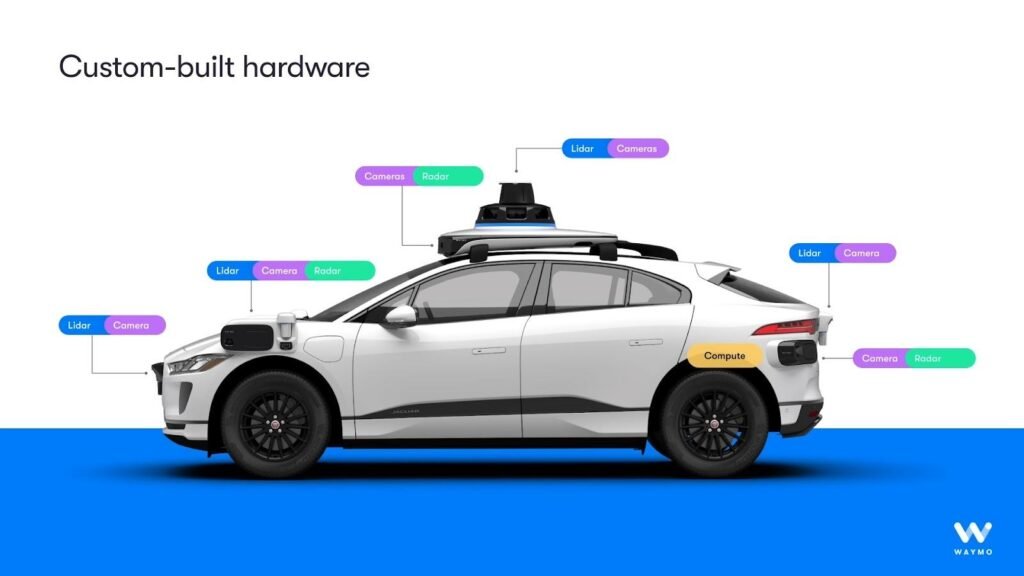
The competition is no longer simply about who has the best AI model.
Companies are increasingly competing across an entire technology stack.
That includes:
- Sensors
- AI models
- Onboard computing
- Mapping
- Simulation
- Safety validation
- Vehicle integration
- Fleet management
- Data collection
- Software updates
This is where the autonomous-driving industry is becoming particularly interesting.
Waymo’s latest lessons suggest that success requires all of these systems to work together.
A company can have an impressive AI model but still struggle if its sensor system is unreliable.
Another company can have excellent sensors but insufficient onboard computing.
Another might have powerful hardware but weak safety validation.
The winner may ultimately be the company capable of integrating everything most effectively.
Waymo Is Taking the Technology Into More Cities
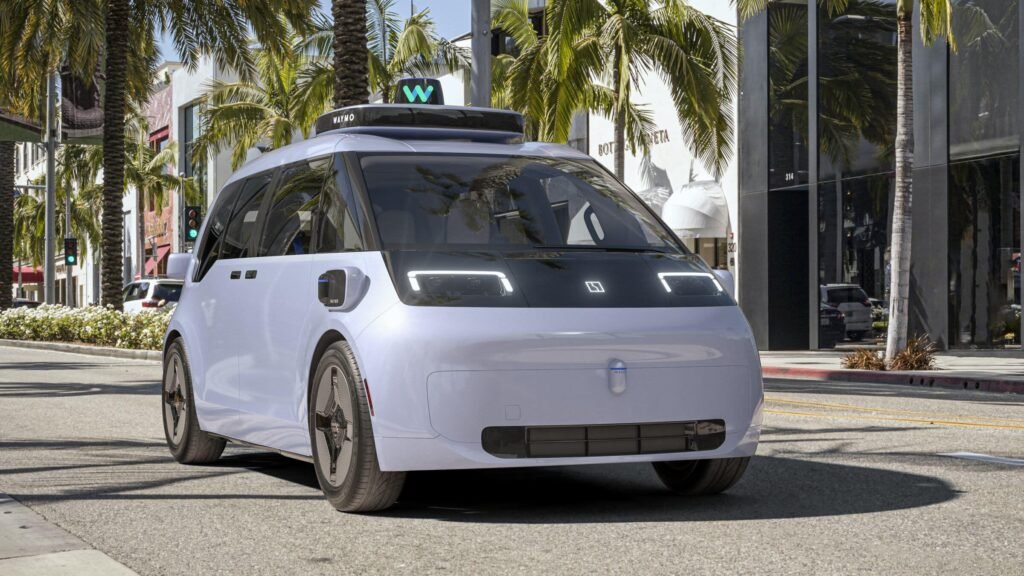
Waymo’s autonomous-driving strategy is also moving beyond experimentation.
The company is expanding its driverless operations into additional markets, including San Diego, Las Vegas, Tampa and Denver.
Waymo has said these new markets will join a growing network of cities where people can use its autonomous vehicles through the company’s service.
That expansion creates another advantage.
Every new city introduces new road layouts, traffic patterns, weather conditions and driving behaviors.
More operational experience can therefore produce more data and more opportunities to improve the system.
The scale of deployment could become just as important as the underlying AI technology.
The Tesla Question Is Impossible to Ignore
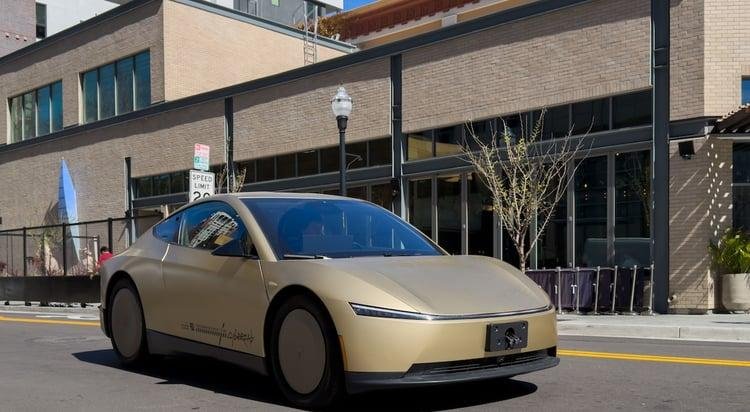
Also Read: Tesla’s Robotaxi Race Enters a New Phase as Austin Cars Go Fully Driverless
Although Waymo does not need to mention Tesla by name, the industry’s biggest autonomous-driving rivalry is clearly part of the background.
Tesla has promoted a fundamentally different approach centered heavily around cameras and AI.
Waymo argues that true Level 4 autonomy requires purpose-built systems with multiple sensors and extensive safety validation.
The difference is philosophical as much as technological.
Tesla’s approach aims to make sophisticated AI capable of interpreting the world much like a human driver.
Waymo’s approach is more explicitly based on redundancy, sensor fusion, mapping and carefully engineered safety systems.
The market will eventually decide which philosophy scales more effectively.
What Happens Next Could Define the Robotaxi Industry
Waymo’s 200 million autonomous miles are significant because they represent a level of real-world experience that is difficult to reproduce quickly.
But they do not mean the autonomous-driving problem has been solved.
The next challenge is scale.
Can these systems operate safely in dozens of cities?
Can the cost of the hardware fall enough to make robotaxis economically attractive?
Can autonomous vehicles operate reliably in difficult weather?
Can regulators and the public trust them?
And perhaps most importantly, can the technology become cheaper and more accessible without compromising safety?
These questions will determine whether robotaxis remain a niche transportation service or become a mainstream alternative to traditional vehicles.
OLSI FEÇI
Why It Matters
Waymo’s latest announcement is not simply another robotaxi story.
It represents a larger debate about what the future of AI-powered transportation will look like.
After more than 200 million fully autonomous miles, Waymo is effectively saying that there is no single AI shortcut to safe autonomy.
The future may require a combination of powerful AI, multiple sensors, specialized onboard computing, high-definition maps, massive simulation environments and independent safety validation.
That makes autonomous driving fundamentally different from many other AI applications.
The AI has to work in the physical world.
And mistakes have physical consequences.
This is why Waymo’s experience matters.
The real race may not be about who can build the most impressive autonomous-driving demo.
It may be about who can build the system that remains reliable after hundreds of millions — and eventually billions — of real-world miles.
For consumers, that could determine when autonomous taxis finally become as normal as ordering an Uber.
For the automotive industry, it could determine which technology architecture becomes the standard for the next generation of vehicles.
And for AI, it offers an important lesson:
The smartest model is not necessarily the safest system.