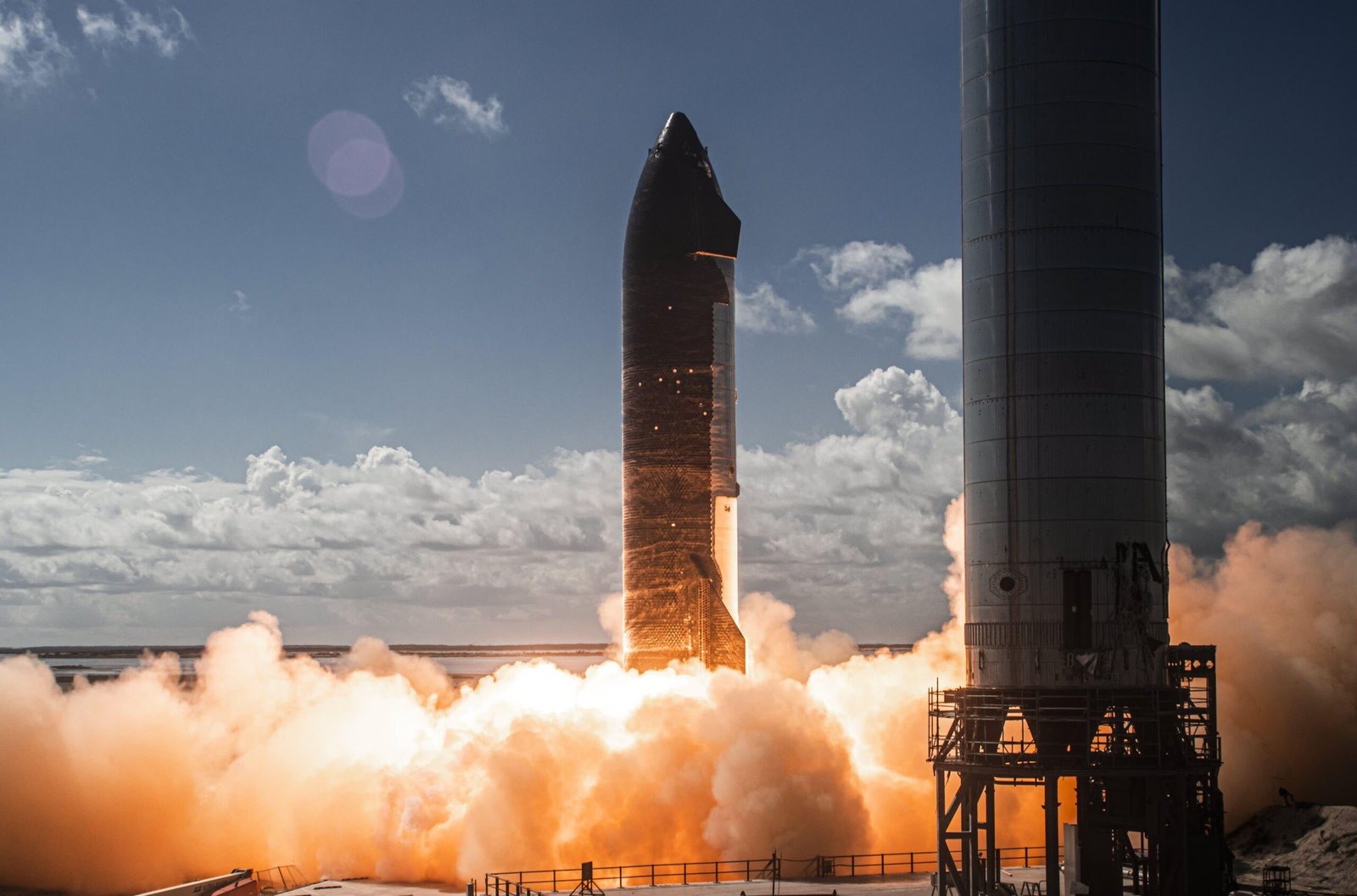
SpaceX is moving closer to another major test of the most ambitious rocket ever developed by the company.
The target is Starship Flight 14 — a mission that could take place in early to mid-September 2026 and would mark the first orbital flight attempt using SpaceX’s upgraded Version 3 configuration.
This is more than another rocket launch.
SpaceX Is Getting Ready for a Defining Starship Mission
Starship is central to SpaceX’s long-term plans for dramatically increasing the number of spacecraft launched into orbit, supporting NASA’s lunar ambitions and eventually enabling missions to Mars.
But before any of that happens, SpaceX has to prove that the latest version of Starship can survive an increasingly demanding flight profile.
And the company has just completed another important step.
SpaceX fires up the new Starship
On August 19, SpaceX conducted a static-fire test of one of the upgraded Raptor 3 engines installed on Ship 41.
The following day, engineers carried out a much more significant test involving all six engines on the upper stage.
The full-duration test lasted approximately 60 seconds.
Static-fire tests are among the most important milestones before launch.
The rocket remains secured to the ground while its engines are ignited.
Engineers can therefore examine propulsion performance, structural behavior, fuel systems and other components without actually sending the vehicle into space.
For Starship, these tests are particularly important because the rocket is enormous and extremely complex.
Why Flight 14 matters
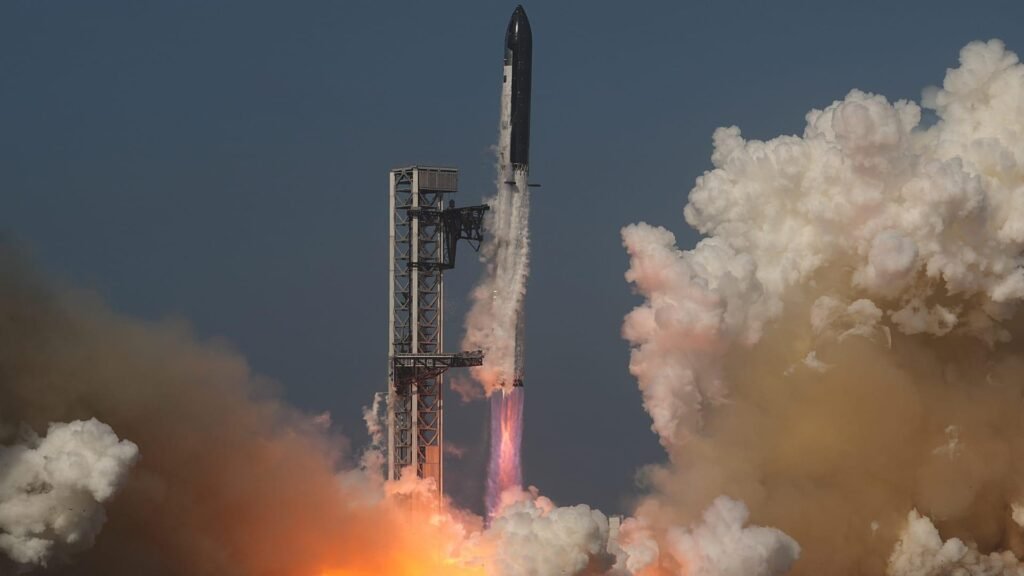
The upcoming mission is expected to be the 14th Starship test flight.
But it will also be the third Starship launch of 2026 and the third to use the upgraded V3 configuration introduced earlier this year.
Version 3 represents another attempt by SpaceX to improve the vehicle’s performance and reliability.
The ultimate objective remains unchanged:
Build a giant rocket that can be launched, recovered and launched again at a frequency that has never been achieved with a vehicle of this size.
That sounds simple.
It is anything but.
Starship is designed to change how rockets are used
Traditional rockets are largely expendable.
They launch once and most of the hardware is lost.
SpaceX changed that model with Falcon 9.
The first stage can return to Earth and land vertically, allowing it to be refurbished and reused.
Starship takes the idea much further.
The long-term goal is a system in which both the Super Heavy booster and the Starship spacecraft can be rapidly reused.
If SpaceX eventually achieves that at scale, the economics of spaceflight could change dramatically.
Instead of treating every launch as a new rocket, companies could operate spacecraft more like aircraft.
That is the revolution SpaceX is trying to create.
But SpaceX still has a major problem to solve
Reusability is not just about getting a rocket back.
The vehicle needs to come back reliably, safely and quickly.
That means every component has to survive extreme temperatures, enormous aerodynamic forces and repeated engine operations.
The company has already demonstrated spectacular progress with the Super Heavy booster.
Starship itself, however, remains much more difficult.
The spacecraft must survive atmospheric re-entry, control its descent and eventually perform a precise landing.
Every successful test brings engineers closer to that goal.
Every failure provides data.
Musk’s ambitions go far beyond Earth orbit
Starship is not being developed simply to launch satellites.
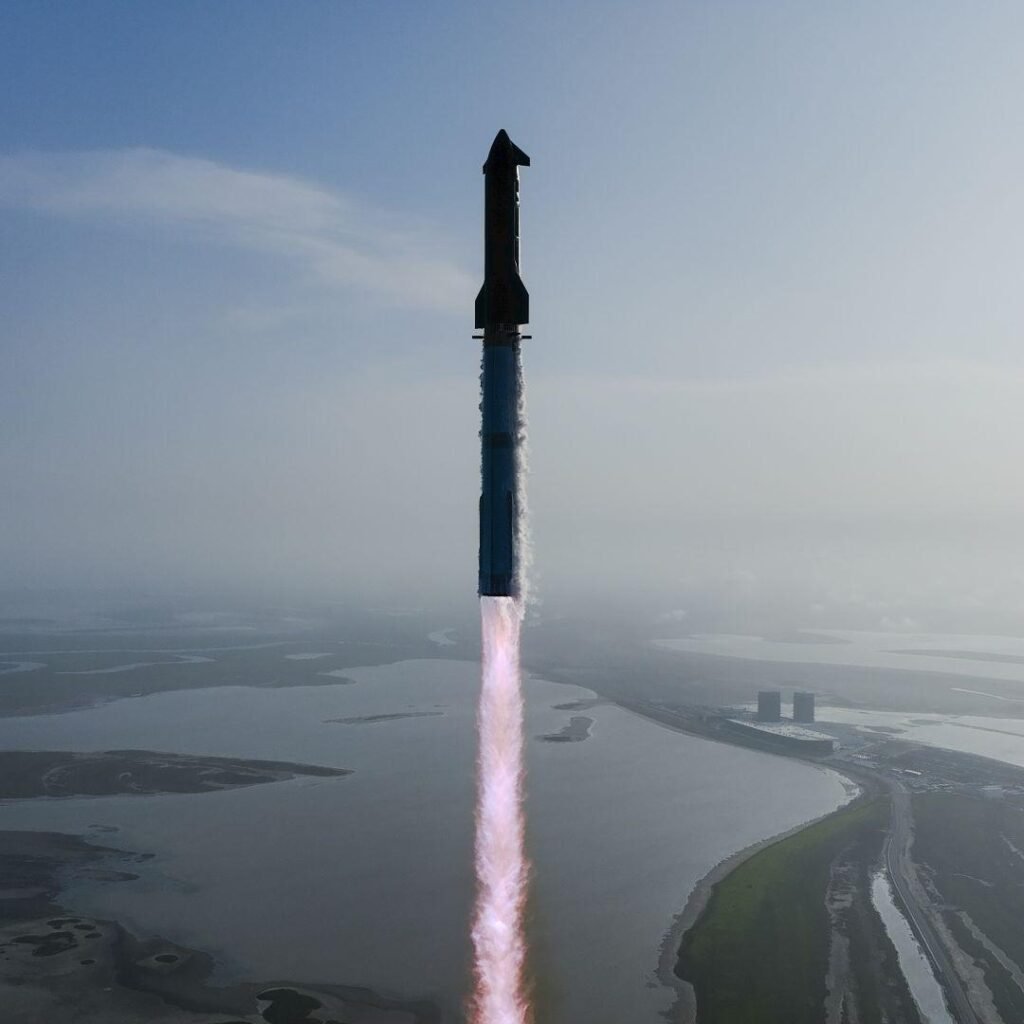
Elon Musk has repeatedly described it as the vehicle that could eventually make large-scale human missions to Mars possible.
SpaceX has also proposed launching multiple uncrewed Starships toward Mars before attempting crewed missions.
Those ambitions remain highly dependent on successful testing and development.
The timelines have changed repeatedly over the years, which is one reason analysts treat ambitious SpaceX schedules cautiously.
Still, the basic technological objective has remained remarkably consistent:
Create a fully reusable heavy-lift spacecraft capable of carrying enormous amounts of cargo and people beyond Earth.
NASA is watching closely
Starship is also deeply connected to NASA’s Artemis program.
NASA has selected a Starship-derived spacecraft as the human landing system for Artemis lunar missions.
That means Starship’s development is no longer only a private SpaceX project.
Its progress has consequences for the future of America’s lunar exploration program.
NASA’s broader plans call for astronauts to return to the Moon before eventually building toward more ambitious deep-space missions.
A reliable Starship could become one of the most important pieces of that architecture.
The next challenge: catching the spacecraft
One of SpaceX’s most spectacular ideas is to recover the Starship spacecraft using the launch tower itself.
The company has already demonstrated tower-assisted catches of Super Heavy boosters.
The concept is extraordinary.
Instead of landing the vehicle on legs, SpaceX wants large mechanical arms attached to the launch tower to capture the returning vehicle.
The advantage is significant.
If successful, the system could eliminate the need for heavy landing hardware and potentially make rapid reuse easier.
But Musk recently indicated that catching the Starship spacecraft itself could still be months away, suggesting that the upcoming mission may instead use an ocean splashdown.
That is an important distinction.
SpaceX is moving quickly, but even the company recognizes that some of its most ambitious recovery techniques require more development.
Starship isn’t the only rocket flying
The pace of SpaceX’s launch operations is already extraordinary.
On August 21, a Falcon 9 successfully launched 29 Starlink satellites from Florida and landed its first-stage booster on a droneship in the Atlantic.
The mission marked the booster’s 30th successful launch and landing.
It also became SpaceX’s 98th Falcon 9 launch of 2026 and its 75th dedicated Starlink mission of the year.
That comparison is revealing.
Falcon 9 has become a mature operational system.
Starship is still in the experimental phase.
SpaceX’s challenge is to eventually make Starship operate with the same kind of reliability and frequency.
The scale of SpaceX’s future plans is enormous
The U.S. government is also pushing for a dramatic expansion of commercial spaceflight.
On August 20, President Donald Trump signed a memorandum targeting at least 1,000 commercial launches and re-entries annually by 2030, compared with 178 recorded the previous year.
The policy calls for faster permitting, additional launch sites and other measures designed to expand America’s commercial space infrastructure.
SpaceX is one of the companies that could benefit most from such an expansion.
The company’s ambitions are even larger.
Musk has discussed extremely high launch frequencies for Starship and the possibility of using enormous numbers of spacecraft to support future satellite networks and other space infrastructure.
Whether those numbers are achievable remains uncertain.
But the direction is clear.
The space industry is moving toward high-frequency launch operations.
Starship could eventually transform satellite internet
There is another reason Starship matters.
SpaceX is already operating one of the world’s largest satellite constellations through Starlink.
The company continues to launch satellites at a remarkable rate.
A much larger reusable rocket could eventually allow SpaceX to deploy substantially larger batches of satellites per mission.
That could reduce launch costs and accelerate constellation expansion.
It could also allow much larger and more capable spacecraft to be placed in orbit.
In other words, Starship isn’t just a Moon-and-Mars project.
It could become the foundation of SpaceX’s entire space infrastructure strategy.
And then there is Mars
Mars remains the ultimate ambition.
A human mission to Mars would require technology far beyond anything currently used for routine orbital launches.
Spacecraft would need to carry people, food, equipment and fuel across interplanetary distances.
They would need reliable life-support systems.
They would need to land safely.
And, eventually, they would need to return.
Starship is intended to become the transportation system that makes that possible.
But the company still has to solve many major engineering problems before a crewed Mars mission becomes realistic.
September could tell us a lot
If Flight 14 launches in September as currently anticipated, engineers will gain another enormous amount of data.
The key questions will be straightforward.
Can the upgraded engines perform as expected?
Can the vehicle reach the intended trajectory?
Can Starship survive atmospheric re-entry?
Can both stages perform their planned maneuvers?
And how much progress has SpaceX made toward eventual full reusability?
A successful mission would not mean Starship is finished.
Far from it.
But it could represent another major step toward the architecture SpaceX has been developing for years.
The bigger picture
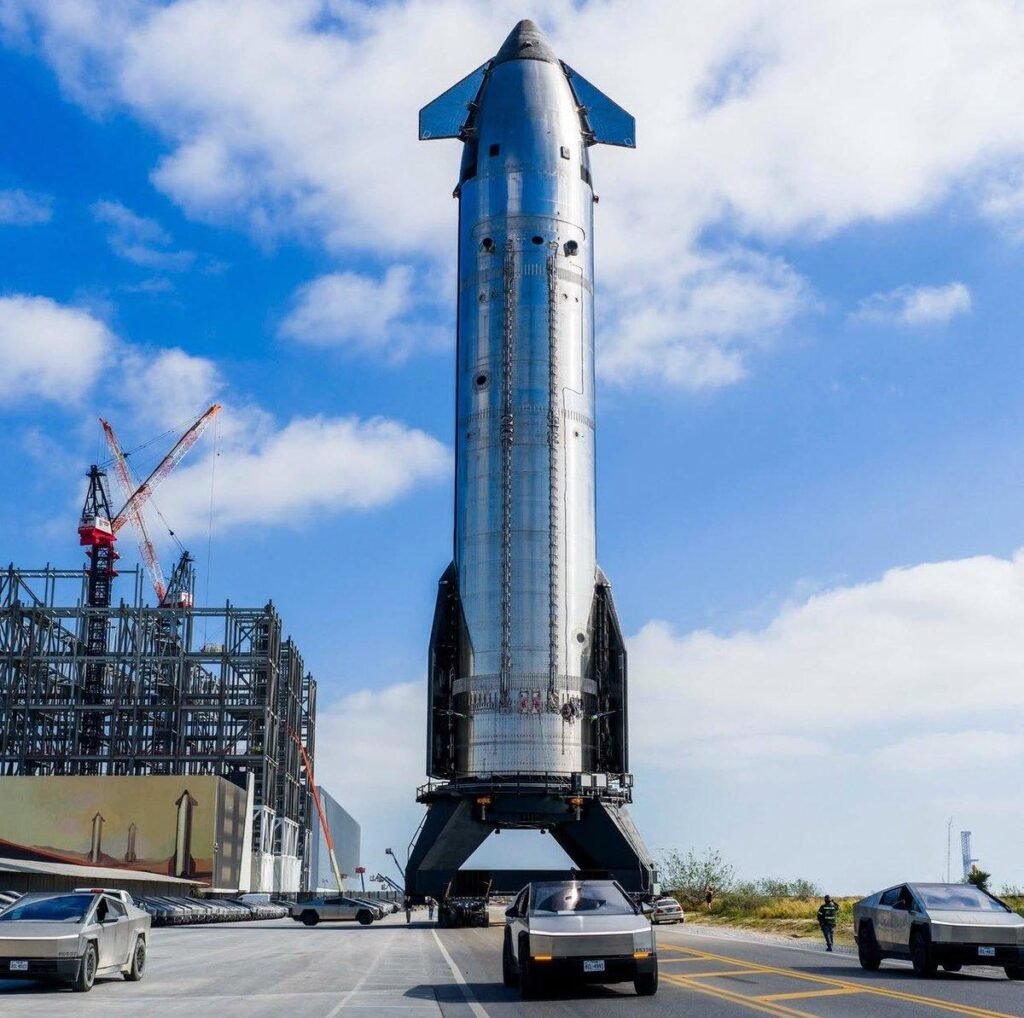
The most interesting thing about Starship isn’t simply its size.
It is the philosophy behind it.
SpaceX is trying to make spaceflight increasingly routine.
That means reducing the cost of each launch, increasing launch frequency and reusing expensive hardware.
If the company succeeds, the consequences could extend far beyond SpaceX.
Lower launch costs could change satellite communications, Earth observation, scientific research, space stations and eventually human exploration.
The Moon could become more accessible.
Mars could become technically reachable.
And Earth’s orbit could become a much busier commercial environment.
TheTechSpot Verdict
Starship Flight 14 may not look like the final destination.
It is another test.
Another launch.
Another opportunity for SpaceX to discover what works—and what still needs fixing.
But the significance of the program is becoming harder to ignore.
SpaceX has already demonstrated that reusable rockets can become a normal part of commercial spaceflight with Falcon 9.
Now it is attempting something much bigger:
a fully reusable spacecraft powerful enough to reshape humanity’s relationship with space.
The next Starship flight will not prove that SpaceX can reach Mars.
It will not prove that humans can live on another planet.
But it could answer a much more immediate question:
Is Starship finally becoming a practical, reusable space vehicle rather than an experimental prototype?
The next few months could provide one of the clearest answers yet.
And if September goes well, the future of spaceflight may suddenly look a lot closer.