

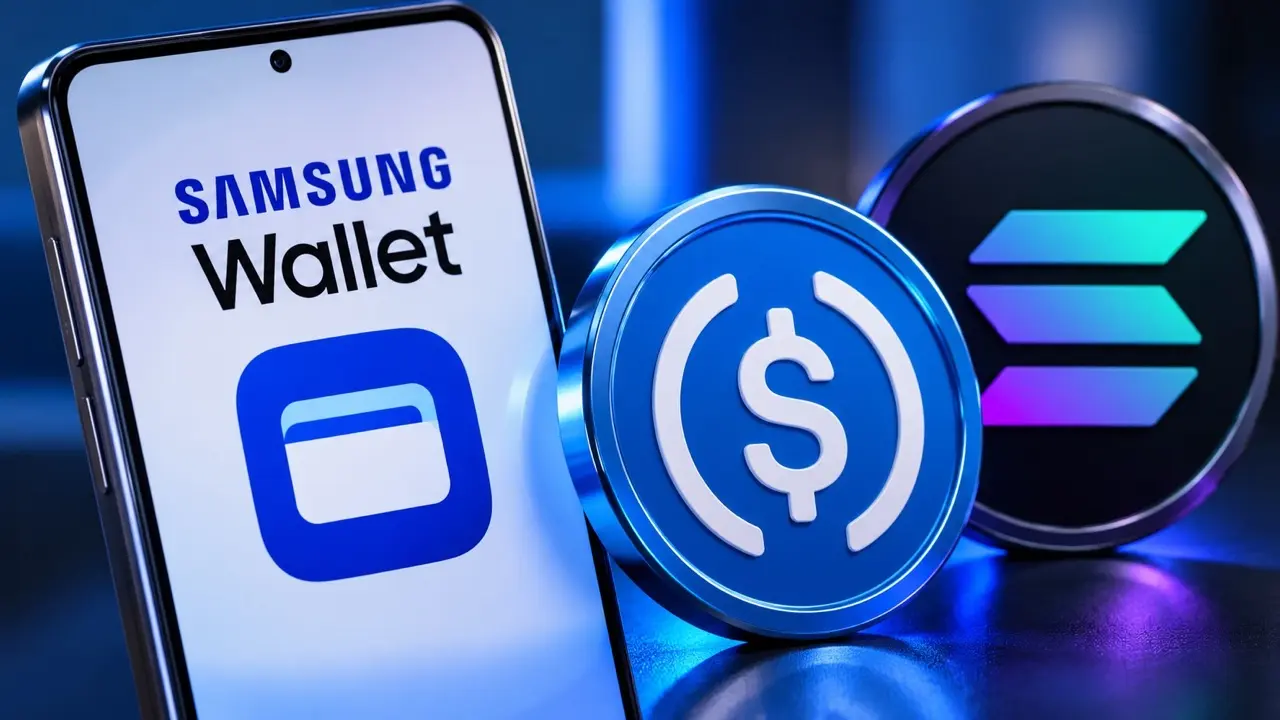
Eligible users in the United States can now buy, hold and transfer the dollar-linked stablecoin through Samsung Wallet, bringing crypto functionality closer to everyday mobile payments.
Samsung is bringing stablecoin purchases directly into its mobile wallet, giving eligible Galaxy users in the United States a way to buy USDC without relying on a separate crypto exchange app. The new Stablecoin Account in Samsung Wallet uses Stripe’s Crypto Onramp to process purchases, while specialist partners handle custody and other parts of the financial infrastructure.
The integration marks a notable step in the effort to make stablecoins easier to access through mainstream consumer technology. Instead of asking users to install a dedicated crypto wallet and navigate a separate buying process, Samsung is placing the feature inside an app many Galaxy owners already use for digital payments and other credentials.
Stripe announced on November 5 that its Crypto Onramp powers USDC purchases in Samsung Wallet. Eligible users can pay using Samsung Pay, credit or debit cards, and ACH bank transfers. Stripe says its service handles identity verification, compliance checks and fraud prevention as part of the purchase process.
What users can do with the new account
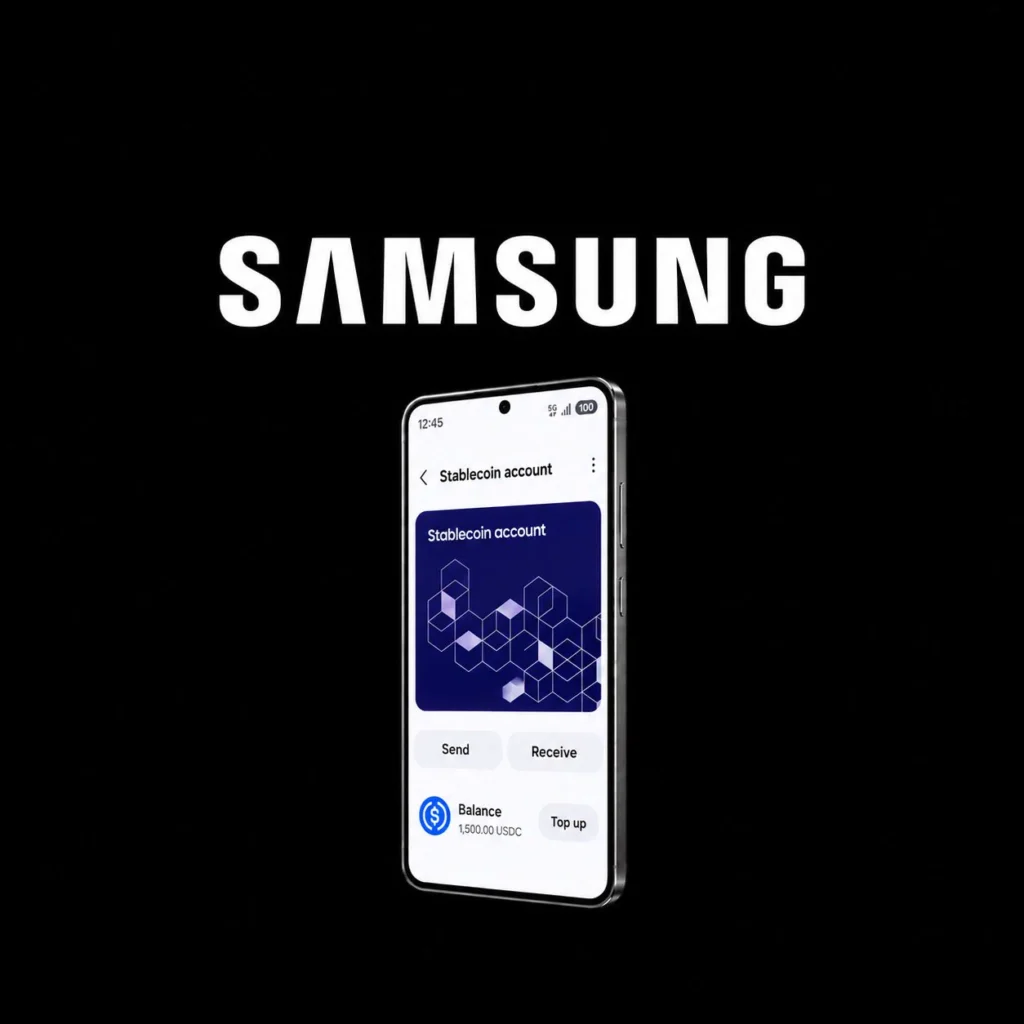
Samsung’s Stablecoin Account supports USDC, a digital token designed to maintain a value equivalent to one US dollar. Eligible users can buy, hold and send USDC through Samsung Wallet, including transfers to compatible external crypto wallets.
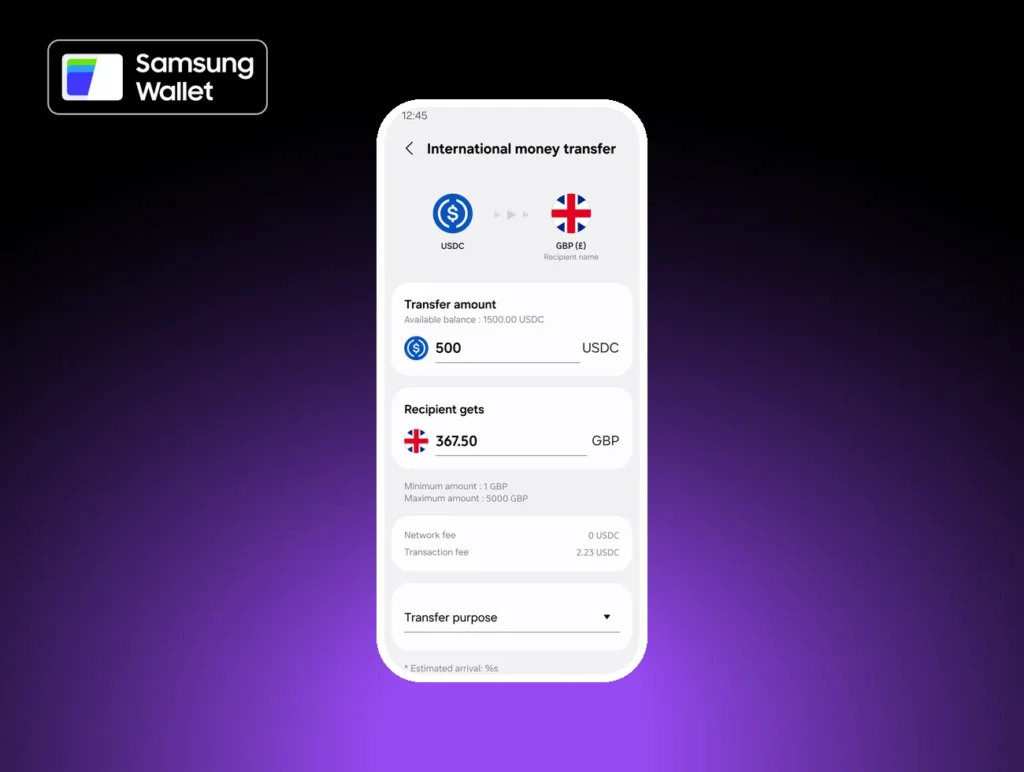
The service also supports transfers to qualifying bank accounts in more than 60 countries, where recipients may receive funds in local currency. Availability depends on the destination, the receiving bank and the conditions shown in the app. Fees can apply to international transfers, and users are shown the relevant cost and estimated delivery time before confirming.
The feature went live on November 2, according to the Solana Foundation, which says transfers settle on the Solana blockchain. Samsung and Solana had previously announced the planned integration in October.
Stripe, Bastion and Coinbase have different roles
The service is not operated by a single company. Stripe’s Crypto Onramp provides the purchase flow and associated identity and compliance checks. Samsung says its stablecoin infrastructure involves Bastion, a licensed provider, while Coinbase acts as a sub-custodian for USDC through Coinbase Prime Vault.
That division matters because a digital wallet interface does not automatically mean the technology company behind the phone is acting as a bank or holding customer assets itself. Samsung says the stablecoin account and related money movement services are provided by its regulated partners.
For users, the intended benefit is a simpler interface. For the companies involved, the arrangement combines Samsung’s reach among Galaxy owners with Stripe’s payments infrastructure and specialist crypto custody services.
A large potential audience, but a limited launch
Samsung and its partners say the feature is available across approximately 82 million compatible Galaxy devices in the United States. That figure describes the compatible device base, not the number of people who have opened an account or are actively using USDC.
Eligibility is restricted. Users must be at least 18, live in the United States, have a Samsung Account and use a compatible Galaxy device running Android 13 or later. The service is not available to New York residents.
This means the announcement should not be interpreted as a global launch. Samsung has said it may explore additional markets as regulatory conditions allow, but has not announced a launch date for other countries.
Why this matters for digital payments
Stablecoins have generally been associated with cryptocurrency exchanges, trading platforms and specialist wallets. Integrating USDC into a widely used smartphone wallet changes the distribution model: access can begin from a familiar consumer app rather than from a dedicated crypto service.
The potential use case extends beyond holding a digital asset. Samsung’s cross-border transfer feature could make it easier for eligible users to send value to compatible wallets or qualifying bank accounts abroad. However, the actual cost, speed and availability will depend on the destination, payment route and service providers involved.
The integration also highlights a broader shift in fintech. Technology companies are increasingly providing the interface through which customers access financial products, while regulated partners supply custody, compliance and money movement. That can make services easier to use, but it also makes it important for consumers to understand which company is responsible for each part of the transaction.
What happens next?
Samsung has indicated that it may explore additional stablecoin payment options, including online and in-store payments, as well as expansion into more markets subject to local regulation.
For now, the immediate test is whether users adopt the new account and whether the service can offer a reliable experience for purchases and cross-border transfers. International availability, transparent fees and the protections offered by the underlying financial partners will be central to that assessment.
The launch brings stablecoins closer to the mainstream smartphone experience, but it does not make USDC equivalent to a bank deposit or remove the risks associated with digital assets.
Key Takeaways
- Samsung Wallet’s Stablecoin Account supports buying, holding and transferring USDC.
- Stripe’s Crypto Onramp powers purchases using Samsung Pay, cards and ACH.
- Transfers settle on Solana, according to the Solana Foundation.
- Bastion and Coinbase provide custody and related infrastructure.
- Samsung says the service is available to eligible users across around 82 million compatible US Galaxy devices.
- The feature is limited to eligible US residents aged 18 or older; New York residents are excluded.
- Samsung has not announced a launch date for Albania or other additional markets.
TheTechSpot Take
Samsung’s move is important because it changes where consumers encounter stablecoins. Rather than asking people to enter the crypto ecosystem through a specialist exchange or wallet, the company is placing a dollar-linked digital asset inside an application already associated with everyday mobile services.
But convenience should not be confused with the protections of a traditional bank account. The service relies on external partners for custody and money movement, and its availability is limited by eligibility and regulation. Users also need to understand that USDC is a digital asset, not a bank deposit.
The bigger question is whether smartphone wallets will become gateways to a wider range of regulated digital financial services. Samsung has taken a step in that direction. Whether it becomes a genuinely mainstream payment option will depend on fees, reliability, consumer protections and how quickly the service can expand beyond the US.


