

Apple has launched a large-scale research project designed to understand how people use artificial intelligence for health questions. Developed with clinical AI platform OpenEvidence, the Apple Health AI Usage Study will accept up to 200,000 eligible participants in the United States and examine how users understand, trust and act on AI-generated health information.
Apple is taking a closer look at one of the fastest-growing uses of artificial intelligence: asking chatbots questions about health.
The company has introduced the Apple Health AI Usage Study, a research project built around a dedicated iPhone application that allows participants to ask everyday health questions and evaluate the answers they receive.
The initiative is being conducted in collaboration with OpenEvidence, a clinical AI platform that generates responses using medical information from established publications and peer-reviewed research.
Announced on November 15, the study is designed to investigate how people interact with conversational health AI, what makes them trust its responses and whether the technology helps them better understand medical information.
What is the Apple Health AI Usage Study?
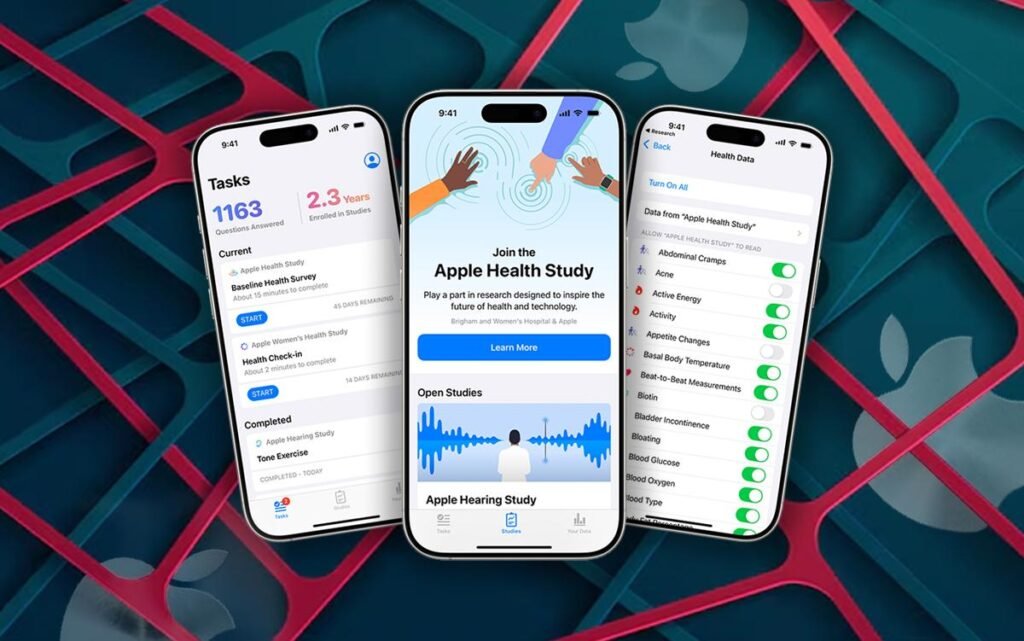
The study gives participants access to an app where they can ask questions about everyday health topics and explore more complex medical information explained in accessible language.
Responses include links to peer-reviewed clinical sources, with material drawn from publications such as The New England Journal of Medicine, the Journal of the American Medical Association and Nature.
Rather than simply measuring how many questions people ask, Apple wants to understand what happens after users receive an answer.
The research will examine several areas:
- How much users trust AI-generated health information.
- Whether people understand the answers they receive.
- How users evaluate the quality and relevance of responses.
- Whether AI helps people prepare for appointments with doctors.
- What actions users take after receiving health information.
The goal is to help Apple and the wider technology industry develop health AI experiences that are more understandable, clinically grounded and useful.
Up to 200,000 people can participate
Apple says the study is open to up to 200,000 eligible participants across the United States.
To join, participants must:
- Be at least 21 years old.
- Live in the United States.
- Own an iPhone 15 Pro or later.
- Use an Apple Intelligence-enabled device running iOS 26 or later.
Participation takes place through a dedicated study application.
The research is not being offered as a general public health service. It is a voluntary study intended to collect information about how people interact with AI-powered health tools.
The eligibility requirements also mean that the findings may not represent people who use older smartphones or do not have access to Apple’s ecosystem.
OpenEvidence provides the clinical AI technology
A central part of the project is Apple’s partnership with OpenEvidence.
The platform is designed to generate medical answers using established clinical literature rather than relying only on general internet information.
This distinction is important because health questions often require careful interpretation of medical evidence, and inaccurate or incomplete answers can lead to confusion.
The study app presents information in more accessible language and includes links to the clinical sources behind its responses.
Apple says the project will help researchers understand whether this approach improves comprehension and helps people prepare for discussions with their healthcare providers.
However, the study is not intended to establish that AI can replace doctors or independently diagnose medical conditions.
Participants can optionally share Apple Health data
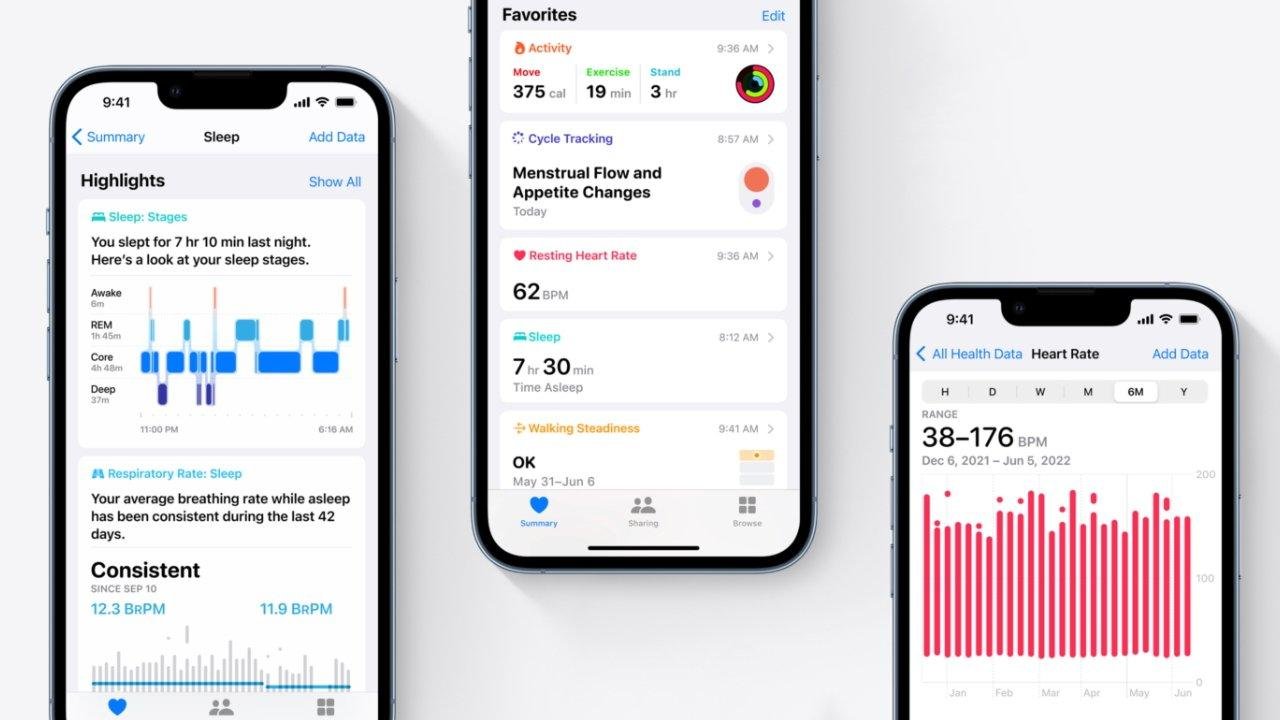
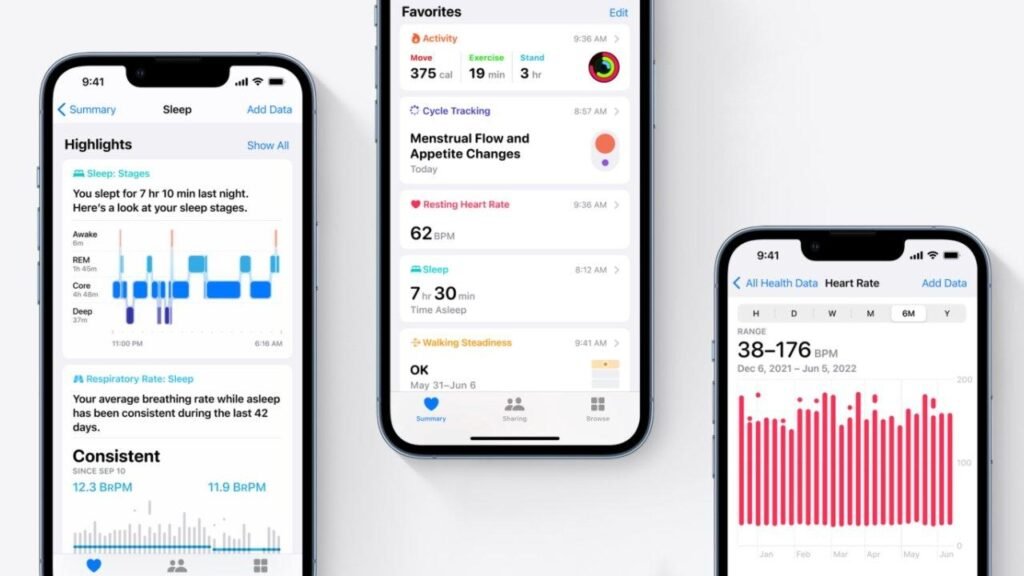
One of the more interesting aspects of the study is its optional integration with HealthKit.
Participants can choose to share information such as:
- Resting heart rate.
- Physical activity.
- Sleep information.
- Laboratory results.
The purpose is to examine whether personal health context makes AI responses more relevant and easier to understand.
For example, researchers may be able to study whether an answer is more useful when a participant voluntarily provides relevant activity or sleep information.
Sharing these metrics is optional. Participants retain control over whether they provide HealthKit information and survey responses.
Apple says study data will not train AI models

Privacy is a particularly important issue when AI applications handle health-related questions.
Apple says the study has been designed with privacy protections, transparency and clinical safeguards.
The company also states that study data will not be used to train AI models.
The application includes safeguards intended to recognise certain concerning questions and direct participants towards a healthcare professional or other appropriate resources.
These measures are important, but users should still understand the difference between a research application and a medical service.
Apple explicitly says the study app is not designed to diagnose or treat medical conditions and should not replace professional medical advice.
Why Apple is studying health AI now
Consumers are increasingly turning to AI tools to understand symptoms, interpret medical information and prepare for appointments.
Technology companies are therefore facing a new challenge: developing systems that are not only capable of producing convincing answers, but also understandable, reliable and appropriately cautious.
For Apple, the study provides an opportunity to collect real-world information about how people interact with health AI rather than relying exclusively on technical benchmarks.
The results could influence how future AI-powered health features are designed across smartphones, wearable devices and digital health services.
The project may also help highlight where AI explanations are confusing, where users place too much confidence in automated responses and when professional medical support remains essential.
What happens next?
Apple has not provided a public results timetable in its announcement.
The most important outcome will be whether the study can provide meaningful evidence about how people understand and use AI-generated health information in everyday life.
A large number of participants could provide valuable insight, but participation alone does not prove that AI improves medical outcomes.
The study will need to demonstrate that users understand the information they receive and can use it appropriately when making decisions about their health.


