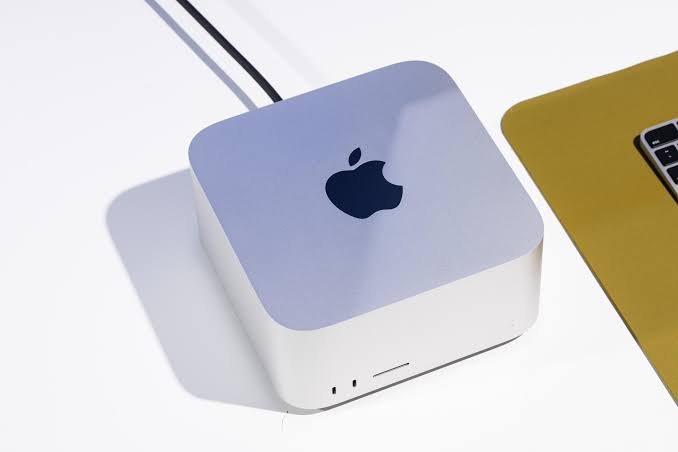
Apple is selling more than a faster Mac
On September 22, Apple began selling its new Mac mini and Mac Studio desktops.
At first glance, it looks like a normal hardware refresh.
But Apple’s message this time is much broader:
AI does not always need to run in a data center. It can increasingly run on the computer sitting on your desk.
The new Mac Studio with M5 Ultra can be configured with up to 512GB of unified memory, and Apple says it can run very large language models entirely on the device.
Reuters reports that Apple is also pitching these systems to corporate customers as an alternative to some recurring cloud AI costs.
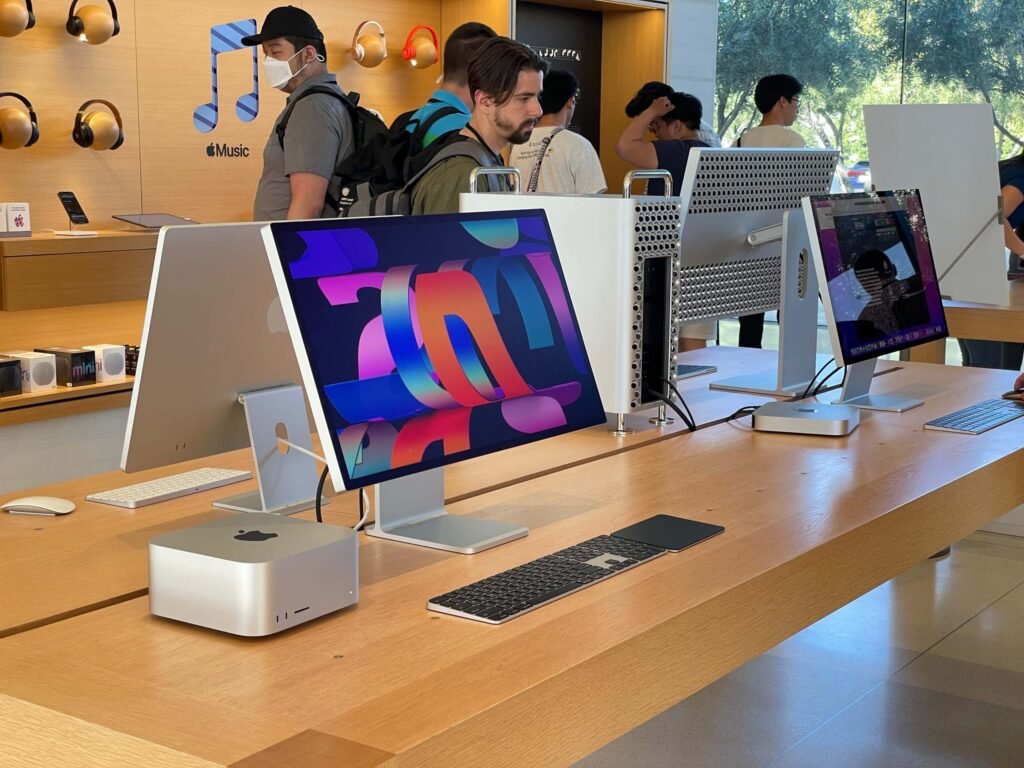
512GB of unified memory is the key specification
The most interesting specification is not simply the processor.
It is memory.
Mac Studio with M5 Ultra supports up to 512GB of unified memory and up to 1.2TB/s of memory bandwidth, according to Apple.
In Apple’s unified-memory architecture, CPU and GPU components share the same memory pool.
That matters for AI.
Large language models can require huge amounts of memory simply to hold model parameters and the data structures needed during inference.
Apple’s approach attempts to reduce some of the overhead involved in moving data between separate memory pools.
Apple says huge models can run locally
Apple positions M5 Ultra as a platform for frontier-class AI models and says very large models can run entirely on the device.
That does not mean every large AI model can simply be downloaded and run without configuration.
Real-world performance depends on:
- model size;
- quantization;
- software;
- optimization;
- available memory;
- inference speed;
- and the model’s architecture.
But the direction is clear.
Apple is treating the desktop as an AI computer, not simply a computer that happens to run AI applications.
Four Mac Studios can work as a cluster
This is where the strategy becomes more interesting.
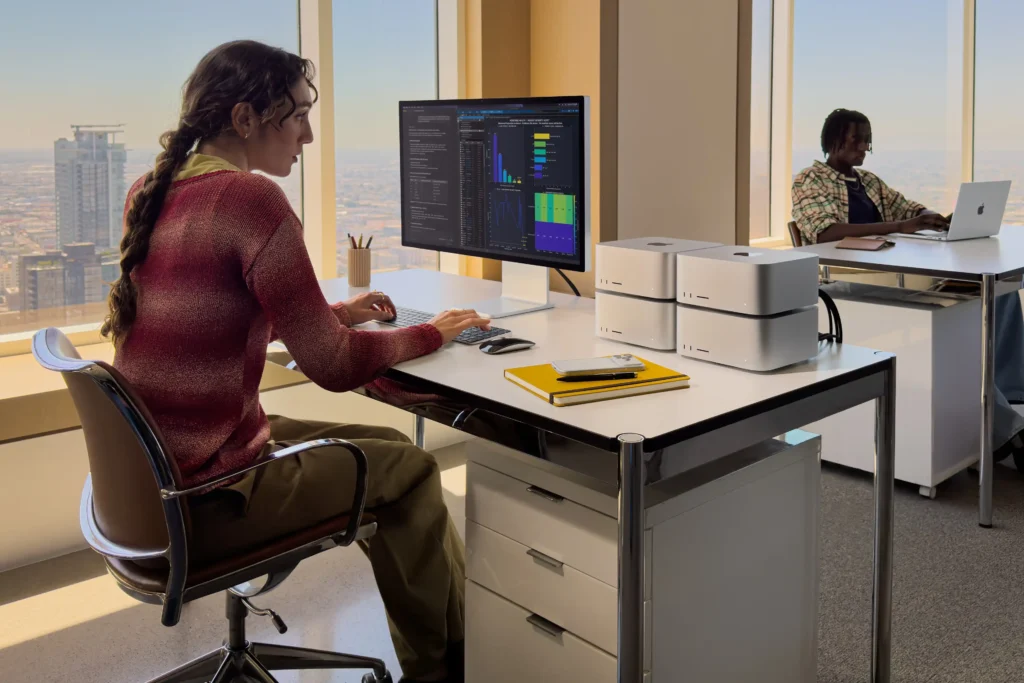
Apple supports Thunderbolt 5 and RDMA — Remote Direct Memory Access to connect multiple Mac Studio systems into a cluster.
Apple says a four-Mac-Studio cluster can deliver up to 3x the performance of a single system for distributed AI inference.
That creates an interesting possibility.
Instead of immediately buying a large dedicated AI server, a smaller team could gradually build a local AI cluster from desktop systems.
That does not make Mac Studio a direct replacement for large GPU clusters.
But for:
- AI research;
- startups;
- developers;
- universities;
- small teams;
- prototyping;
it could become a useful alternative.
Why is Apple talking about cloud costs?
Cloud AI has a different economic model.
When using an API, customers often pay according to usage.
More tokens and more inference generally mean a larger bill.
Apple is proposing a different model:
buy the hardware → pay for electricity → use the machine.
Reuters reports that this is part of Apple’s pitch to corporate customers.
But there is an important caveat.
This does not mean Mac Studio is always cheaper than cloud computing.
A realistic comparison must include:
- hardware cost;
- electricity;
- maintenance;
- staff;
- software;
- utilization;
- hardware refresh cycles;
- and the actual workload.
If a system is used only occasionally, cloud infrastructure may remain attractive.
If it runs AI workloads continuously, the economics can look very different.
The price tells you who Apple is targeting
Mac Studio with M5 Max starts at $2,499.
M5 Ultra starts at $5,499.
This is not mainstream consumer hardware.
Apple is targeting:
developers, AI researchers, creative professionals, data scientists and businesses.
And high-end configurations can cost considerably more.
Reuters reported configurations reaching roughly $20,000, putting some systems into a completely different class from conventional desktop computers.
Mac mini is the other side of the strategy
At the same time, Apple has launched the new Mac mini with M6 and M5 Pro.
That matters because it brings the same broader architecture into a much smaller desktop form factor.
Apple positions Mac mini for everyone from students and everyday users to developers, creatives and small businesses.
The result is a two-level strategy:
Mac mini → accessible local computing and AI
Mac Studio → professional AI and very large models
That gives Apple a way to extend the same Apple Silicon philosophy across different levels of computing.
Why does local AI matter?
There are three major reasons.
1. Privacy
When a model runs locally, data does not necessarily have to leave the device.
Apple explicitly highlights local processing as a privacy advantage.
For companies working with:
- confidential documents;
- source code;
- customer information;
- research;
- financial data;
that can be significant.
2. Latency
Local inference does not require every request to travel to a remote server and return.
For some workloads, that can reduce response latency.
3. Predictable infrastructure costs
A local system requires significant upfront investment, but its usage does not necessarily generate the same per-token bill associated with cloud APIs.
Cloud AI is not going away
This is the critical point.
Local AI will not automatically replace cloud AI.
The largest models, large-scale training and workloads requiring thousands of accelerators still require massive data-center infrastructure.
That is why Nvidia, Microsoft, Google, Amazon and others continue investing heavily in AI data centers.
Apple is targeting a different part of the market:
AI inference closer to the user.
A major shift for developers
Apple is also building the software layer needed for this strategy.
Core AI is a new framework for building, running and deploying models on Apple Silicon.
Meanwhile, MLX is Apple’s open-source machine-learning framework optimized for Apple Silicon.
That matters because powerful hardware alone does not create an AI platform.
Apple is trying to control both sides:
the chip + the developer framework.
What is changing in AI computing?
For years, the dominant architecture looked like this:
GPU → data center → cloud → user.
A second architecture is now emerging:
AI model → PC/workstation → user.
The first model is not disappearing.
But local inference is becoming a serious parallel market.
Apple is betting heavily on it.
What should we watch next?
The real test is not the specification sheet.
It is how well real AI models perform in real workloads.
The important measurements will include:
- which models can run fully offline;
- tokens per second;
- energy consumption;
- cluster performance;
- cost per inference hour;
- and how the economics compare with cloud services.
Those numbers will tell us whether Apple’s strategy is simply another hardware upgrade or part of a larger change in AI computing.
The new Mac Studio is interesting not simply because it is faster.
It is interesting because Apple is placing local AI at the center of its desktop strategy.
With up to 512GB of unified memory, 1.2TB/s bandwidth, M5 Ultra, Thunderbolt 5 and multi-system clustering, Apple is trying to move increasingly large AI workloads from the data center to the user’s desk.
But this is not the end of cloud AI.
It is the beginning of a new question:
Will the AI of the future mostly live in the cloud — or increasingly live on the device next to us?
That battle has just begun.
Editorial verification note: Specifications, prices, memory capacities, clustering capabilities and performance claims were checked against Apple’s official materials. The cloud-versus-local economic discussion is editorial analysis and is not a universal cost conclusion for every workload.