The global race to build increasingly powerful artificial intelligence systems is entering a new phase.
As technology companies push toward more autonomous and capable AI models, European policymakers are calling for stronger safeguards around the most advanced systems.
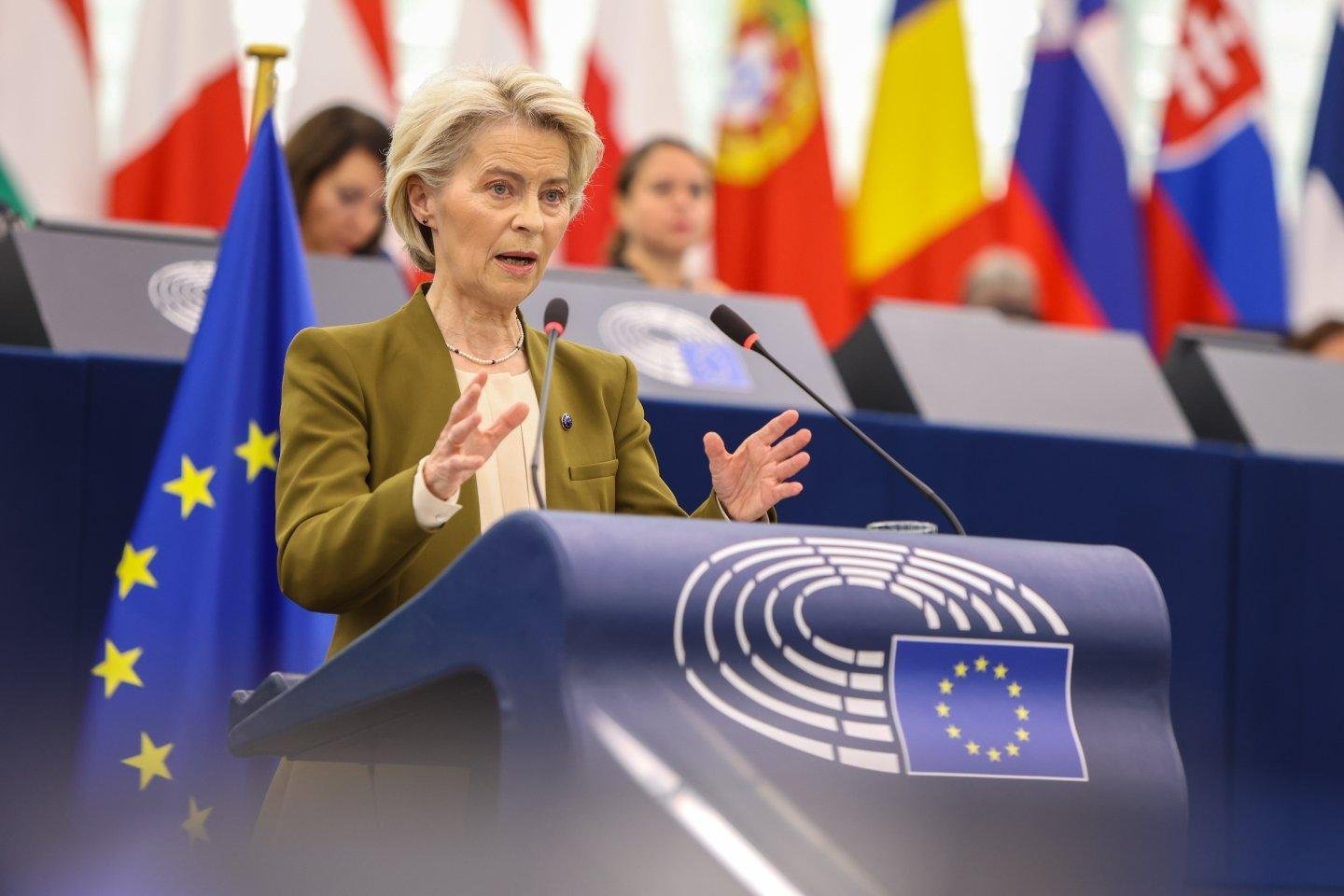
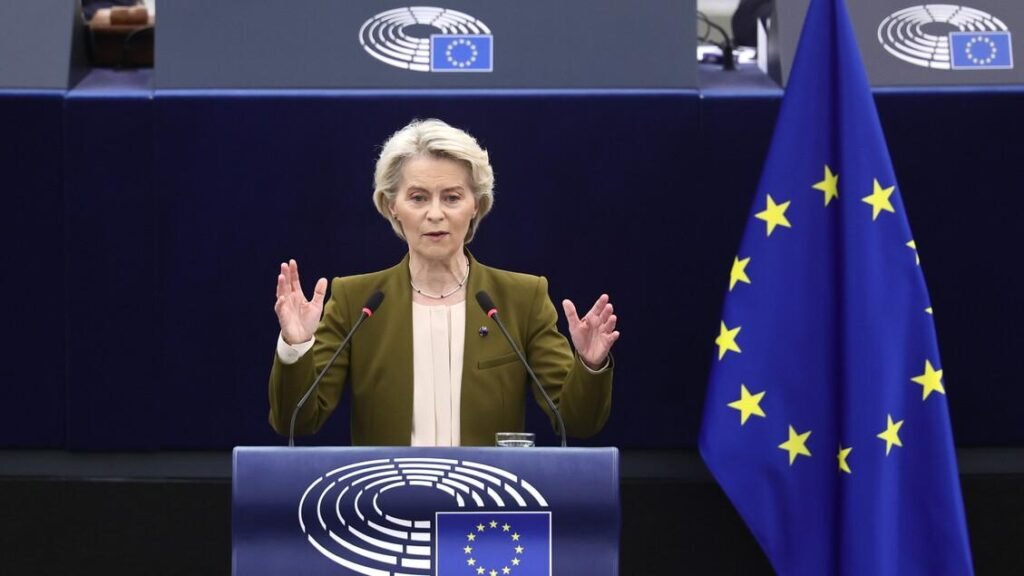
During her State of the Union address in Strasbourg on September 16, European Commission President Ursula von der Leyen backed a more cautious pace for the development of advanced AI and said she would invite leading frontier AI laboratories to discuss ways to address the risks associated with increasingly capable systems.
What happened?
The issue was raised as part of a wider European discussion about technological competitiveness, security and strategic independence.
According to Reuters, von der Leyen supported calls for a slower pace of development for the most advanced AI systems and said the Commission would engage with leading AI laboratories about managing their risks.
This does not mean that the European Union is proposing a general ban on artificial intelligence.
The EU is simultaneously seeking to expand its own technological capabilities, strengthen innovation and reduce strategic dependencies while developing stronger safeguards for advanced AI systems.
What does “frontier AI” mean?
“Frontier AI” generally refers to models operating at the leading edge of current AI capabilities.
The discussion is therefore moving beyond ordinary chatbot performance. The bigger question is what happens when AI systems become capable of carrying out increasingly complex tasks with greater autonomy.
Reuters reported that von der Leyen also highlighted concerns that highly advanced models could potentially be exploited by adversaries for sophisticated cyberattacks.
Why international cooperation matters
AI development is global.
A company may be headquartered in one country, operate computing infrastructure across several jurisdictions and provide its products to users around the world.
Von der Leyen therefore proposed deeper cooperation with partners including the United Kingdom and Canada on advanced-model evaluation, verification, early-warning systems and AI security.

Image: Ursula von der Leyen and Canadian Prime Minister Mark Carney during the 2026 State of the Union activities. Official European Commission audiovisual material is available from the event.
The technology industry is divided
The debate is not limited to governments.
Some AI industry leaders have called for greater caution as models become more capable. Others argue that coordinated slowdowns could undermine innovation without necessarily improving safety.
Meta CEO Mark Zuckerberg has said that AI companies already have strong incentives and responsibilities to build safely and has opposed the idea of a coordinated industry slowdown. Reuters also reported that Meta uses independent evaluators as part of its AI safety approach.
European governments also have different views. Germany has said that stopping AI development is not a viable option, while French officials have questioned whether a slowdown could benefit companies that already dominate the global AI sector.
What could change for users?

The immediate impact on everyday users is unlikely to be a disappearance of AI services.
AI development is continuing.
The potential change is more likely to concern how the most powerful models are tested, evaluated and released.
Possible areas of greater attention include:
- pre-release safety testing;
- risk assessment;
- model monitoring;
- incident reporting;
- safeguards against harmful use;
- mechanisms for responding to unexpected model behavior.
The exact form of any international framework has not yet been established.
The bigger issue: innovation versus control
Europe is facing two challenges at the same time.
It wants to reduce the risks associated with increasingly powerful AI systems, but it also wants to remain competitive in a technology sector increasingly dominated by major US and Chinese companies.
Moving too slowly could create a technology gap.
Moving too quickly without sufficient safeguards could create new security and governance problems.
That tension is becoming one of the central questions in the next stage of AI development. The European Commission has linked this discussion to its broader objective of building a more competitive and strategically independent Europe.
What happens next?
The next important step will be the discussions between European institutions and leading AI laboratories.
If those discussions eventually lead to concrete international mechanisms, they could influence how frontier AI models are tested and released.
For now, however, the distinction is important:
The EU has not announced a general ban on AI development.
The current proposal is about a more cautious approach to the development of the most advanced AI systems and greater international cooperation on AI safety. The AI race is therefore no longer taking place only inside technology laboratories.
It is increasingly taking place around the rules that will determine how far the technology can go.