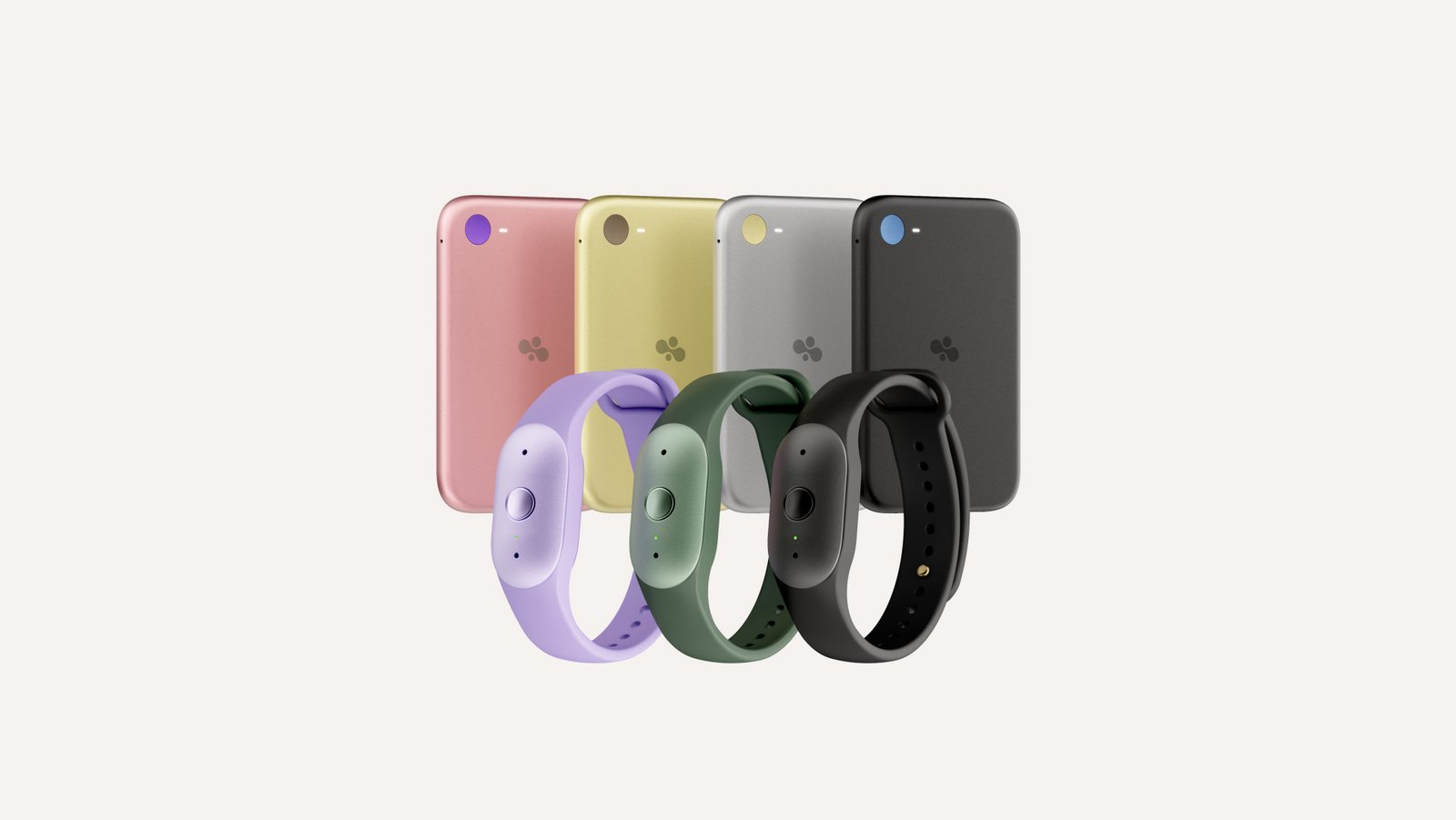
Amazon has introduced a $74.99 wearable and a $99.99 magnetic smartphone accessory designed to turn everyday conversations into summaries, reminders and actionable tasks. The products also raise important questions about privacy and the handling of recorded conversations.
Amazon is expanding its presence in personal artificial intelligence hardware. On October 15, 2026, the company unveiled two new products under its Bee brand: Bee Frontier, a device that can be worn on the wrist or clipped to clothing, and Bee Eclipse, a compact accessory that attaches magnetically to the back of a smartphone.
Both products are designed to help users retain useful information from everyday conversations. The system can generate summaries, identify tasks and help organize calendars, emails and reminders.
Bee Frontier is priced at $74.99, while Bee Eclipse will start at $99.99. Amazon also announced Bee Pro, a subscription priced at $11.99 per month that unlocks additional features and integrations with the company’s services.
The announcement marks a new stage for Bee following Amazon’s acquisition of the startup in 2025. It also reflects a broader direction in personal AI hardware: moving beyond devices that answer questions toward assistants that capture context from daily activities and turn it into practical actions.
Bee Frontier: a personal assistant you can wear
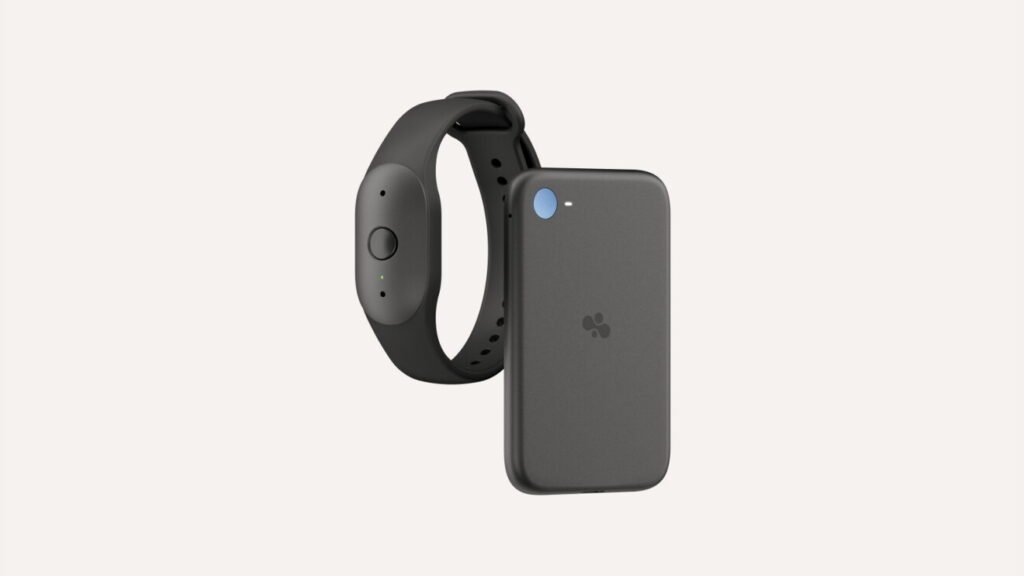
Bee Frontier is the next generation of the company’s wearable device. It can be worn as a wristband or clipped to clothing, offering an option for people who want to capture notes without constantly reaching for their phones.
The device features dual microphones with advanced noise filtering, USB-C charging and an IP67 rating for water and dust resistance. Amazon claims up to seven days of battery life, although actual results may vary with usage and recording frequency.
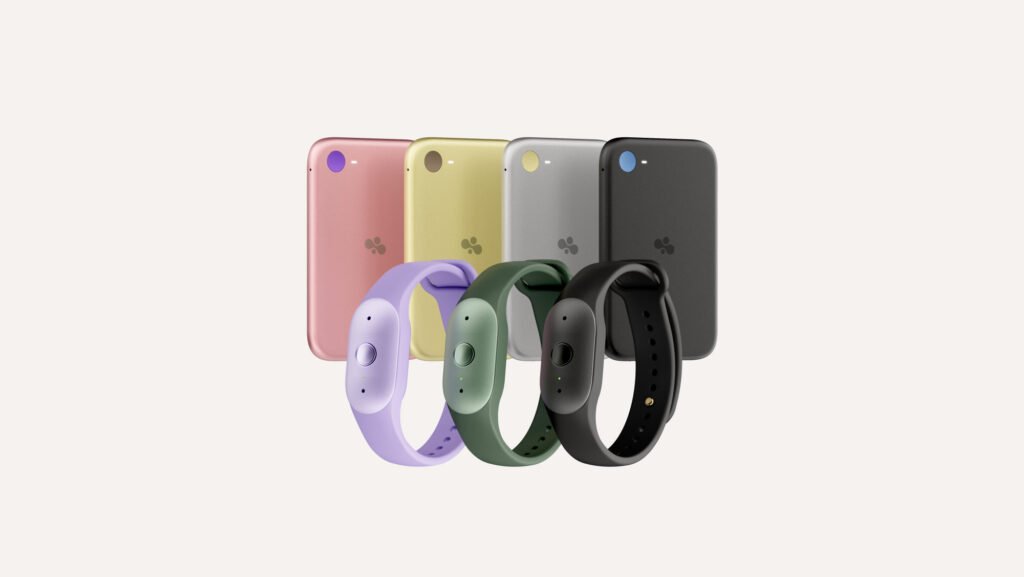
Bee Frontier will be available in Onyx, Lavender and Sage. A physical button controls the device, while an indicator light signals when it is processing a conversation.
The idea is straightforward: instead of manually writing down every detail during a meeting or conversation, users can rely on the device to produce a summary they can review later.
For example, if a colleague discusses an upcoming meeting and mentions a date, time and tasks, Bee may extract the key points and turn them into reminders or action items. The results depend on what the device captures and interprets accurately, so users should check the details before relying on an automated reminder.
Bee Eclipse: a compact accessory for your smartphone
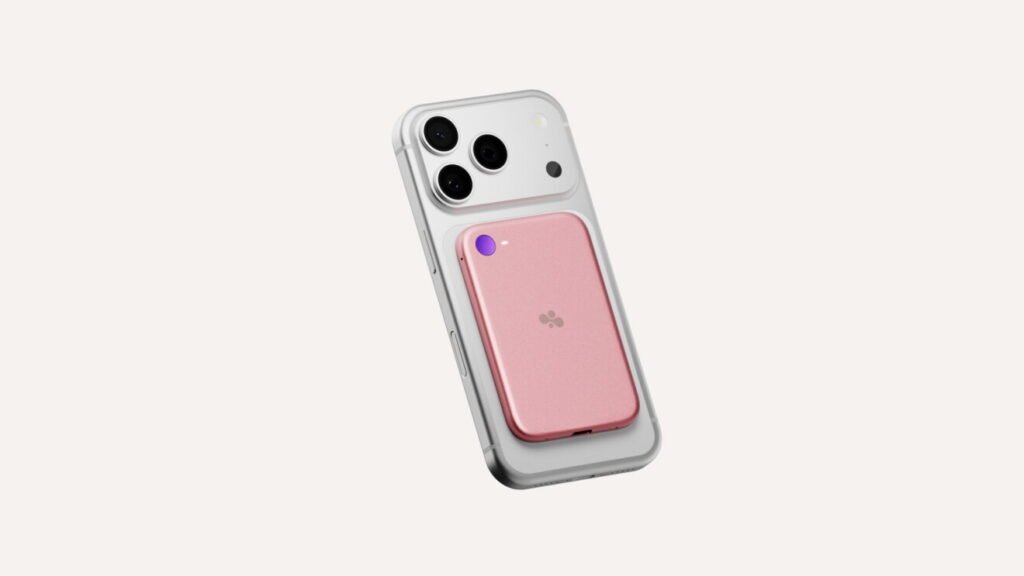
The second product, Bee Eclipse, takes a different approach. It is roughly the size of a credit card and attaches magnetically to the back of a smartphone.
The design targets people who do not want to wear an additional wristband. The device stays close to the phone and can be activated when the user wants to capture information from a conversation.
Amazon claims more than 21 days of battery life for Bee Eclipse on a single charge. It will be offered in Silver, Midnight, Honey and Blush, with a starting price of $99.99.
Comparisons with other AI note-taking devices, including products from Plaud, are inevitable. The market is developing tools that record conversations and turn them into organized documents, summaries and task lists. Amazon is entering the category with a relatively low entry price for the hardware, although the cost of using some features must be considered alongside the subscription.
One important distinction is that Bee is not positioned solely as an audio transcription device. Amazon describes it as an assistant that can identify useful information and connect it to calendars, email and tasks. Its performance in real-world situations still needs to be assessed through practical testing rather than relying exclusively on manufacturer demonstrations.
What can Bee’s AI do?
According to Amazon, Bee devices can generate conversation summaries, reminders and task lists. The service may be useful during work meetings, lectures, personal planning and conversations involving dates or actions that need to be remembered.
If a user discusses travel plans, for instance, Bee may help summarize decisions and identify follow-up items. During a work meeting, it may help extract tasks and deadlines. In a personal conversation, it may preserve information the user wants to remember.
These capabilities should not be confused with a system that understands every conversation perfectly. Speech recognition can be affected by background noise, overlapping speakers, accents, technical vocabulary and ambiguous context. Even a fluent summary can omit a detail or draw an incorrect conclusion.
Users should therefore review information generated from conversations before sending emails, creating calendar events or acting on important tasks.
Gmail, calendars and Alexa+ integrations
A major part of the announcement is the connection to everyday applications. Bee can integrate with Gmail, Google Calendar and Microsoft Outlook to help draft emails, organize meetings and identify action items from conversations.
Amazon is also connecting Bee with Amazon.com and Alexa+. Users who enable the relevant integrations can use information stored by Bee to obtain summaries or reminders through Alexa and access shopping-related features.
This moves the product beyond the role of a simple audio recorder. In theory, it can act as a personal organizational layer connecting conversations with calendars, messages and tasks. In practice, its value will depend on integration quality, requested permissions and how reliably it handles errors.
Users should review which accounts they connect and what permissions they grant. Email and calendar integrations can be useful, but they also expand the amount of personal information the assistant may process.
Hardware pricing and the Bee Pro subscription
Amazon separates basic features from those included with Bee Pro.
According to the company, all users receive conversation summaries and recaps, along with 14 days of memory at no additional cost. Bee Pro costs $11.99 per month and adds unlimited conversation summaries, integrations with Amazon.com, Alexa+ and third-party applications, suggested tasks, daily memories, a personal chat assistant and conversation templates.
The subscription also includes the Bee desktop application. Amazon says new Bee customers receive a 30-day Bee Pro trial.
This structure means that the hardware price does not represent the full potential cost of ownership. Someone who needs occasional summaries may be satisfied with the basic features, while a user seeking extensive integrations and continuous assistance may want the subscription.
At the announced price, one year of Bee Pro costs $143.88 if paid monthly without a price change. Bee Frontier plus 12 months of subscription would therefore total $218.87, while Bee Eclipse plus the same subscription would total $243.87, excluding taxes and possible promotions. These calculations use the announced prices and are not final retail totals for every market.
Before buying, consumers should compare the full cost with alternatives and check which features remain available without a subscription.
Privacy: what happens to recorded conversations?
Devices that process conversations raise an essential question: how is information protected when it may contain personal, business or health-related details?
Amazon says Bee processes audio in real time and deletes it afterward rather than storing raw recordings. The company says transcripts are encrypted with keys created and controlled by the user’s device. It also says users can delete their transcripts and summaries.
These are meaningful safeguards if implemented as described, but they do not remove the need to review the privacy policy, terms of service and behavior of third-party integrations. Summaries and transcripts can themselves contain sensitive information, even if the original audio is not retained.
Users should also understand what happens when they connect Bee to other services. Information may be handled under the terms of those services as well as Bee’s own policies.
An indicator light signals when the device is processing a conversation, and Amazon says users should obtain permission from call participants whenever recording begins. In practice, users should inform everyone involved and comply with local laws governing conversation recording.
For example, users should not assume they can activate the device in every business meeting, medical consultation or private conversation without notifying others. Recording laws vary by jurisdiction and may require consent from one or all participants.
Is Bee for everyone?

Not necessarily. The devices may benefit people with frequent meetings, students organizing notes, professionals tracking multiple tasks or anyone who wants to retain details from conversations.
Others may be uncomfortable carrying a device that can process conversations throughout the day. Some users may prefer manual notes or built-in smartphone features rather than buying another piece of hardware.
For organizations, the issue is more complex. Meetings may contain trade secrets, customer data or information governed by internal policies. Before deploying such devices, companies should assess security, data management and compliance requirements.
Availability is another consideration. Bee Frontier has been announced through Amazon.com, while Bee Eclipse is expected to follow. Availability in other countries, including European markets, should be checked separately; the announcement does not guarantee immediate sales in every region.
What does this mean for the AI hardware market?
The personal AI hardware market is looking for ways to make technology useful beyond the smartphone screen. Some products focus on recording and transcription, while others emphasize voice commands or activity summaries. Bee attempts to connect these capabilities with tasks, calendars and everyday services.
Amazon has a potential advantage through its ecosystem: Alexa, online shopping and digital services may enable more integrated experiences. But that advantage depends on user trust and whether the new features solve real problems rather than simply appearing impressive in demonstrations.
The relatively low starting price could make Bee more attractive than some competing devices. However, the monthly subscription and privacy concerns will influence buying decisions. The product must demonstrate that it can save time and organize information reliably.
TheTechSpot Take
Bee Frontier and Bee Eclipse point toward a clear direction for AI devices: less time spent writing notes and more automation of everyday tasks. If summaries are accurate and integrations work well, such devices could help professionals and students manage information more efficiently.
But convenience should not come at the expense of privacy. A device that processes conversations needs to be transparent about activation, data retention and deletion. Users must also obtain appropriate consent from others and review summaries before relying on them.
The buying decision should not be based solely on the $74.99 entry price. Subscription costs, local availability, integrations and data protection are equally important. For now, Bee is an interesting proposition for personal organization, but its long-term value will depend on real-world performance and the trust it earns.