The new Preview release brings a redesigned interface and Linux support. But Epic warns that the app is still in development and lacks some features found in the existing client.
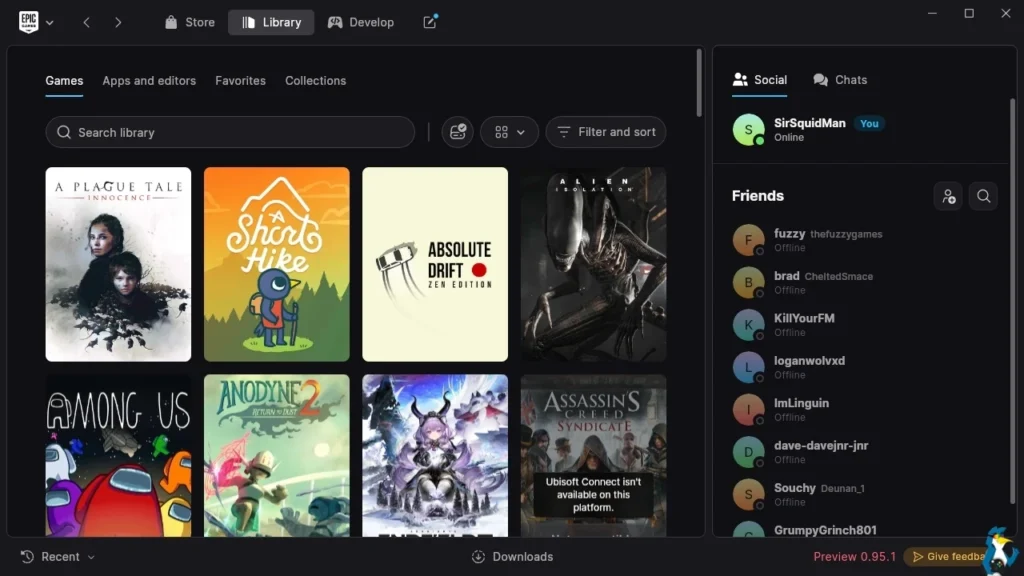
Epic Games has released a redesigned Preview version of the Epic Games Launcher, the application used to purchase, download and organize games from the Epic Games Store. The company says the new client was built with the help of artificial intelligence and is designed to be substantially faster and more responsive than its current launcher.
The announcement was published on October 14, 2026. The Preview is available for Windows, macOS and, for the first time, Linux. Epic describes the release as an early version with fewer features than a finished application.
Epic claims a 46% faster startup than Steam
According to figures published by Epic, the new launcher takes about 5.47 seconds to move from a cold start to the store page, compared with 10.07 seconds for Steam. That represents a startup time roughly 46% shorter in the company’s testing.
Epic says the measurements were conducted by external company Keywords Studios across five tests on 13 Windows configurations. However, the results were published by Epic and should not be treated as a definitive performance assessment for every computer.
A faster startup also does not automatically mean the entire service is better than Steam. The platforms differ in features, integrations, community tools and game management. Startup time measures only one part of the user experience.
What is changing?
Epic has redesigned the application’s interface and structure to help users move more quickly between their game library and the store. The new version also includes social features and options to customize the top bar.
The company is working toward feature parity with its existing client, but the Preview does not yet include everything. Epic has advised some users—including competitive Fortnite and Rocket League players and developers working with Unreal Engine—to continue using the current launcher for now.
That warning matters: the new release is intended for testing and feedback, not necessarily as an immediate replacement for everyone.
AI-assisted software development
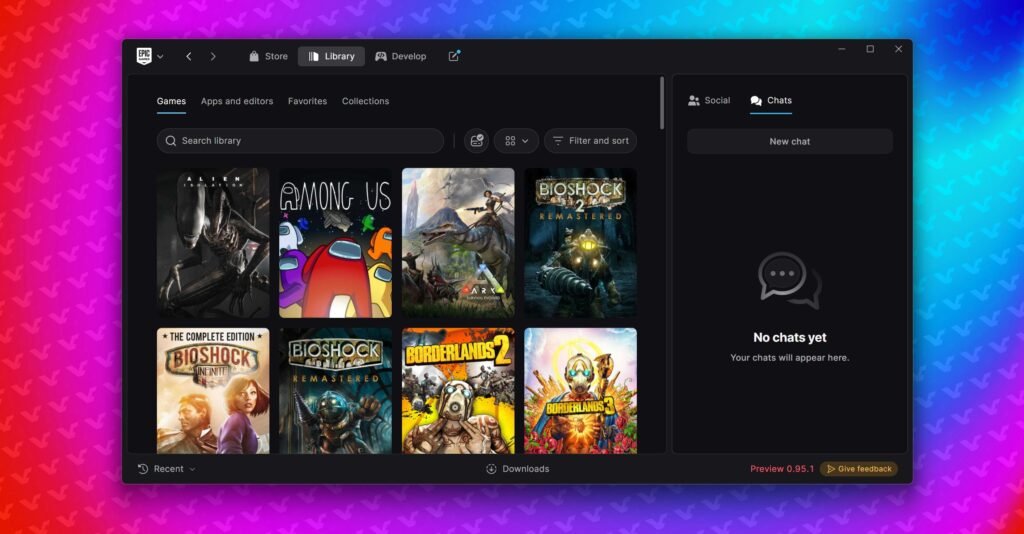
Epic has described the development process as “vibe coding,” an approach in which AI tools help generate code and build features from natural-language instructions.
That does not necessarily mean the application was created without human developers. AI-assisted software development can involve code generation, testing, debugging and engineering oversight. There is not yet enough public information to establish exactly how much of the work was performed by AI and how much by people.
Still, the release provides a concrete example of Epic applying AI to its own software development. The final result will depend not just on speed, but also on stability, security, maintainability and update quality.
What Linux support means
Native Linux support is one of the most significant additions in this release. Users on supported distributions can test the application, expanding the options available to people who game on Linux PCs.
However, this does not mean every game in the Epic Games Store now works on Linux. Compatibility depends on each title, its technology and the anti-cheat systems it uses.
Epic has also said it is working to bring Fortnite to Linux and developing an updated version of Easy Anti-Cheat for the platform. At the time of the announcement, Fortnite was not yet available on Linux through this release.
Can it replace Steam?
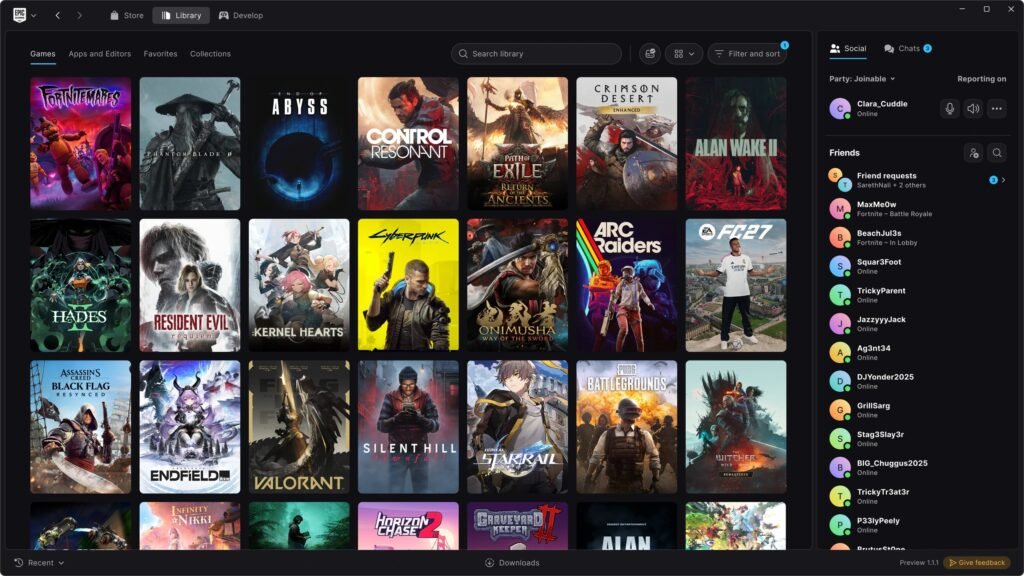
There is not enough evidence to say the new launcher can seriously challenge Steam across every category. Steam has a broad range of features, community tools and integrations that startup-speed tests do not measure.
Epic is attempting to address one of the familiar criticisms of its client: responsiveness. If the new version becomes more stable and restores the necessary features, it could improve the experience for users who already buy or claim games through the Epic Games Store.
For now, the Preview should be treated as a work in progress rather than a confirmed victory over Steam.
TheTechSpot Take
The most interesting part of this release is not just the claim of a 46% faster startup. It is the combination of a rebuilt application, AI-assisted development and native Linux support.
Performance claims are useful only when the comparison conditions are clear and equivalent. A client with fewer features may start faster, but users also care about their libraries, stability, download management and social tools.
For most users, the sensible move is to wait for early feedback and updates to the Preview. For Linux gamers, this is a development worth watching, but it does not guarantee compatibility with every game.
Epic has delivered a new version and published promising figures. Its everyday performance—and its ability to compete with Steam—will need to be established through further testing and development.