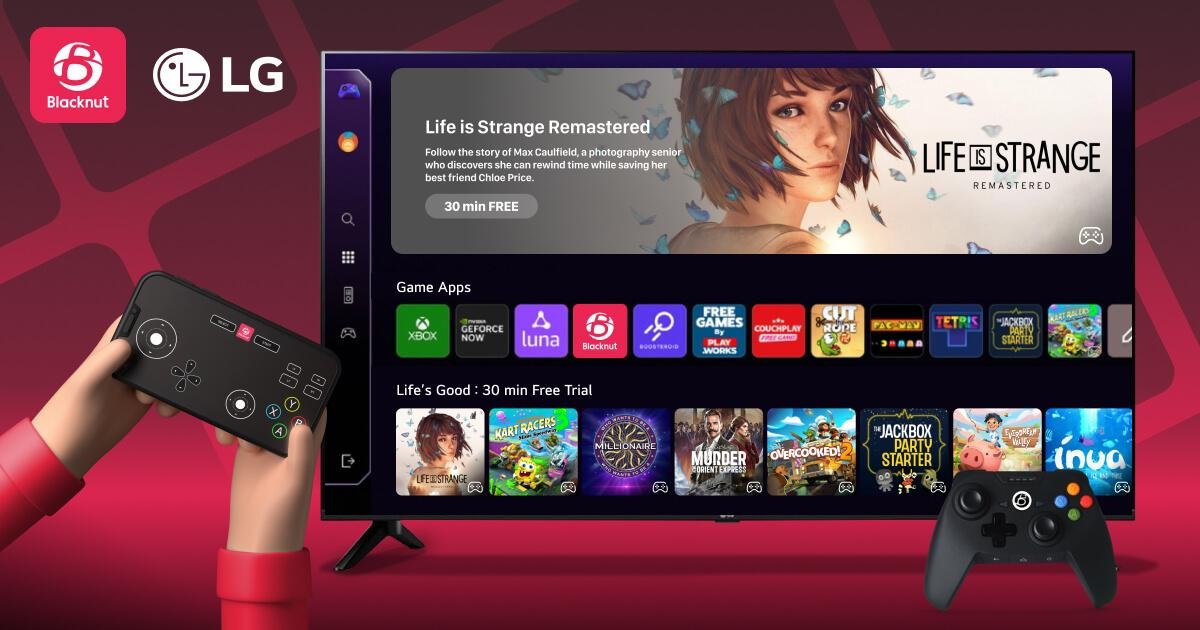
Cloud gaming is entering a new phase as Blacknut secures up to $215 million in strategic backing from Digital Alpha, aiming to expand its game library, infrastructure and global reach. The move could accelerate the shift from traditional gaming hardware toward games streamed directly from the cloud.
By TheTechSpot Digital | August 18, 2026
For decades, playing a high-quality video game meant owning powerful hardware.
You needed a PlayStation, Xbox, Nintendo console or gaming PC capable of running the latest titles.
That model may be slowly changing.
Cloud gaming has been promising to transform the industry for years, but the technology has faced a major challenge: delivering console-quality games over an internet connection without noticeable lag.
Now, one of the industry’s cloud gaming companies is making a major push to solve that problem.
Blacknut has secured up to $215 million in strategic investment from Digital Alpha, with the funding intended to support infrastructure, content expansion, product development and international growth. Blacknut says it currently serves more than three million subscribers across more than 65 countries.
The investment represents a major vote of confidence in cloud gaming — and could help push the technology closer to mainstream adoption.

Gaming Without the Console
The basic idea behind cloud gaming is surprisingly simple.
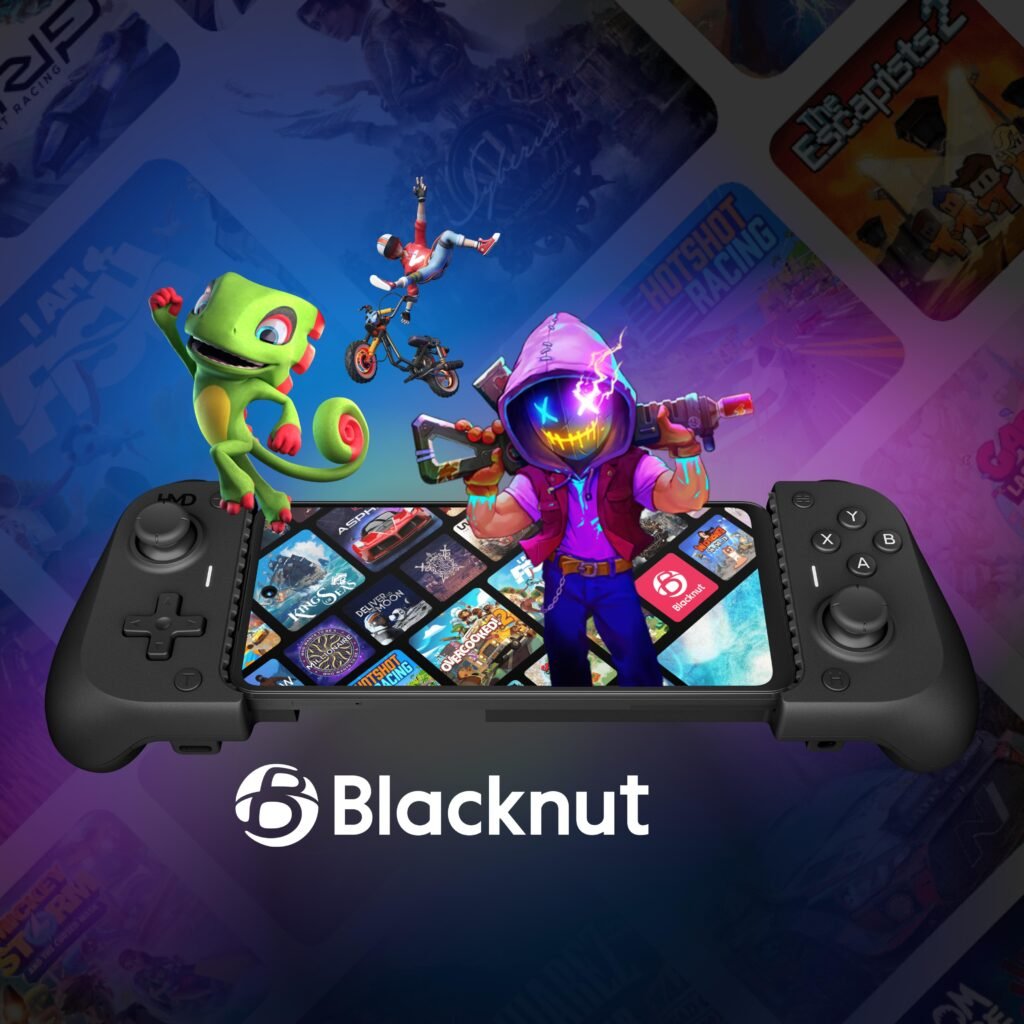
Instead of installing a game on your device, the game runs on powerful servers inside a data center.
Your phone, smart TV, laptop or other device simply receives the video stream.
Your controller inputs are sent back to the server.
The process is similar to streaming a movie, except the system has to respond to your actions in real time.
That makes cloud gaming considerably more technically demanding than Netflix or YouTube.
A movie can buffer for a few seconds.
A competitive video game cannot.
If there is too much delay between pressing a button and seeing the result on screen, the experience immediately becomes frustrating.
Why the $215 Million Investment Matters
Digital Alpha’s investment is significant because it is aimed not just at developing software, but at expanding the infrastructure behind cloud gaming.
The deal provides up to $215 million for Blacknut’s growth strategy, including product development, content, infrastructure and international expansion.
That is important because infrastructure is one of the biggest challenges facing cloud gaming.
To deliver games smoothly, providers need powerful computing hardware located relatively close to players.
They also need high-bandwidth networks and extremely low latency.
As more people play simultaneously, the infrastructure requirements become enormous.
Blacknut Is Building a Different Gaming Model
Blacknut operates differently from traditional console manufacturers.
Instead of asking consumers to buy a dedicated gaming machine, the company provides access to games through a subscription-based cloud service.
The platform says its catalog contains more than 1,000 games, with access available across devices including smartphones, set-top boxes and Smart TVs.
That means a television does not necessarily need to be connected to a PlayStation or Xbox.
A compatible device and internet connection could potentially be enough.
The same concept can work with laptops and mobile devices.
This is one of the biggest attractions of cloud gaming.

The Smart TV Could Become a Gaming Console
One of the most interesting consequences of cloud gaming is what it could do to Smart TVs.
Modern televisions already contain powerful processors, internet connectivity and sophisticated operating systems.
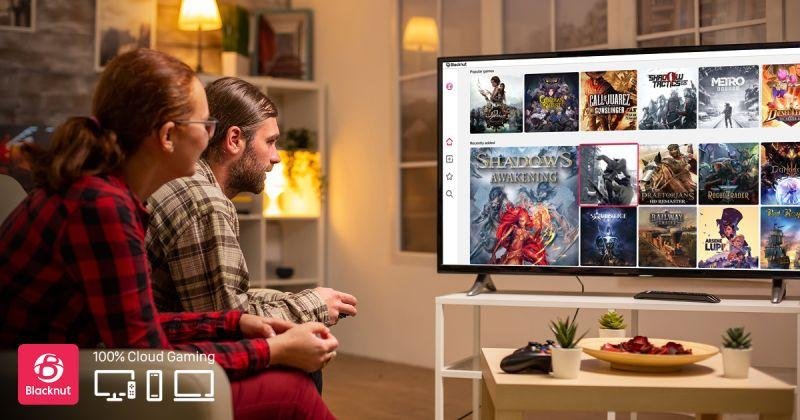
If cloud gaming apps become widely available, the television itself could become the gaming platform.
Imagine buying a new Smart TV and discovering that you don’t necessarily need another box underneath it.
You simply connect a controller.
Open the gaming application.
Choose a title.
And start playing.
That could significantly reduce the importance of traditional gaming hardware.
Smartphones Could Become Gaming Machines
The same idea applies to smartphones.
Today’s flagship phones are already extremely powerful.
But even an inexpensive smartphone can potentially become a gaming device if the heavy processing takes place in the cloud.
That changes the economics of gaming.
Instead of spending hundreds of dollars on a gaming console, consumers could potentially use hardware they already own.
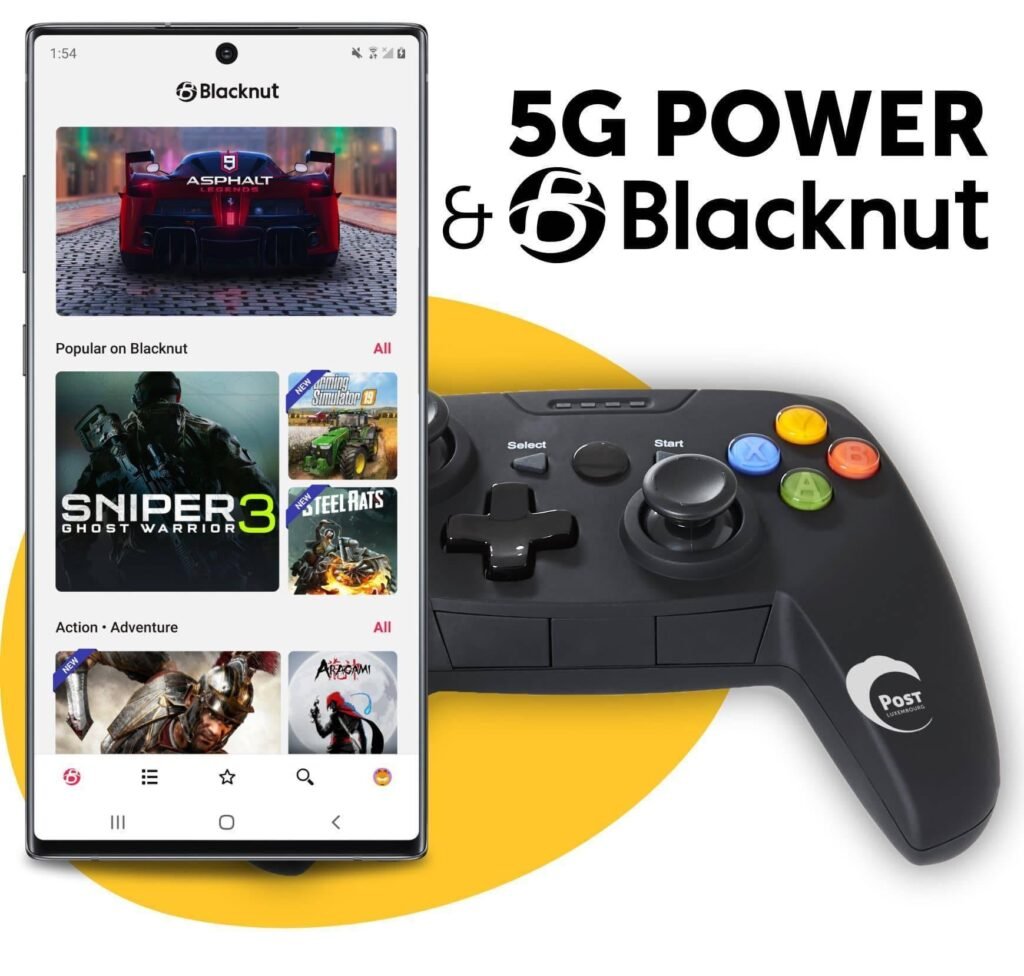
The smartphone becomes the screen.
The controller becomes the interface.
The cloud does the heavy computing.
The Biggest Problem Is Still Latency
There is one major obstacle.
Latency.
For casual games, a small amount of delay may not matter.
But competitive shooters, racing games and fighting games require extremely fast responses.
A delay of even a fraction of a second can affect gameplay.
That is why cloud gaming depends heavily on network infrastructure.
The closer the data center is to the player, the better the experience can potentially become.
This is one reason Digital Alpha sees cloud gaming as a significant driver of demand for edge networks and GPU infrastructure.
5G and Fiber Could Change Everything
The expansion of high-speed internet is one of the biggest reasons cloud gaming has become more realistic.
Fiber connections can provide enormous bandwidth.
5G networks can deliver fast wireless connections with significantly lower latency than older mobile networks.
Future network technologies could make cloud gaming even more responsive.
For players with excellent connectivity, the difference between locally installed games and cloud-streamed games could eventually become difficult to notice.
That is the point the industry is trying to reach.
Gaming Infrastructure Is Becoming More Like Cloud Computing
The technology behind modern cloud gaming is closely connected to the broader cloud computing industry.
Games require powerful GPUs.
They need large amounts of storage.
They require high-speed networking.
They need sophisticated server management.
And they need systems capable of scaling when millions of players log in simultaneously.
This means cloud gaming is becoming part of the same infrastructure ecosystem that supports video streaming, enterprise software and AI applications.
Digital Alpha specifically points to GPU capacity, edge networks and digital infrastructure as important components of the cloud gaming opportunity.
Publishers Could Benefit Too
Cloud gaming could also change how game publishers reach customers.
A publisher traditionally has to support multiple platforms.
A game may need separate versions for PlayStation, Xbox, PC and Nintendo.
Cloud platforms could simplify distribution in some situations.
The game runs remotely.
The player accesses it through a compatible application.
That could potentially allow publishers to reach new audiences without requiring every customer to own expensive hardware.
Blacknut says it works with publishers, telecom operators, internet service providers and device manufacturers as part of its distribution model.
Telecom Companies Have a Big Role
Internet providers may become increasingly important players in gaming.
Telecom operators already control the networks required to deliver cloud games.
Some can bundle gaming subscriptions with broadband or mobile packages.
This gives them a new opportunity to increase customer loyalty.
A consumer might choose one internet provider over another because it includes gaming services.
Gaming could therefore become another component of the digital subscription ecosystem.
The Console Isn’t Dead
Despite all this, traditional consoles are not disappearing overnight.
PlayStation, Xbox and Nintendo have enormous user bases.
Dedicated gaming hardware provides advantages that cloud services cannot always match.
Local gaming does not depend on internet quality.
It can deliver extremely low latency.
Games can run at high resolution without being compressed into a video stream.
And many players simply enjoy owning physical or digital game libraries.
Cloud gaming therefore looks more like an additional option than an immediate replacement.
A Hybrid Future Is More Likely
The most realistic future may combine both models.
Players could own a console or gaming PC for demanding local gaming.
They could use cloud gaming when travelling.
They could stream games to a Smart TV without connecting their console.
They could play on a smartphone when away from home.
The same account and game library could follow them across devices.
That would make gaming much more flexible.
Instead of asking:
“Which console do you own?”
the industry could eventually ask:
“Which gaming service do you use?”
Subscription Gaming Is Growing
Cloud gaming also fits naturally into the subscription economy.
Consumers are already comfortable paying monthly fees for Netflix, Spotify and other digital services.
Gaming subscriptions follow the same concept.
Instead of purchasing every game individually, players can pay a monthly fee and access a library.
This can reduce the barrier to trying new games.
It also creates predictable recurring revenue for gaming companies.
The challenge is ensuring that the subscription catalog remains attractive enough for people to continue paying every month.
Why the Industry Is Paying Attention
The global video game industry generated more than $200 billion in annual revenue in 2025, according to figures cited in Blacknut’s announcement, while cloud gaming is projected to remain one of the fastest-growing segments.
Even a relatively small shift from locally installed games toward cloud services could therefore represent a huge business opportunity.
That explains why technology companies, telecom operators and infrastructure investors are increasingly interested in the space.

The Future of Gaming Could Be Everywhere
One of the most exciting possibilities is that cloud gaming could make games much less dependent on hardware.
Your television could become a gaming device.
Your phone could become a gaming device.
Your tablet could become a gaming device.
Your laptop could become a gaming device.
Even devices that were never designed specifically for gaming could potentially access high-end titles.
That is a major change from the traditional console model.
But Internet Access Will Matter
There is also an important limitation.
Cloud gaming depends on reliable internet access.
In regions where broadband is slow or unstable, the experience can be poor.
That means the growth of cloud gaming will be closely connected to the development of global broadband infrastructure.
Fiber, 5G, edge computing and improved data centers will all play a role.
In other words, the future of gaming may depend as much on telecommunications infrastructure as it does on game developers.
The Bigger Picture
The $215 million Blacknut investment is therefore about more than one company.
It reflects a broader shift in the gaming industry.
Games are becoming services.
Hardware is becoming less important.
Cloud infrastructure is becoming more important.
And players increasingly expect their entertainment to be available wherever they are.
The traditional console will probably remain important for years.
But it may no longer be the only way to access premium gaming.
The Bottom Line
Cloud gaming has been described as the future of gaming for more than a decade.
But the technology is finally reaching a point where the idea is becoming much more practical.
Blacknut’s new investment demonstrates that investors see significant long-term potential in the market.
With up to $215 million available for expansion, the company plans to strengthen its infrastructure, increase its game catalog and reach more players around the world.
The biggest question remains latency and internet quality.
If those challenges continue to improve, the traditional idea of a gaming console could gradually become less important.
You may not need a powerful machine under your television.
You may only need a controller, a screen and a good internet connection.
The next gaming console might not be a console at all.
It could be the cloud.
Cloud gaming is entering a new phase as Blacknut secures up to $215 million in strategic backing from Digital Alpha, aiming to expand its game library, infrastructure and global reach. The move could accelerate the shift from traditional gaming hardware toward games streamed directly from the cloud.
By TheTechSpot Digital | August 18, 2026
For decades, playing a high-quality video game meant owning powerful hardware.
You needed a PlayStation, Xbox, Nintendo console or gaming PC capable of running the latest titles.
That model may be slowly changing.
Cloud gaming has been promising to transform the industry for years, but the technology has faced a major challenge: delivering console-quality games over an internet connection without noticeable lag.
Now, one of the industry’s cloud gaming companies is making a major push to solve that problem.
Blacknut has secured up to $215 million in strategic investment from Digital Alpha, with the funding intended to support infrastructure, content expansion, product development and international growth. Blacknut says it currently serves more than three million subscribers across more than 65 countries.
The investment represents a major vote of confidence in cloud gaming — and could help push the technology closer to mainstream adoption.
Gaming Without the Console
The basic idea behind cloud gaming is surprisingly simple.
Instead of installing a game on your device, the game runs on powerful servers inside a data center.
Your phone, smart TV, laptop or other device simply receives the video stream.
Your controller inputs are sent back to the server.
The process is similar to streaming a movie, except the system has to respond to your actions in real time.
That makes cloud gaming considerably more technically demanding than Netflix or YouTube.
A movie can buffer for a few seconds.
A competitive video game cannot.
If there is too much delay between pressing a button and seeing the result on screen, the experience immediately becomes frustrating.
Why the $215 Million Investment Matters
Digital Alpha’s investment is significant because it is aimed not just at developing software, but at expanding the infrastructure behind cloud gaming.
The deal provides up to $215 million for Blacknut’s growth strategy, including product development, content, infrastructure and international expansion.
That is important because infrastructure is one of the biggest challenges facing cloud gaming.
To deliver games smoothly, providers need powerful computing hardware located relatively close to players.
They also need high-bandwidth networks and extremely low latency.
As more people play simultaneously, the infrastructure requirements become enormous.
Blacknut Is Building a Different Gaming Model
Blacknut operates differently from traditional console manufacturers.
Instead of asking consumers to buy a dedicated gaming machine, the company provides access to games through a subscription-based cloud service.
The platform says its catalog contains more than 1,000 games, with access available across devices including smartphones, set-top boxes and Smart TVs.
That means a television does not necessarily need to be connected to a PlayStation or Xbox.
A compatible device and internet connection could potentially be enough.
The same concept can work with laptops and mobile devices.
This is one of the biggest attractions of cloud gaming.
The Smart TV Could Become a Gaming Console
One of the most interesting consequences of cloud gaming is what it could do to Smart TVs.
Modern televisions already contain powerful processors, internet connectivity and sophisticated operating systems.
If cloud gaming apps become widely available, the television itself could become the gaming platform.
Imagine buying a new Smart TV and discovering that you don’t necessarily need another box underneath it.
You simply connect a controller.
Open the gaming application.
Choose a title.
And start playing.
That could significantly reduce the importance of traditional gaming hardware.
Smartphones Could Become Gaming Machines
The same idea applies to smartphones.
Today’s flagship phones are already extremely powerful.
But even an inexpensive smartphone can potentially become a gaming device if the heavy processing takes place in the cloud.
That changes the economics of gaming.
Instead of spending hundreds of dollars on a gaming console, consumers could potentially use hardware they already own.
The smartphone becomes the screen.
The controller becomes the interface.
The cloud does the heavy computing.
The Biggest Problem Is Still Latency
There is one major obstacle.
Latency.
For casual games, a small amount of delay may not matter.
But competitive shooters, racing games and fighting games require extremely fast responses.
A delay of even a fraction of a second can affect gameplay.
That is why cloud gaming depends heavily on network infrastructure.
The closer the data center is to the player, the better the experience can potentially become.
This is one reason Digital Alpha sees cloud gaming as a significant driver of demand for edge networks and GPU infrastructure.
5G and Fiber Could Change Everything
The expansion of high-speed internet is one of the biggest reasons cloud gaming has become more realistic.
Fiber connections can provide enormous bandwidth.
5G networks can deliver fast wireless connections with significantly lower latency than older mobile networks.
Future network technologies could make cloud gaming even more responsive.
For players with excellent connectivity, the difference between locally installed games and cloud-streamed games could eventually become difficult to notice.
That is the point the industry is trying to reach.
Gaming Infrastructure Is Becoming More Like Cloud Computing
The technology behind modern cloud gaming is closely connected to the broader cloud computing industry.
Games require powerful GPUs.
They need large amounts of storage.
They require high-speed networking.
They need sophisticated server management.
And they need systems capable of scaling when millions of players log in simultaneously.
This means cloud gaming is becoming part of the same infrastructure ecosystem that supports video streaming, enterprise software and AI applications.
Digital Alpha specifically points to GPU capacity, edge networks and digital infrastructure as important components of the cloud gaming opportunity.
Publishers Could Benefit Too
Cloud gaming could also change how game publishers reach customers.
A publisher traditionally has to support multiple platforms.
A game may need separate versions for PlayStation, Xbox, PC and Nintendo.
Cloud platforms could simplify distribution in some situations.
The game runs remotely.
The player accesses it through a compatible application.
That could potentially allow publishers to reach new audiences without requiring every customer to own expensive hardware.
Blacknut says it works with publishers, telecom operators, internet service providers and device manufacturers as part of its distribution model.
Telecom Companies Have a Big Role
Internet providers may become increasingly important players in gaming.
Telecom operators already control the networks required to deliver cloud games.
Some can bundle gaming subscriptions with broadband or mobile packages.
This gives them a new opportunity to increase customer loyalty.
A consumer might choose one internet provider over another because it includes gaming services.
Gaming could therefore become another component of the digital subscription ecosystem.
The Console Isn’t Dead
Despite all this, traditional consoles are not disappearing overnight.
PlayStation, Xbox and Nintendo have enormous user bases.
Dedicated gaming hardware provides advantages that cloud services cannot always match.
Local gaming does not depend on internet quality.
It can deliver extremely low latency.
Games can run at high resolution without being compressed into a video stream.
And many players simply enjoy owning physical or digital game libraries.
Cloud gaming therefore looks more like an additional option than an immediate replacement.
A Hybrid Future Is More Likely
The most realistic future may combine both models.
Players could own a console or gaming PC for demanding local gaming.
They could use cloud gaming when travelling.
They could stream games to a Smart TV without connecting their console.
They could play on a smartphone when away from home.
The same account and game library could follow them across devices.
That would make gaming much more flexible.
Instead of asking:
“Which console do you own?”
the industry could eventually ask:
“Which gaming service do you use?”
Subscription Gaming Is Growing
Cloud gaming also fits naturally into the subscription economy.
Consumers are already comfortable paying monthly fees for Netflix, Spotify and other digital services.
Gaming subscriptions follow the same concept.
Instead of purchasing every game individually, players can pay a monthly fee and access a library.
This can reduce the barrier to trying new games.
It also creates predictable recurring revenue for gaming companies.
The challenge is ensuring that the subscription catalog remains attractive enough for people to continue paying every month.
Why the Industry Is Paying Attention
The global video game industry generated more than $200 billion in annual revenue in 2025, according to figures cited in Blacknut’s announcement, while cloud gaming is projected to remain one of the fastest-growing segments.
Even a relatively small shift from locally installed games toward cloud services could therefore represent a huge business opportunity.
That explains why technology companies, telecom operators and infrastructure investors are increasingly interested in the space.
The Future of Gaming Could Be Everywhere
One of the most exciting possibilities is that cloud gaming could make games much less dependent on hardware.
Your television could become a gaming device.
Your phone could become a gaming device.
Your tablet could become a gaming device.
Your laptop could become a gaming device.
Even devices that were never designed specifically for gaming could potentially access high-end titles.
That is a major change from the traditional console model.
But Internet Access Will Matter
There is also an important limitation.
Cloud gaming depends on reliable internet access.
In regions where broadband is slow or unstable, the experience can be poor.
That means the growth of cloud gaming will be closely connected to the development of global broadband infrastructure.
Fiber, 5G, edge computing and improved data centers will all play a role.
In other words, the future of gaming may depend as much on telecommunications infrastructure as it does on game developers.
The Bigger Picture
The $215 million Blacknut investment is therefore about more than one company.
It reflects a broader shift in the gaming industry.
Games are becoming services.
Hardware is becoming less important.
Cloud infrastructure is becoming more important.
And players increasingly expect their entertainment to be available wherever they are.
The traditional console will probably remain important for years.
But it may no longer be the only way to access premium gaming.
Cloud gaming has been described as the future of gaming for more than a decade.
But the technology is finally reaching a point where the idea is becoming much more practical.