

Instagram is introducing a new Content Protection feature designed to help creators identify and control unauthorised copies of their original videos. The tool can detect reposted Reels and is being expanded to identify AI-generated videos that reuse creators’ original audio, even when the visuals have been changed.
Instagram is giving content creators another way to protect their work as artificial intelligence makes it increasingly easy to copy, edit and redistribute videos.
Announced on November 17, 2026, the new expansion of Instagram’s Content Protection feature is designed to identify when someone uploads a creator’s original video without permission.
The system is also being developed to recognise AI-generated videos that reuse original audio, even when the original visuals have been modified.
The announcement addresses a growing problem across social media: creators can spend hours producing original content, only to find similar versions appearing on other accounts without proper credit.
How Instagram’s Content Protection works
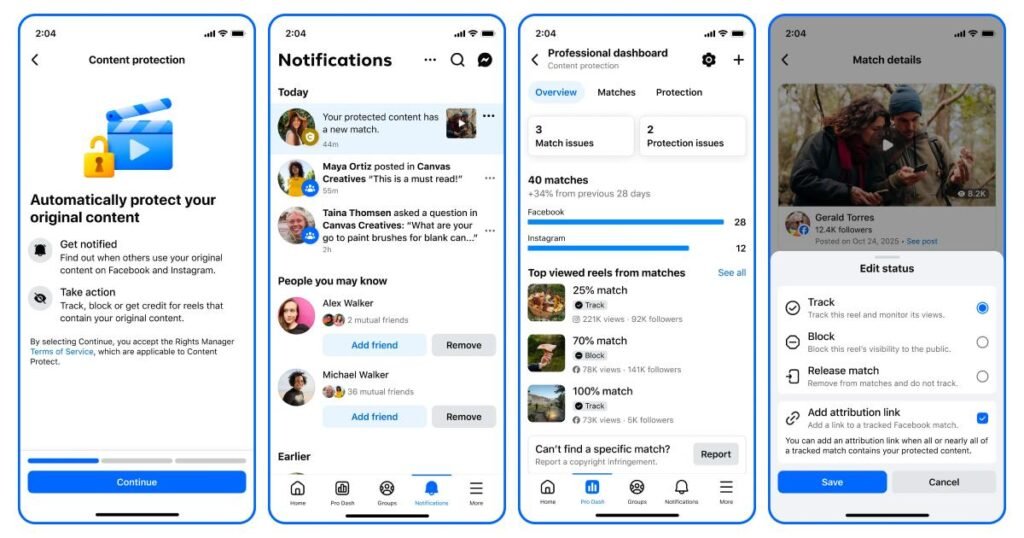
Instagram’s Content Protection system continuously scans the platform for unauthorised uses of videos belonging to enrolled creators.
When the system identifies a potential match involving one of a creator’s Reels, Instagram sends a notification.
The creator can then decide what happens next.
Available options include:
- Block the video: Request that the matching video be hidden on Instagram and Facebook.
- Add an original creator label: Display an attribution label linking viewers to the original video.
- Keep the video visible: Allow the matching content to remain online while monitoring its performance.
- Release the claim: Allow the matching Reel to remain visible without taking action against it.
This gives creators more control over how Instagram handles copies of their content instead of automatically removing every detected match.
Instagram is expanding protection to AI-generated videos
One of the most interesting parts of the announcement is the addition of AI-related detection.
Traditional video matching can identify copies that reuse much of the original footage.
However, generative AI makes it possible to change a video’s appearance while retaining other elements from the original.
For example, someone could use AI to alter the visuals of a video while keeping the creator’s original audio.
Instagram says its updated protection system will begin detecting AI-generated videos that reuse audio from creators’ original content, even when the visuals have been changed.
This capability will initially be tested with a small group of creators in the coming weeks.
Meta plans to expand access to creators who enrol in Content Protection on both Instagram and Facebook.
The company is also exploring ways to reduce the reach of accounts that repeatedly use AI tools to repost other people’s work.
How creators can activate the feature
Eligible creators will receive a notification in their Instagram activity feed inviting them to enrol in Content Protection.
Once enrolled, newly published original videos will automatically receive protection.
Creators can also select eligible videos they have already published and add them to the protection system manually.
There is another useful option for creators who operate multiple accounts.
Instagram allows them to create an allow list for profiles that have permission to use their videos.
For example, a creator can authorise a secondary account or a brand account so that legitimate use of their own content is not incorrectly flagged.
This is particularly relevant for influencers, publishers, marketing agencies and businesses that distribute the same videos across several accounts.
What happens when Instagram finds a copied video?
The system is designed to give creators control rather than immediately treating every match as a violation.
Imagine a photographer publishing an original Reel on Instagram.
A different account downloads the video and uploads it again without permission.
If Instagram identifies a match, the original creator receives a notification and can choose to hide the copied version or add an attribution label linking viewers back to the original.
The ability to monitor a match without immediately blocking it could also help creators understand how their work is being redistributed.
However, automated matching is not the same as a legal copyright decision. A detected match does not automatically establish that someone has violated copyright law. Context, permission and applicable rights still matter.
Why this matters for influencers and digital publishers
The new feature could be particularly useful for creators whose businesses depend on original video content.
Influencers, journalists, independent media companies, educators and small businesses regularly publish Reels to attract audiences.
When their videos are copied, they can lose views, engagement and traffic to accounts that did not produce the original material.
The problem becomes more complicated when AI tools are used to modify videos, change appearances or create new versions of existing material.
Instagram’s expanded detection approach is an attempt to address that changing environment.
It could also help reduce the incentive for accounts that repeatedly copy popular videos to grow their audiences.
Is this the end of unauthorised reposting?
Not necessarily.
Content Protection is a useful platform tool, but it cannot guarantee that every copied video will be detected.
AI-generated content can be modified in many different ways, and matching systems may sometimes miss copies or flag legitimate uses.
There are also broader copyright questions involving commentary, criticism, parody and other permitted uses of existing material.
Creators should therefore continue to keep original video files, publication records and evidence of ownership.
The feature should be seen as another layer of protection rather than a complete replacement for copyright enforcement.
What comes next?
Instagram’s announcement marks another step in Meta’s effort to give creators greater control over how their work is distributed.
The immediate focus is on expanding Content Protection and testing the ability to identify AI-generated videos that reuse original audio.
If the testing proves effective, the technology could become increasingly important as AI-generated video becomes more sophisticated.
For creators, the message is straightforward: original content is becoming easier to imitate, and social platforms are under growing pressure to provide better tools for protecting it.
Instagram’s new Content Protection expansion could make unauthorised video reposting harder and give creators more control over how their work is used. Its AI-audio detection feature is particularly important because it addresses a type of copying that traditional video matching may struggle to identify.


