

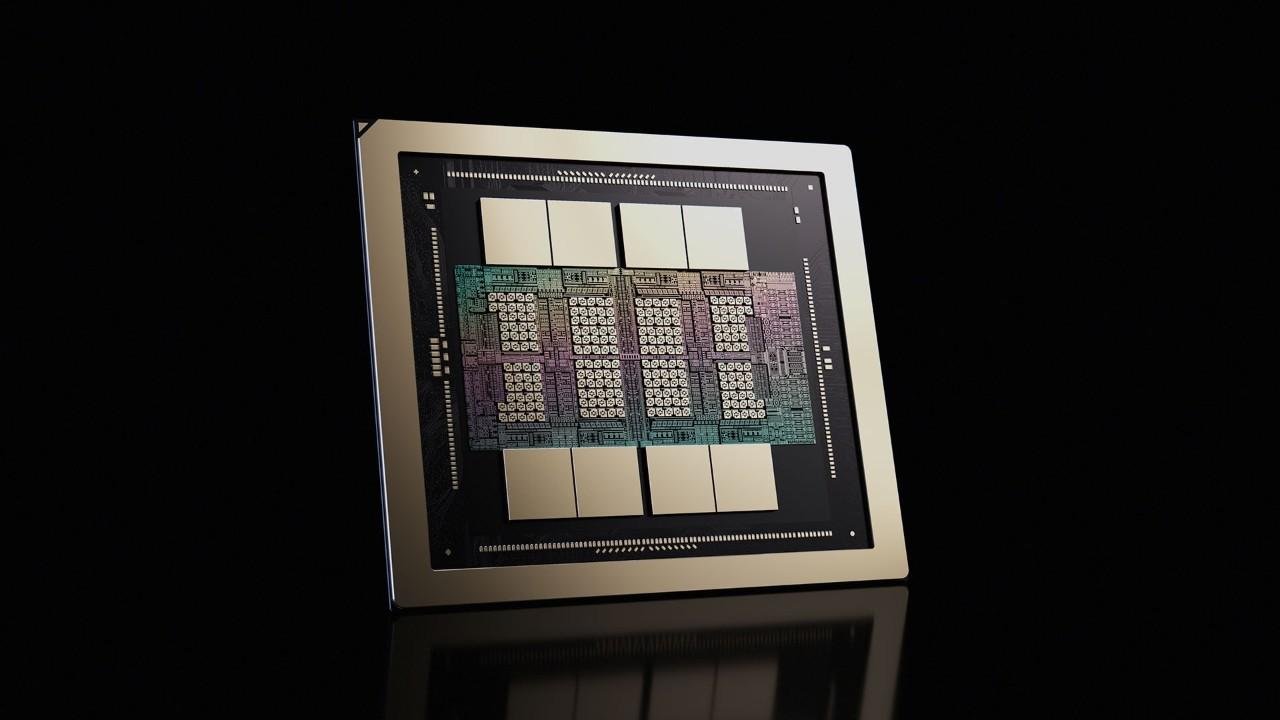
NVIDIA has announced a new high-performance computing processor designed to accelerate scientific research, engineering simulations and data-intensive workloads. Called Rubin HPC, the GPU was unveiled on November 16 at the SC26 supercomputing conference in Chicago and is expected to become available in 2028.
The new processor is part of NVIDIA’s Vera Rubin platform and is designed for workloads that require more than conventional AI model training. The company is positioning it as a tool for scientific computing, where researchers increasingly use AI agents to explore possible solutions and run large numbers of simulations.
More than 50,000 CUDA cores on a single GPU
The headline specification is the number of CUDA cores. NVIDIA says Rubin HPC features more than 50,000 CUDA cores on a single GPU, describing it as a record for the company’s graphics processors.
The company has also highlighted a sparse data acceleration capability intended to keep those computing cores supplied with data. This matters because scientific applications frequently work with enormous datasets, but only access selected values during each calculation.
Rather than increasing raw computing capacity alone, NVIDIA says the Rubin HPC design aims to balance processing performance with data movement.
The GPU also uses seventh-generation NVIDIA NVLink technology to improve connectivity between GPUs. This is important for supercomputing systems, where large workloads are distributed across multiple accelerators.
Built for science, engineering and complex simulations
NVIDIA is targeting several areas where faster simulations could have practical benefits.
These include climate modelling, engineering design, genomic analysis, financial risk calculations and scientific research.
For example, researchers developing new materials or studying molecules can use simulations to test possible outcomes before committing to expensive physical experiments. AI agents can help explore candidate designs, while accelerated computing systems process the simulations needed to evaluate them.
NVIDIA argues that faster simulations can shorten the cycle between forming a hypothesis, testing it and refining the next experiment.
The company is also highlighting the role of its CUDA-X libraries, which provide optimised implementations of algorithms used in scientific computing and analytics.
Part of the wider Vera Rubin platform
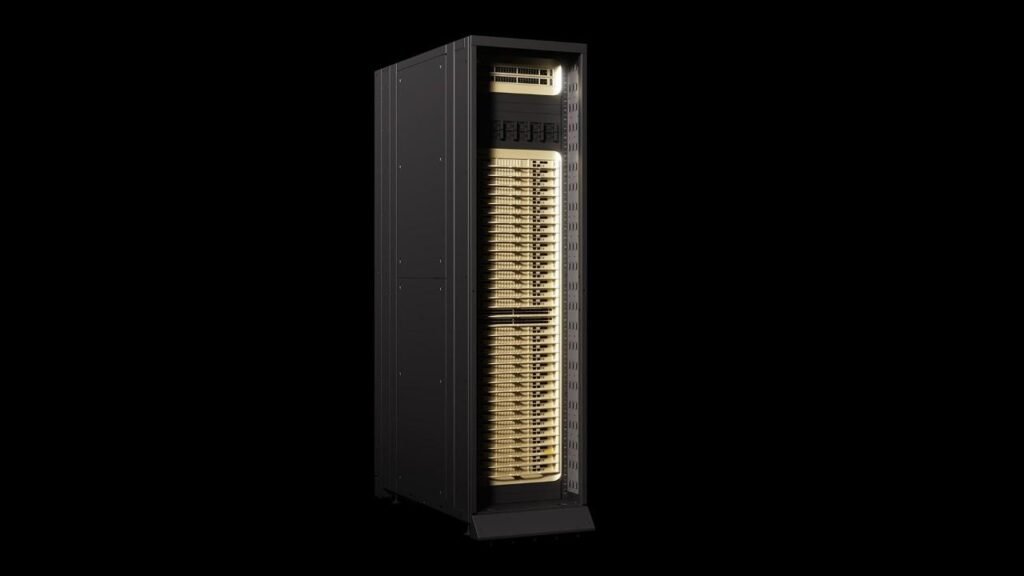
Rubin HPC is not being presented as a standalone consumer graphics card. It is part of NVIDIA’s broader Vera Rubin computing platform, which targets large-scale AI and high-performance computing infrastructure.
The distinction is important: the product is aimed at research institutions, cloud providers, industrial engineering teams and organisations operating large computing systems, rather than ordinary desktop PC users.
NVIDIA has not yet published a complete consumer-style specification sheet for Rubin HPC. Details such as final memory capacity, board configurations and independently verified performance benchmarks should therefore not be assumed from the core-count announcement alone.
Availability expected in 2028
NVIDIA says Rubin HPC is expected to become available in 2028. That means the announcement is an early look at a future generation of scientific computing hardware, not a product that research organisations can purchase immediately.
The company has not announced a final price or detailed deployment schedule.
The long lead time also means that the real-world impact will depend on the systems built around the GPU, the software optimisations available to researchers and the performance achieved in independent testing.
Why the announcement matters
The Rubin HPC announcement reflects a growing shift in the computing industry. AI is increasingly being used not only to generate text or images, but also to help researchers investigate complex scientific questions.
Those systems still need substantial computing power to test ideas through simulations. NVIDIA is betting that specialised hardware, faster data movement and optimised scientific software will become increasingly important as AI agents take on more research tasks.
For now, the most notable figure is the GPU’s claimed total of more than 50,000 CUDA cores. The bigger test will come in 2028, when the hardware reaches real-world systems and independent benchmarks can show how much faster it makes scientific workloads.


