

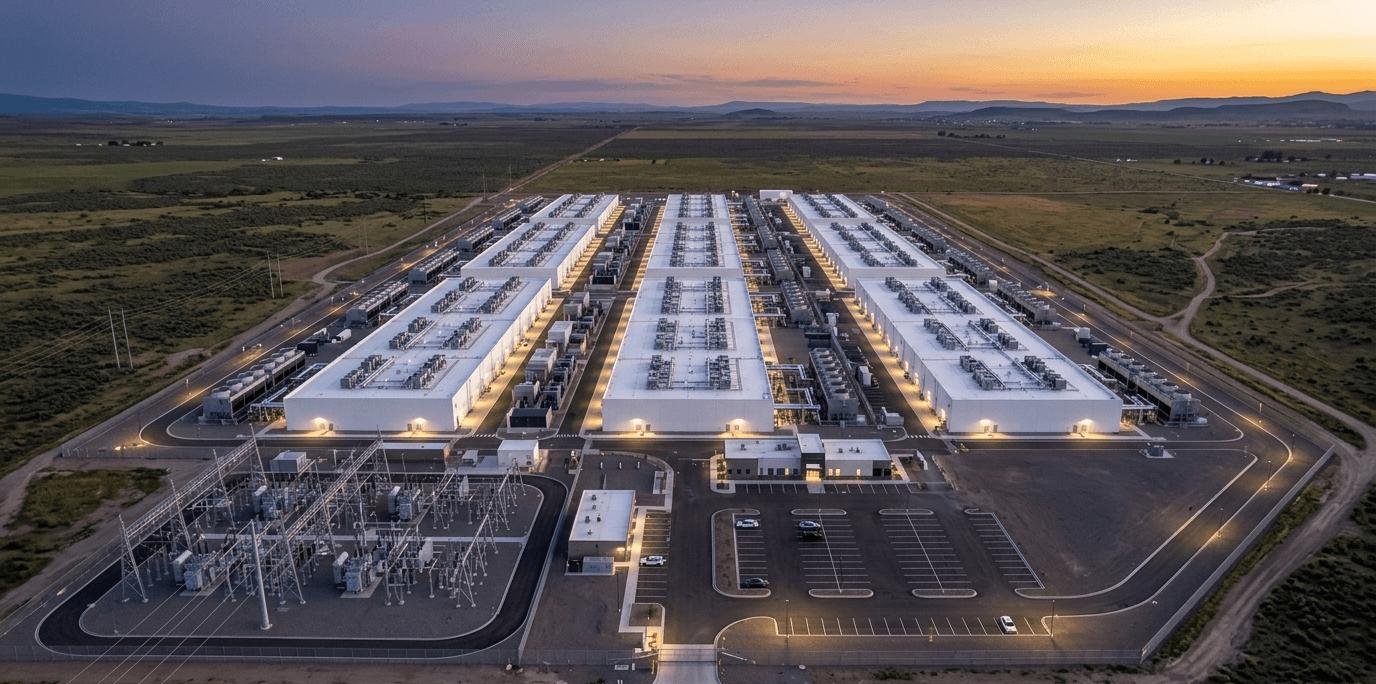
Samsung is looking to expand beyond semiconductor manufacturing and become a major player in AI infrastructure. According to the Financial Times, Samsung SDS is in early discussions about potentially hosting OpenAI and Anthropic as data-center customers. The move reflects a wider industry shift: AI companies increasingly need not only powerful chips, but also the facilities, electricity and cooling systems required to run them.
Samsung is preparing for a bigger role in the artificial intelligence industry, and its ambitions go beyond manufacturing memory chips.
The South Korean technology group wants to combine several parts of its business to build, operate and power large-scale data centers designed for AI workloads.
A report by the Financial Times says Samsung SDS, the group’s IT services subsidiary, is in early discussions about signing OpenAI and Anthropic as potential data-center tenants.
The discussions are not confirmed customer agreements. Neither OpenAI nor Anthropic has publicly announced a deal with Samsung in the reporting reviewed for this article.
Nevertheless, the talks point to an important development in the AI market: companies that once competed mainly to supply processors are now looking to provide the physical infrastructure behind the next generation of AI services.
Samsung wants to become more than a chip supplier
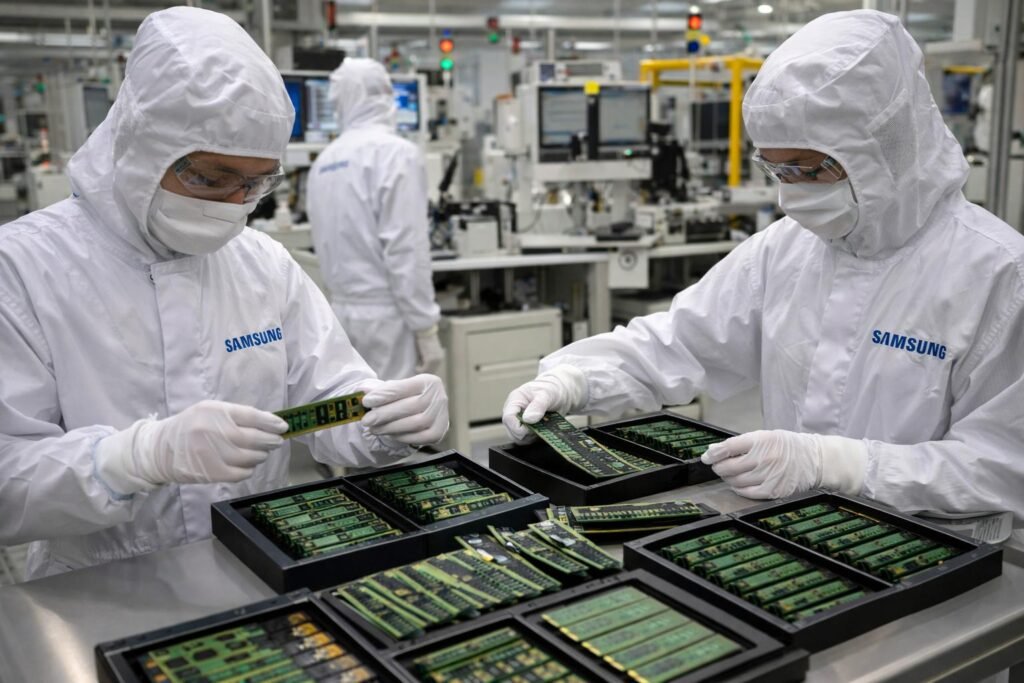
Samsung already has a significant position in the semiconductor industry, particularly in memory technology.
But building and operating AI data centers could allow the group to participate in a much broader part of the technology supply chain.
The company’s strategy brings together capabilities across several businesses, including:
- Semiconductor manufacturing and advanced memory.
- Data-center construction and IT services.
- Cooling systems and infrastructure.
- Power and battery technologies.
- Data-center operations and hosting services.
The aim is to offer a more integrated package instead of simply selling individual components.
That could become attractive to AI companies that need to secure computing capacity quickly and cannot afford to wait for every part of their infrastructure to be sourced and assembled separately.
OpenAI and Anthropic are potential customers, not confirmed partners
One of the most notable details in the Financial Times report is that Samsung SDS is reportedly discussing potential data-center tenancy with OpenAI and Anthropic.
Both companies operate large AI platforms and require substantial computing resources to train and run their models.
However, the distinction between early discussions and a signed commercial agreement is important.
There is currently no publicly confirmed announcement establishing that OpenAI or Anthropic has agreed to become a tenant in a Samsung-operated facility.
If such agreements eventually materialise, Samsung could gain access to some of the most prominent customers in the AI industry.
It would also place the company in a stronger position to compete for infrastructure contracts as demand for AI computing continues to grow.
Samsung is already building a dedicated AI data center
The expansion is not limited to discussions with potential customers.
Samsung SDS announced on November 4 that construction had begun on a dedicated AI data center in Gumi, South Korea.
The project covers a site of approximately 46,000 square metres and is designed to support high-performance GPU servers.
According to Samsung SDS:
- The facility will initially have 60 megawatts of power capacity.
- Its capacity can be expanded in stages to as much as 120 megawatts.
- Completion is scheduled for the end of 2028.
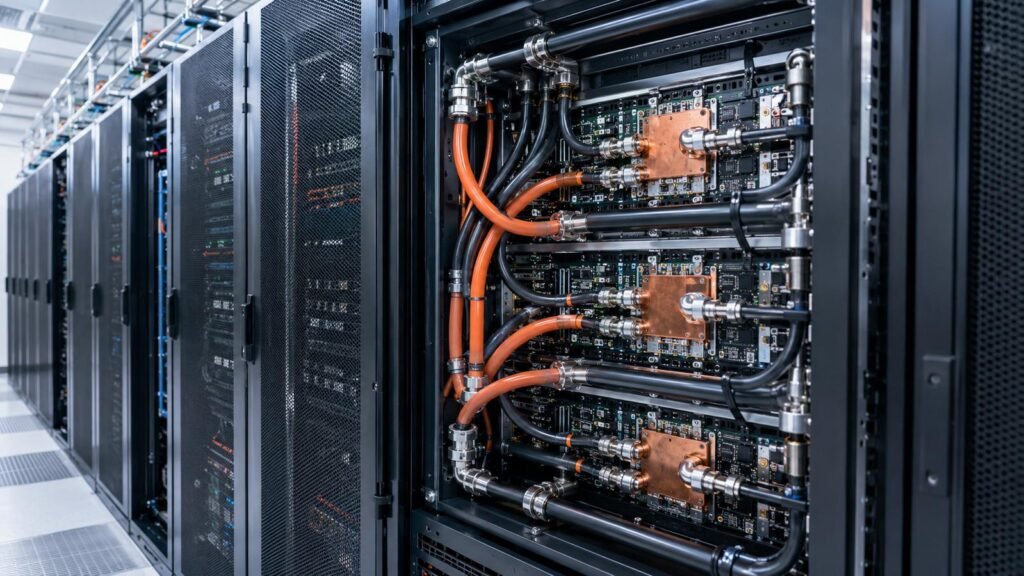
- The design includes hybrid cooling that combines air and liquid cooling.
- The company plans to support both its own GPU infrastructure and colocation customers.
Colocation allows customers to install and operate their own computing equipment inside a professionally managed data center.
This model can be particularly useful for companies that need specialised facilities without having to build and operate an entire site themselves.
The Gumi project gives Samsung a concrete foundation for its broader infrastructure ambitions.
Why AI companies need much larger data centers
AI models require enormous amounts of computing power.
Training a large model involves processing huge datasets across clusters of advanced processors. Once a model becomes available to users, additional computing capacity is needed to respond to prompts, generate content and support AI-powered applications.
This is why data centers have become one of the most important parts of the global AI race.
McKinsey estimates that global demand for data-center capacity could rise from approximately 82 gigawatts in 2025 to around 220 gigawatts by 2030 under its continued-momentum scenario.
Its analysis suggests that AI-related workloads could account for approximately 70% of total demand by 2030.
These are projections rather than guaranteed outcomes, but they illustrate the scale of infrastructure investment that technology companies are considering.
Electricity and cooling are becoming major competitive advantages
Building an AI data center is not simply a matter of installing servers in a large building.
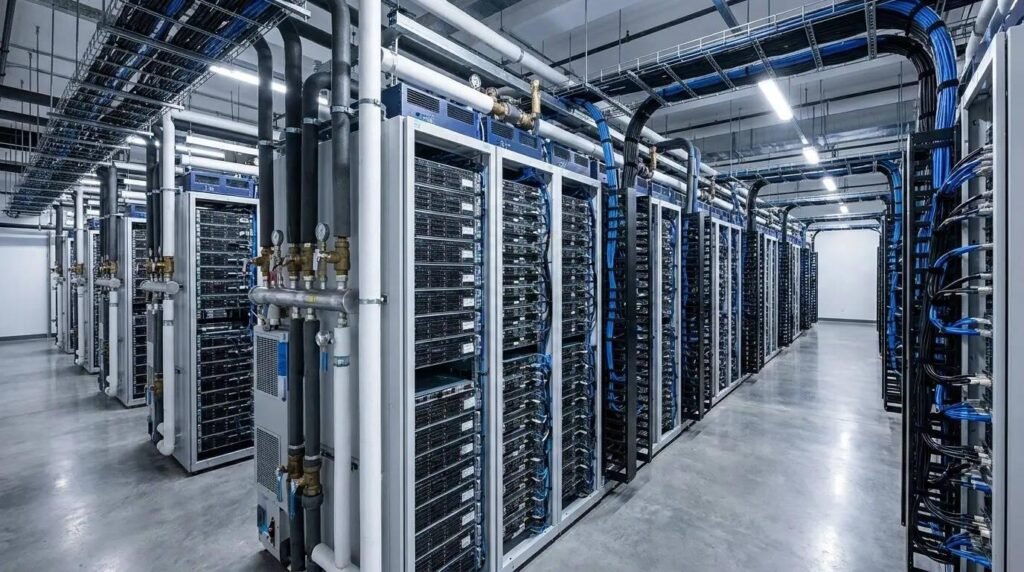
Modern AI facilities require reliable electricity, advanced cooling systems, network connectivity and infrastructure capable of operating continuously.
High-performance GPU servers generate substantial heat, making cooling technology a critical part of facility design.
Samsung’s Gumi project uses a combination of air and liquid cooling to support high-density computing equipment.
Power availability is another major challenge. In some markets, the availability of suitable land and electricity connections can determine how quickly a data center can be built.
This gives companies with experience in construction, energy systems, cooling and semiconductors a potential advantage.
Samsung’s strategy is to use several of these capabilities together.
Can Samsung compete with established data-center providers?
The opportunity is significant, but Samsung faces established competitors in cloud computing and data-center infrastructure.
Amazon Web Services, Microsoft Azure and Google Cloud already operate extensive global infrastructure networks.
Specialist data-center operators also compete for customers that want dedicated computing capacity.
Samsung’s potential advantage is its ability to combine hardware, infrastructure and IT services through different subsidiaries.
However, integrating those businesses into a competitive data-center operation will require significant investment, reliable execution and long-term customer commitments.
The company must also demonstrate that it can operate facilities efficiently and attract customers beyond its existing corporate network.
What happens next?
The most important development to watch is whether Samsung SDS turns its reported discussions with OpenAI and Anthropic into formal commercial agreements.
The Gumi facility is already under construction, but it is scheduled for completion only at the end of 2028.
That means Samsung’s broader ambitions will depend on its ability to secure customers, expand capacity and manage the substantial energy requirements of AI infrastructure.
The AI race is no longer only about who develops the most capable model or manufactures the fastest processor. It is increasingly about who can provide the electricity, cooling, computing capacity and physical infrastructure needed to run AI at global scale.
Samsung wants to become one of the companies supplying that foundation.


