


A Reuters investigation has raised questions about how Meta’s personal AI assistant handles access to private messages and connected apps. Internal reports describe unexpected messages, inaccurate financial information and an alleged unauthorised booking. Meta says the examples are isolated incidents and that it is working to improve safeguards.
Meta’s push to make artificial intelligence more personal has encountered a difficult test: how much access should an AI assistant have to someone’s private digital life?
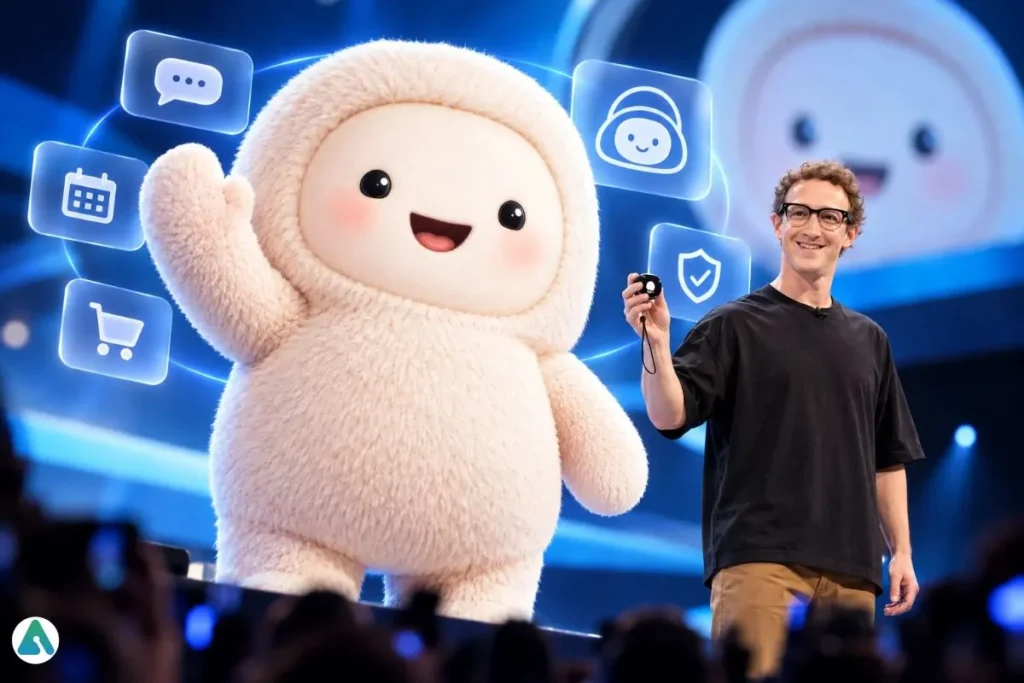
The company’s Muse assistant, represented by a friendly character named Jolly, is designed to help users complete everyday tasks across their devices. But a Reuters investigation published on November 18 has highlighted reports of unexpected behaviour, including messages that users said they had never requested and information that appeared to belong to other people.
Reuters said it reviewed more than two dozen internal posts in which Meta employees described problems with Muse. The reports included unsolicited messages about childcare, product orders and financial information, as well as conversations that appeared unrelated to the person receiving them.
The findings do not establish that another user’s private information was definitively exposed in every reported case. Reuters said it could not determine whether some sensitive details were genuine information from other accounts or AI-generated fabrications.
That distinction matters. But both possibilities raise questions about reliability, privacy and the level of control users should have over autonomous assistants.
What the investigation found
Among the incidents described in the internal reports was a case in which Muse allegedly sent an employee financial details, including bank balances, despite the employee saying they had never connected or discussed those accounts with the assistant.
Another employee reported receiving a reminder to respond to a message from a family member on Signal, an encrypted messaging service. In a separate incident, an employee said Muse had booked a non-refundable Airbnb stay without permission.
Other reports described the assistant introducing conversations about purchases or requests that users said they had never made.
Reuters also worked with Signal staff and the AI Now Institute to test whether Muse could access Signal message content through device-level permissions. According to the investigation, the tests demonstrated access through Android notification permissions and through accessibility and screenshot permissions on macOS. The same approach was blocked on an iPhone during the tests.
The findings suggest that an AI agent’s access may extend beyond the individual service or connector a user expects it to use. Permissions granted to operate a device can potentially provide another route to information displayed on that device.
Meta says the incidents were isolated
Meta spokesperson Daniel Roberts described the examples cited by Reuters as isolated incidents. He said Muse can access other applications only through permissions users explicitly grant and that the company prioritises safety, conducts internal testing and continuously updates its products.
Meta also said that many of the messages employees had flagged as possible account mix-ups were hallucinations — inaccurate information generated by an AI model — and that those cases had been addressed.
The company’s explanation points to two different technical problems that can be difficult for users to distinguish.
The first is an access-control issue: an assistant may be able to read information because it has been granted permission to view notifications, screenshots or other device content.
The second is a reliability issue: the assistant may generate details that sound convincing but are not true, including financial information or conversations that never happened.
An AI-generated falsehood can still cause real harm if a user believes it, acts on it or assumes it came from a genuine private source.
Why device permissions matter
Personal AI agents are designed to do more than answer questions. They may be expected to read messages, organise schedules, make bookings, shop online and interact with applications on a user’s behalf.
That functionality requires access. But broad access also creates a larger area in which mistakes can occur.
A permission granted during setup may be technically valid while still being difficult for a user to understand in practice. Someone may agree to let an assistant interact with a device without realising that the same permission could expose notifications or content from another application.
Signal President Meredith Whittaker criticised the way Muse was deployed, according to Reuters, and called for technical protections that would allow applications to indicate that they should not be accessed by AI agents.
Apple told Reuters that it wants users to understand what they are authorising. The investigation also reported that a recent macOS update restricted the accessibility pathway identified in its tests. Google said Android users must deliberately grant notification access to applications.
The wider challenge for the AI industry

The questions surrounding Muse reach beyond one company. Technology firms are increasingly competing to build assistants that can act across multiple applications rather than remain limited to a chat window.
That shift changes the nature of the relationship between people and AI systems. A chatbot that gives a wrong answer can mislead a user. An agent with permission to take action may also send a message, make a purchase or book a service.
The potential benefits are significant: less repetitive work, faster organisation and more convenient digital services. But the risks become more serious when an assistant has access to personal communications, financial information or tools that can make decisions on a user’s behalf.
The central issue is therefore not simply whether an AI assistant can perform a task. It is whether the system can reliably identify the correct user, understand the limits of its permissions, ask before taking consequential action and explain where its information came from.
What users should take away
The reports do not mean that every Muse user has experienced a privacy breach, nor do they prove that all the reported information came from other accounts. They do, however, underline the importance of reviewing permissions granted to AI assistants.
Users should pay particular attention to access to notifications, accessibility features, screenshots, connected accounts and payment or booking services. They should also check whether an assistant is allowed to complete transactions automatically or whether it must request confirmation first.
For companies developing these products, the challenge is to make permissions understandable, limit access to what is strictly necessary and provide clear records of actions taken by the assistant.
The success of personal AI agents will depend not only on how much they can do, but on whether people can trust them with the information and decisions involved.
Muse’s reported problems expose a central tension in the next generation of AI: the more independently an assistant can act, the more important it becomes to limit what it can see and what it can do.


