

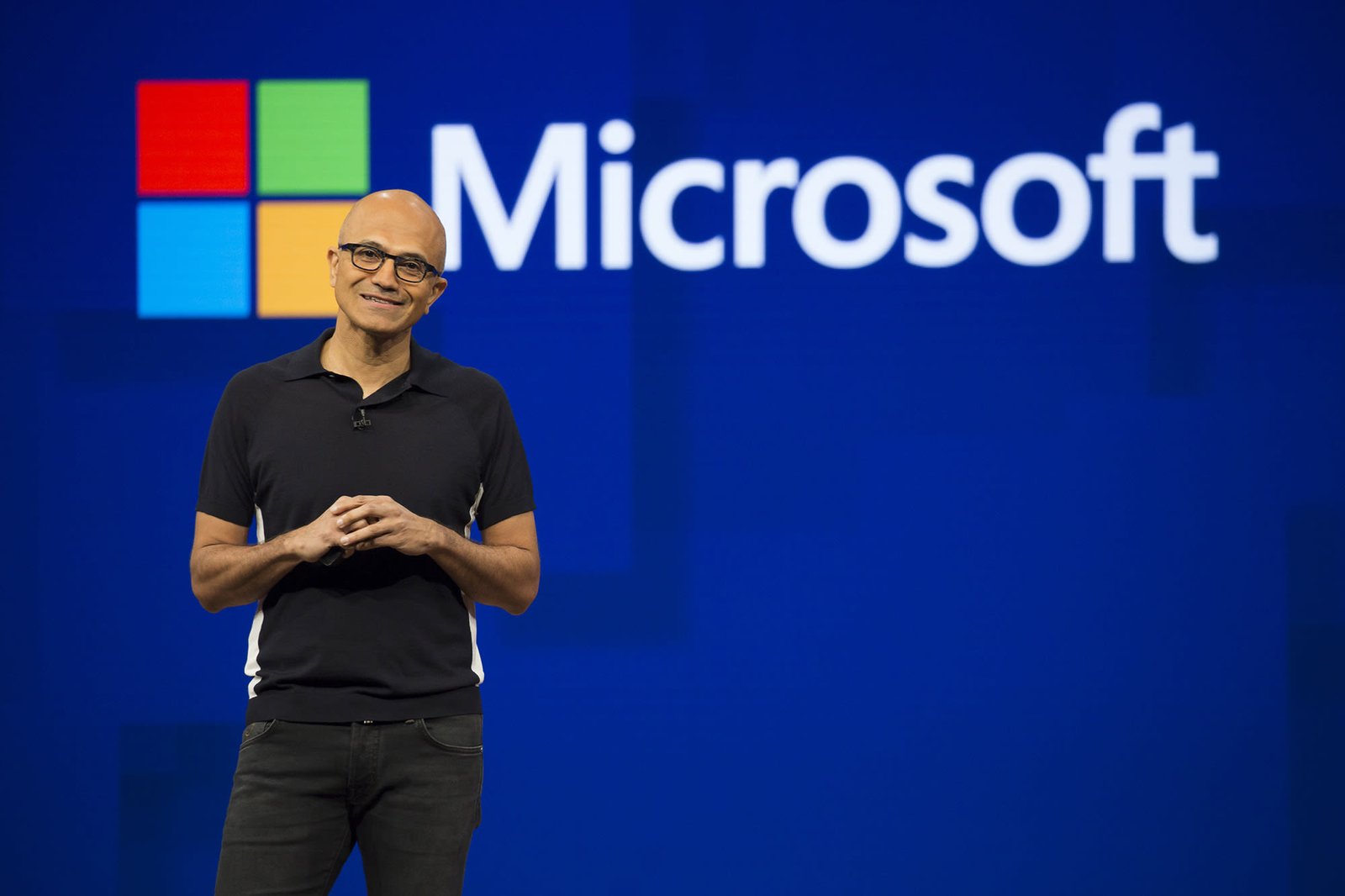
Microsoft CEO Satya Nadella says the company must reorganize how people work as artificial intelligence becomes central to its operations. Around 60,000 employees were eligible for voluntary buyouts, but Nadella says the move is about giving workers choices during a major organisational transition, not simply replacing engineers with AI.
Microsoft CEO Satya Nadella has offered a clearer explanation of the company’s decision to make voluntary buyout offers available to approximately 60,000 employees, describing the move as part of a broader transformation toward an AI-first organisation.
In recent public remarks, Nadella discussed how artificial intelligence is changing the way software is developed and how teams are structured. His comments suggest that Microsoft expects employees to work increasingly alongside AI agents rather than relying entirely on traditional workflows.
The offer, announced in October, gave eligible employees an opportunity to leave the company voluntarily with financial support. It was not a notice that 60,000 jobs had already been eliminated.
Why Microsoft offered buyouts
Nadella explained that the company wanted employees to have more control over their decisions as Microsoft changes its organisational structure.
The CEO acknowledged that the rapid development of AI has created uncertainty among workers. Employees are facing questions about how their responsibilities may change, which skills will become more important and how teams will operate in the future.
The voluntary programme was intended to give eligible workers an option rather than making every organisational change through compulsory layoffs.
Microsoft has been reshaping its business around AI infrastructure, software and services, while integrating AI tools into products and internal operations.
AI could change what software engineers actually do
One of Nadella’s central arguments is that software engineering will remain important, but the work itself may look very different.
Rather than writing every part of a product manually, developers may increasingly direct AI systems, review their output and coordinate automated workflows.
Nadella has described a future in which employees become managers of AI agents, with people focusing more on direction, judgement and oversight.
He has also pointed to small teams using AI tools to produce work at a scale that previously required more traditional development processes.
That does not mean every role can immediately be automated. Nadella acknowledged that the transition will take time and that different teams will adapt at different speeds.
60,000 eligible employees does not mean 60,000 layoffs

The distinction between voluntary buyouts and compulsory job cuts is important.
The programme covered approximately 60,000 eligible employees, but that figure represents the potential pool of workers who could accept the offer. It should not be interpreted as confirmation that all 60,000 employees left Microsoft or that the company eliminated the same number of positions.
The initiative reflects a wider restructuring effort as Microsoft attempts to adapt its workforce and operating model to the growing role of AI.
The company has not suggested that every employee will be replaced by an AI system. Instead, Nadella has argued that jobs and workflows will evolve as employees learn to use increasingly capable tools.
The bigger question for the technology industry
Microsoft’s approach could offer an indication of how other major technology companies handle the workforce implications of AI.
If smaller teams can deliver more through AI-assisted development, businesses may reconsider how they organise engineering, product management, customer support and other functions.
That could create new opportunities for workers who develop the skills needed to supervise and integrate AI systems. It could also create pressure for employees whose current responsibilities are more easily automated.
The challenge for technology companies will be balancing productivity gains with retraining, employee confidence and the need for human oversight.
Nadella’s comments make one point clear: Microsoft expects AI to change the structure of work, not simply add another tool to the existing workplace.


