

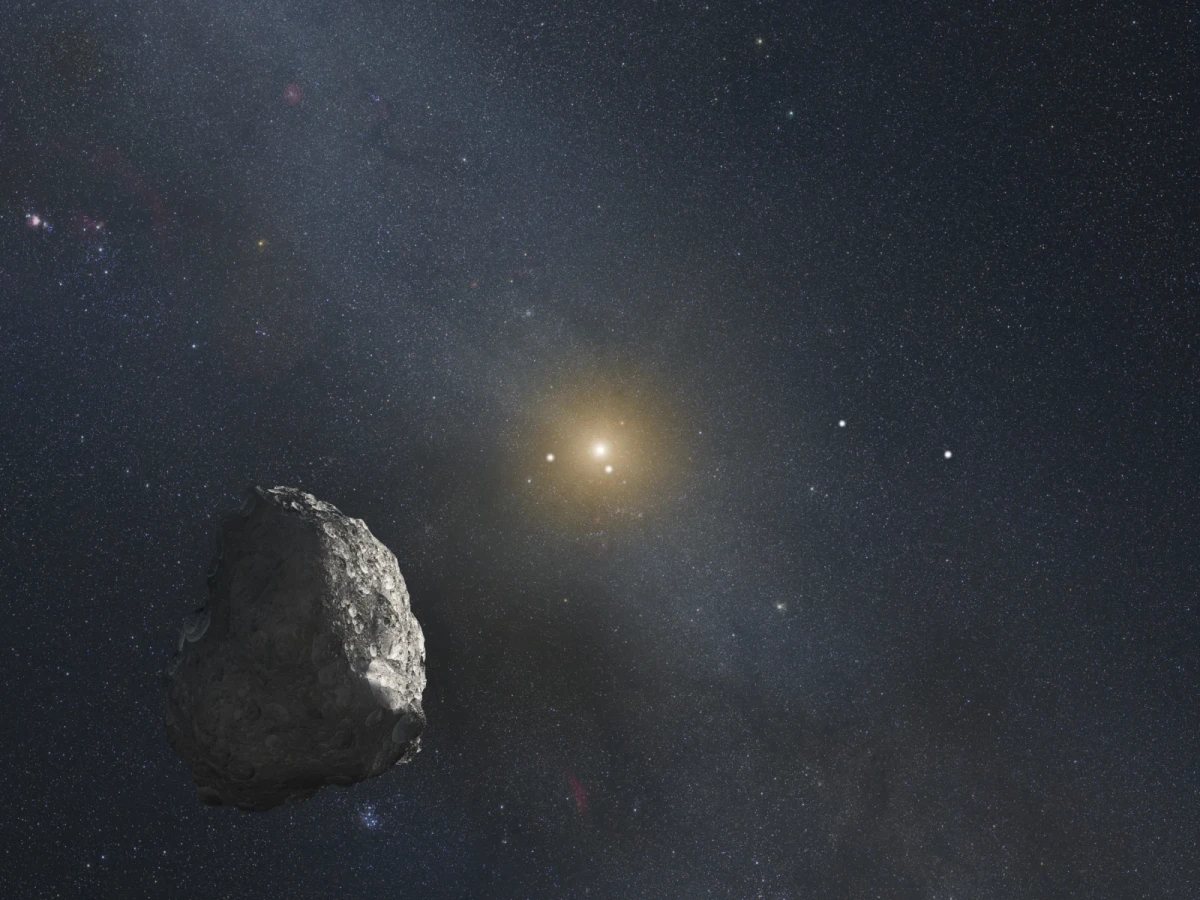
NASA scientists have identified chemical clues pointing to an ancient reservoir of ice in the Kuiper Belt, the distant region beyond Neptune. The evidence comes from just 12 microscopic dust particles collected high above Earth, offering new insight into how water and other materials were distributed during the formation of the Solar System.
NASA researchers have found compelling evidence that an ancient reservoir of ice existed in the outer Solar System, beyond Neptune’s orbit.
The discovery was made by analysing tiny particles of cosmic dust collected from Earth’s stratosphere. Their chemical composition suggests that water interacted with dust in the early Solar System, leaving behind minerals with an unusual oxygen-isotope signature.
The findings provide a new way to investigate the history of the Kuiper Belt, a distant region containing icy objects, dwarf planets and remnants from the Solar System’s formation.
Twelve microscopic particles provided the clues
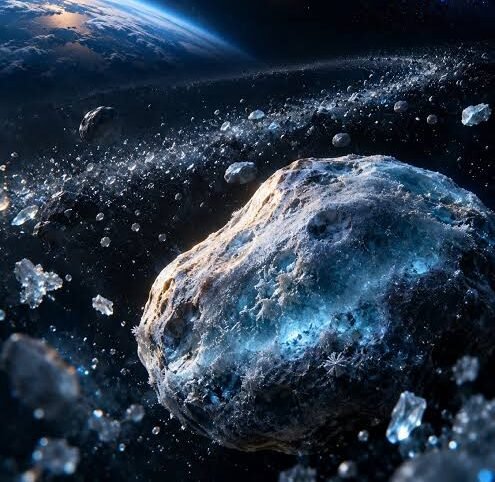
Researchers at NASA’s Johnson Space Center analysed 12 dust particles collected from Earth’s stratosphere by the agency’s ER-2 high-altitude research aircraft.
The particles contained traces associated with energetic particles from the Sun. These signatures helped scientists trace their likely origins to the Kuiper Belt.
Working with researchers from the University of California, Los Angeles (UCLA), the team used advanced electron microscopy and an ion microprobe to examine the minerals and their oxygen-isotope composition.
The researchers identified minerals that formed when water interacted with dust during the early stages of Solar System history.
Their chemical signatures indicated that the ancient water contained unusually high concentrations of heavier oxygen isotopes.
Why the discovery matters
Scientists have suspected for decades that the outer Solar System contained water ice with distinctive isotopic characteristics.
Previous investigations of meteorites and material collected from carbon-rich asteroids provided clues, but the evidence was limited.
The new analysis adds another piece to the puzzle by connecting microscopic particles found in Earth’s atmosphere with material originating in the distant outer Solar System.
It could help researchers better understand how water and other ingredients were distributed across different regions when the planets were forming.
The giant planets may have influenced the distribution of water
The findings also offer insight into the early architecture of the Solar System.
NASA researchers compared the particles’ chemical signatures with measurements from the agency’s Genesis mission, which collected solar-wind material to help scientists understand the composition of the early Solar System.
The scarcity of similar isotopic signatures in meteorites suggests that the giant planets may have limited the mixing of materials between the inner and outer regions.
In other words, Jupiter, Saturn, Uranus and Neptune may have played an important role in determining how different materials moved through the young planetary system.
This could help explain why the chemistry of objects in the outer Solar System differs from material found closer to the Sun.
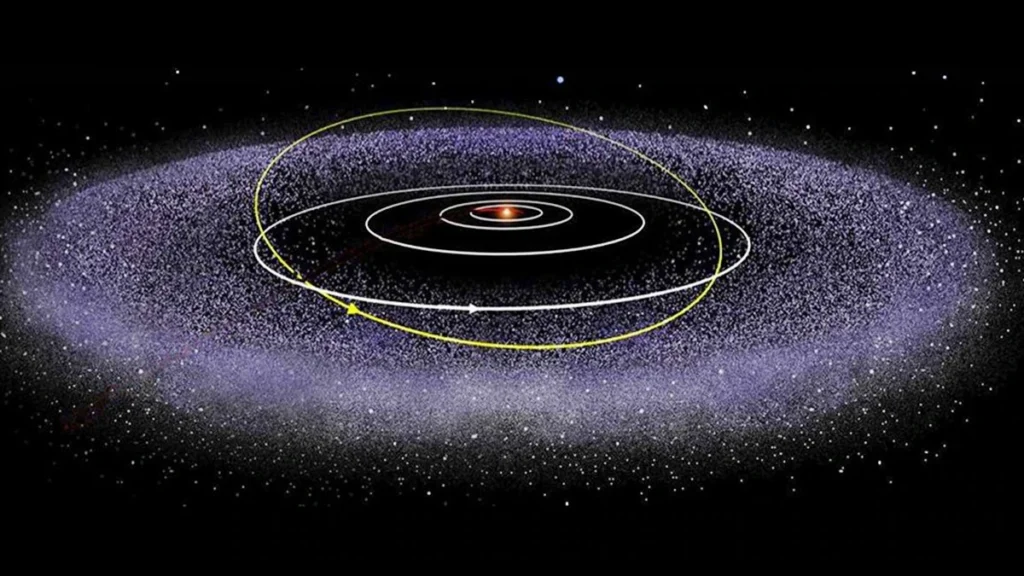
What is the Kuiper Belt?
The Kuiper Belt is a vast region beyond Neptune containing icy bodies left over from the formation of the Solar System.
It includes Pluto and numerous smaller objects orbiting the Sun at enormous distances.
Because these objects preserve material from the Solar System’s earliest period, studying them can reveal information that is difficult to obtain from planets that have undergone billions of years of geological change.
Directly exploring this region remains challenging. That makes the analysis of cosmic dust particularly valuable: tiny particles can preserve chemical clues about places that spacecraft have not yet visited.
An important clue, not a direct sample of an ice reservoir
The discovery should not be interpreted as NASA physically finding a large underground or surface reservoir of ice beyond Neptune.
The researchers examined dust particles collected in Earth’s atmosphere and used their chemical composition and radiation signatures to infer their likely origin and the conditions in which their minerals formed.
The findings strengthen the evidence for an ancient ice-rich environment in the Kuiper Belt, but they do not represent a direct measurement of a present-day ice deposit.
Further research will help scientists refine their understanding of how these materials formed and moved during the Solar System’s earliest history.
The study demonstrates how even microscopic grains of dust can reveal information about the distant past of our planetary neighbourhood.


