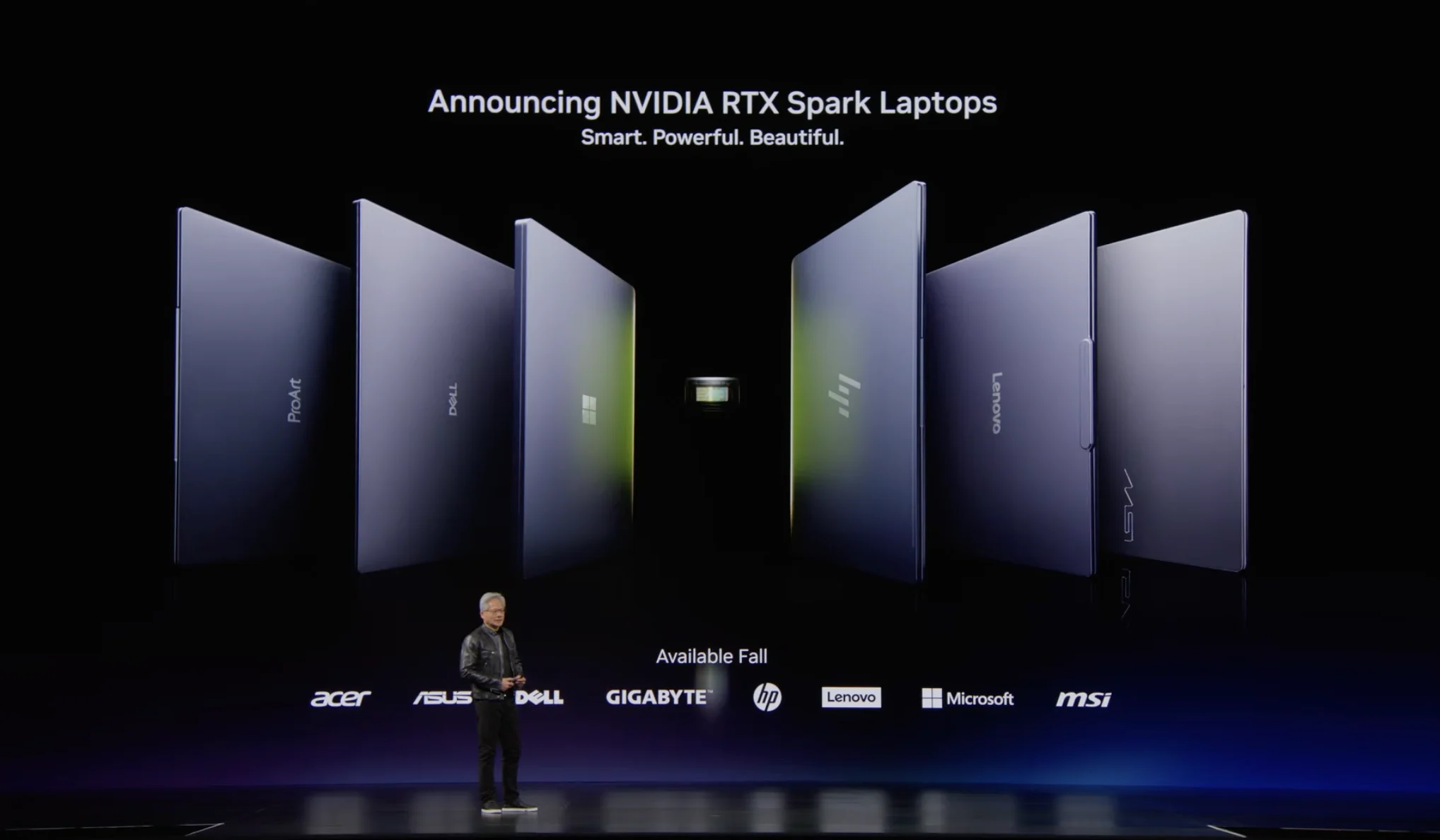
NVIDIA has introduced RTX Spark, a new superchip that brings artificial intelligence directly to laptops and desktops. Here’s what this means for the future of personal computers.
Nvidia launches ‘superchip’ putting AI power into laptops and PCs. Firm says its RTX Spark PC chip for Microsoft Windows will let AI agents replace the mouse and keyboard
NVIDIA Enters a New Era of Artificial Intelligence
NVIDIA has taken another giant step in the world of technology by introducing RTX Spark, a new hardware platform that aims to bring the power of artificial intelligence directly to personal computers. The announcement has been considered one of the most important developments of 2026 and is attracting the attention of experts, developers and consumers around the world.
For years, artificial intelligence applications have been dependent on remote servers and large data centers. With RTX Spark, NVIDIA aims to change this model by allowing advanced AI models to run locally on laptops and desktops.
What is RTX Spark?
RTX Spark is a superchip designed to handle advanced AI workloads without the need for a constant connection to the cloud.
In practical terms, this means that users will be able to:
Use AI assistants in real time.
Generate images and videos with AI.
Process complex documents.
Create professional content faster.
Run large language models directly on their devices.
According to NVIDIA, RTX Spark is built for the new era of AI computing, where most intelligent processes will be performed locally and not on remote servers.
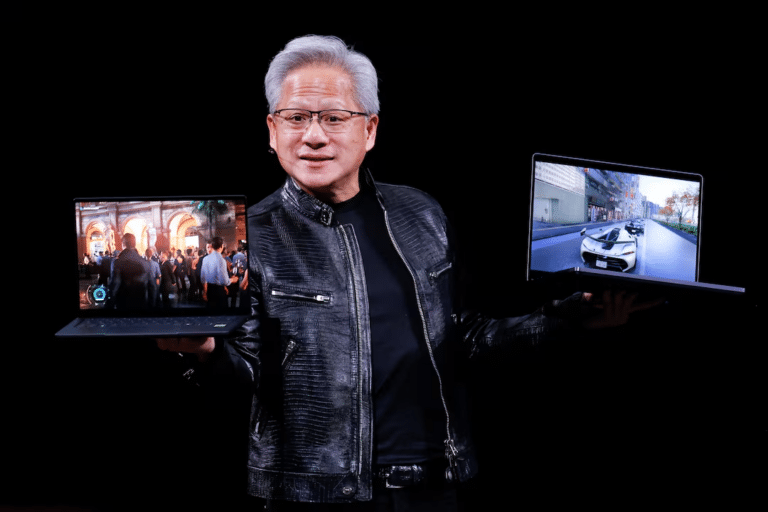
Why is this development so important?
The technology industry is experiencing a major transformation driven by artificial intelligence. Until now, most AI services relied on the cloud to perform the necessary processing.
However, this model presents several challenges:
Response delays.
Dependence on the internet.
High infrastructure costs.
Data privacy concerns.
RTX Spark aims to solve these problems by bringing processing power directly to the user’s device.
This will result in:
Higher speed
Local processing eliminates the need to send data to the cloud and wait for a response from servers.
Greater privacy
Personal data can remain on the user’s device without being uploaded to the internet.
Lower costs
Companies can reduce spending on data centers and cloud services.
Collaboration with Technology Giants
NVIDIA has confirmed that it is working closely with some of the largest computer manufacturers in the world.
These include:
Dell
HP
LenovoAsus
Acer
MSI
The first RTX Spark devices are expected to hit the market in the coming months.
This collaboration shows that the industry is preparing for a massive transition to AI-driven computing.
AI in Personal Computers: The Future Billion-Dollar Market
Analysts believe that AI-powered computers will constitute the fastest-growing segment in the PC industry in the coming years.
Following the success of chatbots and AI-powered content generation, the demand for devices that can process AI locally is growing rapidly.
According to industry forecasts:
Millions of AI laptops will be sold by the end of 2027.
Content creators will be among the main users.
Businesses will adopt local AI solutions for security reasons.
Developers will have easier access to advanced models.
Competition with Intel and AMD
NVIDIA is not the only company investing heavily in artificial intelligence.
Intel and AMD have also introduced new products focused on AI.
However, NVIDIA continues to be considered the market leader thanks to its dominance in graphics processors and technologies for training and running artificial intelligence models.
RTX Spark is seen as an attempt to extend this dominance to the personal computer segment.
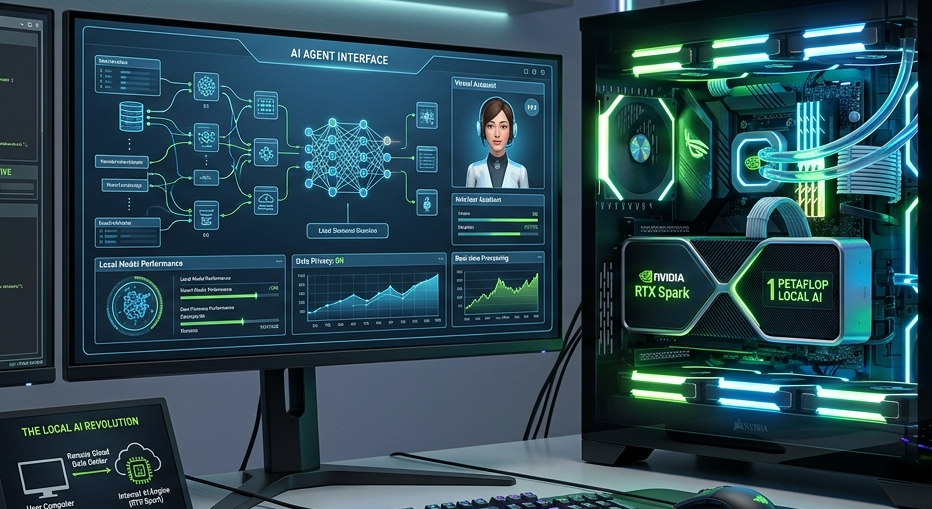
What does this mean for users?
For ordinary users, the changes may not be immediately noticeable. However, in the coming years, AI will be integrated into almost every aspect of computer use.
This includes:
More intelligent virtual assistants.
Real-time translation.
Automatic video editing.
Presentation generation.
Automation of everyday tasks.
Essentially, the computer will become more of an intelligent partner than a traditional work tool.
Conclusion
The introduction of RTX Spark confirms that artificial intelligence is moving from large data centers to personal devices. NVIDIA is trying to position itself at the center of this transformation and set the standards for the next generation of computers.
If the technology lives up to expectations, RTX Spark
The Hardware: RTX Spark & Vera CPU
NVIDIA is famous for dominating the data center chips used to train AI, but they are now aggressively moving into the consumer market to handle inference (running the AI models).
Component Target Market Key Role in the Revolution
RTX Spark Superchip Laptops & Desktops Combines CPU and GPU capabilities to run highly capable AI models and local agents smoothly without killing battery life.
Vera CPU Data Centers & Enterprise Built specifically to handle the heavy orchestration, tool usage, and coding logic that autonomous agents require.
The iPhone Moment” for PCs
Industry analysts are already comparing this rollout to the launch of the iPhone or the initial drop of ChatGPT. Up until now, “AI PCs” have had a mixed reception because the software and hardware weren’t fully integrated. By partnering closely with Microsoft to deeply embed these capabilities into Windows, NVIDIA is attempting to turn the traditional, app-centric PC into a true AI assistant.
It is a massive play to put an AI supercomputer into every home—and it’s officially kicking off later this year.