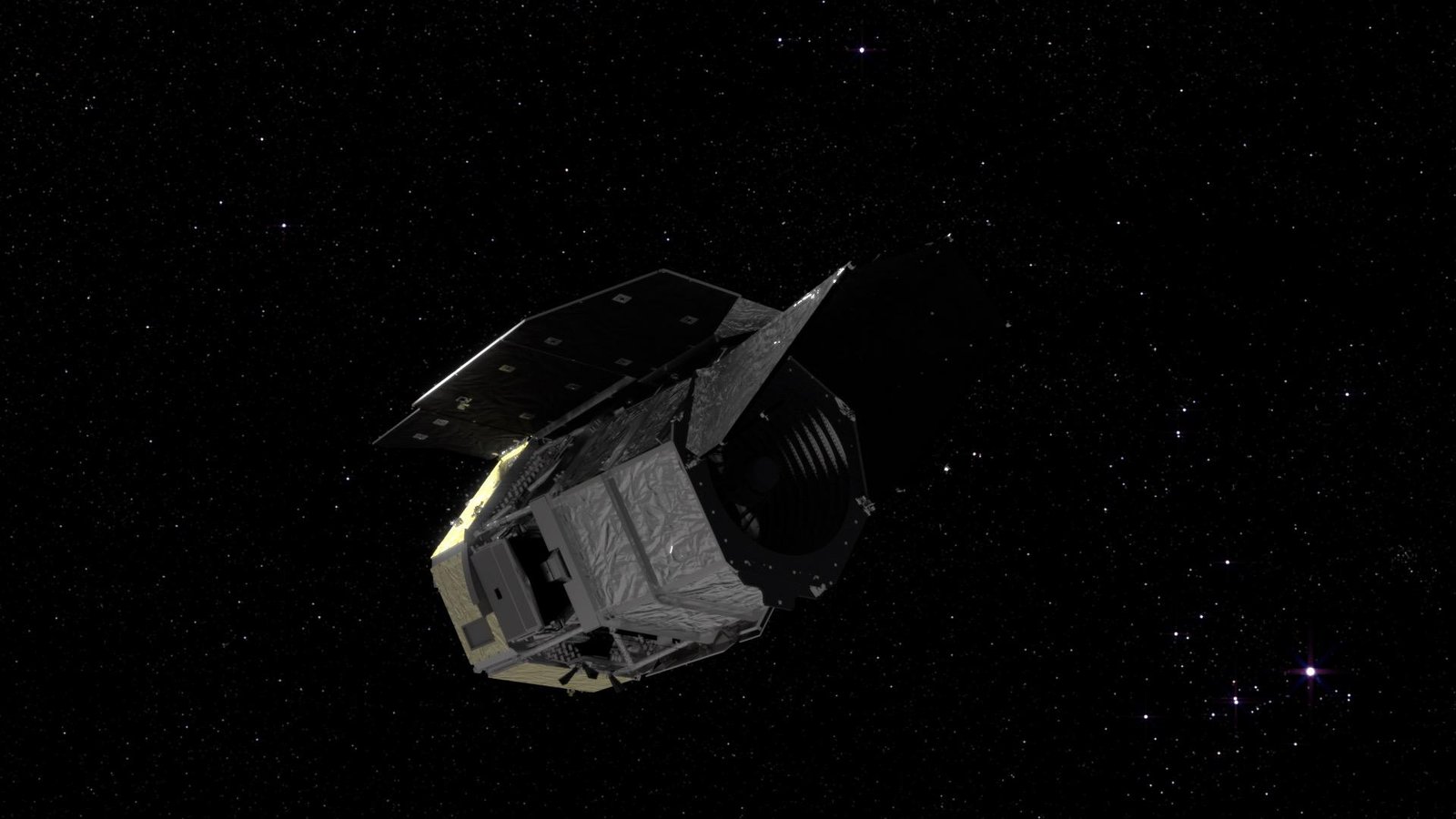
NASA is preparing to launch one of the most ambitious space observatories ever built, sending the Nancy Grace Roman Space Telescope into orbit aboard a SpaceX Falcon Heavy. The mission could transform our understanding of dark energy, exoplanets, distant galaxies and the structure of the universe itself.
After years of development, testing and engineering work, NASA is preparing for a major milestone in space science.
The Nancy Grace Roman Space Telescope, one of the agency’s most advanced observatories, is scheduled to launch today, August 30, 2026, from NASA’s Kennedy Space Center in Florida.
The observatory will travel into space aboard a SpaceX Falcon Heavy, one of the most powerful rockets currently in operation.
But the rocket is only the beginning of the story.
What happens after launch could be far more important.
Roman was designed to survey enormous portions of the sky while collecting data on billions of cosmic objects. Unlike traditional observatories that focus on relatively small areas to produce highly detailed observations, Roman is designed to combine wide-field astronomy with powerful infrared instruments.
That capability could give scientists an entirely new view of the universe.
And some of the discoveries may challenge what we currently believe about how the cosmos works.
A Telescope Designed to See More of the Universe
When people hear about a new space telescope, the first question is often how far it can see.
Roman is different.
Its greatest advantage is not simply distance.
It is scale.
NASA says Roman will have a field of view at least 100 times larger than Hubble’s, allowing it to survey huge sections of the sky far more efficiently. Over the course of its mission, the telescope is expected to observe an enormous number of galaxies and other astronomical objects.
That means scientists will be able to study the universe statistically in ways that were previously extremely difficult.
Instead of examining one galaxy at a time, researchers can analyze millions or even billions of objects and look for patterns.
Those patterns could reveal how the universe evolved.
They could also expose things that current theories cannot fully explain.
The Biggest Mystery: Dark Energy
One of Roman’s primary scientific goals is to investigate one of the greatest mysteries in modern physics:
dark energy.
Scientists know that the universe is expanding.
They also know that this expansion is accelerating.
What they do not know is exactly why.
Dark energy is the name scientists use for whatever is driving this accelerated expansion, but its true nature remains unknown.
Roman will study the distribution and evolution of galaxies across enormous regions of the universe, helping scientists measure how cosmic structures have changed over time.
These observations could provide some of the strongest evidence yet about the nature of dark energy.
And there is an intriguing possibility.
The observations may not match current theories.
If that happens, scientists could be forced to rethink some fundamental assumptions about the universe.
That is one of the reasons Roman is considered such an important mission.
Roman Will Also Search for Thousands of Exoplanets
Dark energy is only part of the mission.
Roman will also play an important role in the search for exoplanets — worlds orbiting stars beyond our Sun.
Thousands of exoplanets have already been discovered.
But compared with the enormous number of planets believed to exist in the Milky Way, that catalog represents only a tiny fraction.
Roman is expected to dramatically expand our understanding of planetary systems.
Its observations will help scientists determine how common different types of planets are and how planetary systems are structured.
Researchers will be able to study planets that are difficult to detect using traditional techniques.
That could include worlds that are very different from anything in our own Solar System.
A Special Instrument Could Help Scientists See Planets Near Their Stars
One of Roman’s most technologically interesting instruments is its Coronagraph Instrument.
The problem astronomers face is straightforward:
Stars are incredibly bright.
Planets are comparatively faint.
Trying to observe a planet directly next to its star is therefore extremely difficult because the star can overwhelm the planet’s light.
A coronagraph is designed to block or suppress the star’s light, allowing scientists to study much fainter objects nearby.
Roman’s coronagraph will serve as a technology demonstration while also providing scientists with new capabilities for studying exoplanets and planetary systems.
The technology could become particularly important for future missions designed specifically to search for potentially habitable worlds.
Roman and James Webb Are Not Competitors
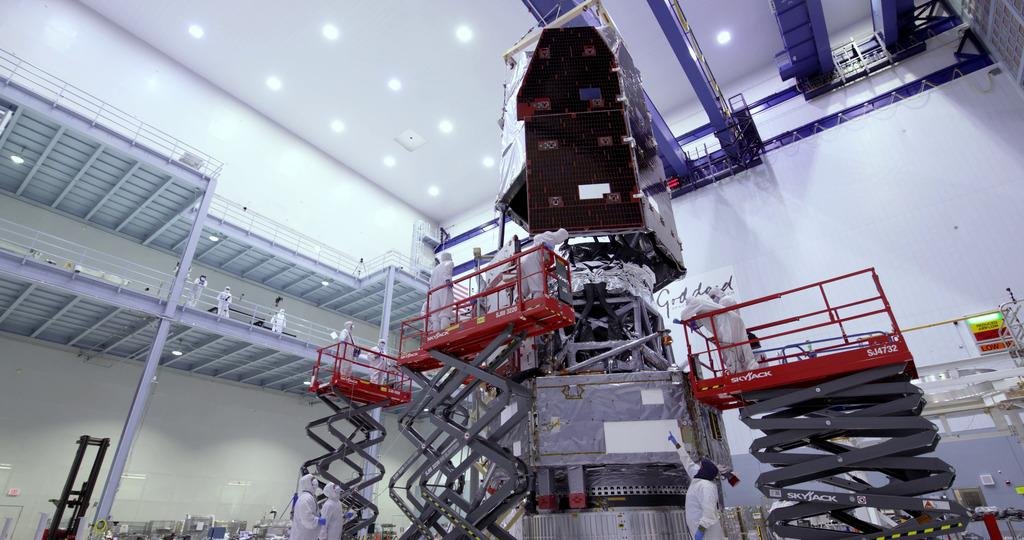
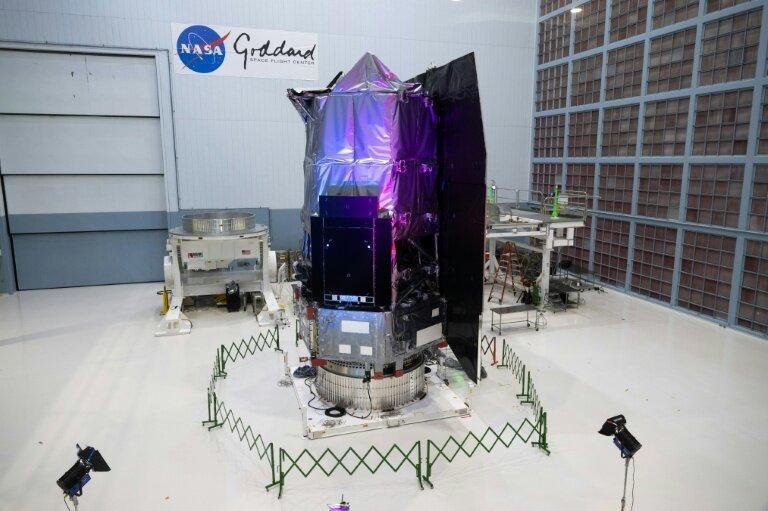
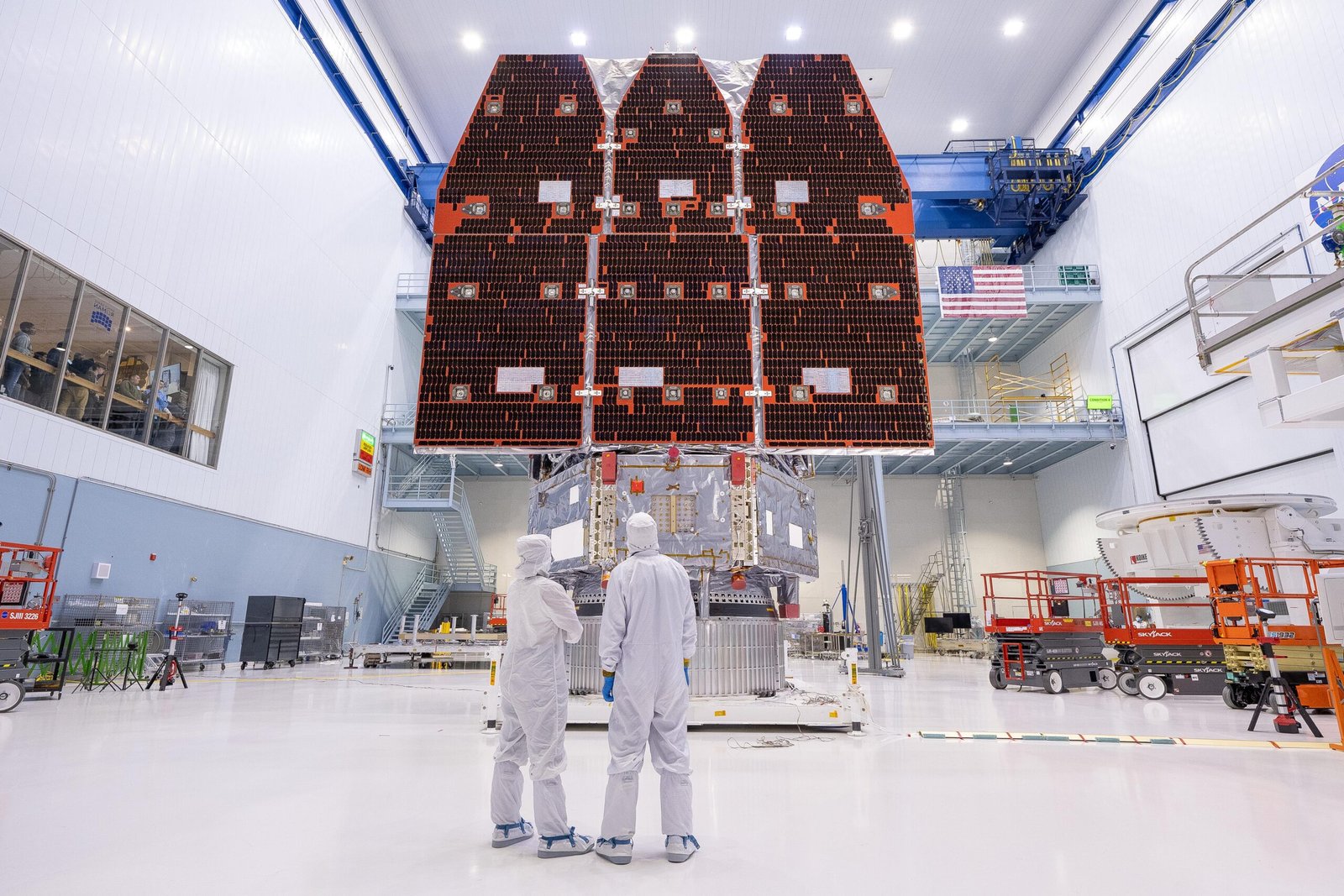
It would be easy to describe Roman as NASA’s replacement for the James Webb Space Telescope.
That would be incorrect.
The two observatories are designed for different purposes.
James Webb is exceptionally powerful for detailed observations of individual objects, including distant galaxies, stars and planetary systems.
Roman, meanwhile, is designed to survey enormous areas of the sky.
In simple terms, Webb is extremely powerful when scientists want to study something in great detail.
Roman is designed to find and measure a huge number of objects across a much wider area.
The two telescopes can therefore complement each other.
Roman could identify an interesting object during a large survey.
Webb could then potentially study that object in greater detail.
That combination could become extremely powerful for astronomy.
The Mission Will Generate an Extraordinary Amount of Data
There is another technological challenge hiding behind Roman’s scientific goals.
Data.
A telescope capable of surveying such a large portion of the sky will generate enormous amounts of information.
Scientists will need sophisticated computing systems and software to process those observations.
Algorithms will have to identify galaxies, stars, gravitational effects, possible planets and other astronomical phenomena.
Researchers will then need to determine which discoveries are scientifically significant.
This means Roman is not simply a space mission.
It is also a massive data science project.
Modern astronomy increasingly depends on the ability to collect, store and analyze huge datasets.
Roman will push that requirement even further.
Why This Matters Beyond Astronomy
The technology being developed for Roman has implications far beyond the mission itself.
Building a space telescope requires advances in:
- optical engineering
- infrared sensors
- imaging technology
- spacecraft systems
- computing
- data processing
- communications
- precision control
Every component must work in an environment that is extremely difficult to repair or access.
Once the telescope reaches space, engineers cannot simply send a technician to replace a damaged component.
Reliability is therefore one of the most important parts of the entire project.
That makes Roman an enormous engineering achievement even before it begins its scientific mission.
A Multi-Billion-Dollar Bet on Discovery
Roman represents a massive investment in scientific research.
The telescope has been developed over many years and has required contributions from NASA centers, contractors, scientists and international partners.
The cost reflects the complexity of building an observatory capable of operating for years in space while maintaining extremely precise instruments.
But the potential scientific return is equally enormous.
A single discovery could fundamentally change our understanding of the cosmos.
That is ultimately what makes missions like Roman different from commercial technology projects.
The goal is not necessarily to create something profitable.
The goal is to discover something humanity has never seen before.
Named After a Pioneer of Space Astronomy
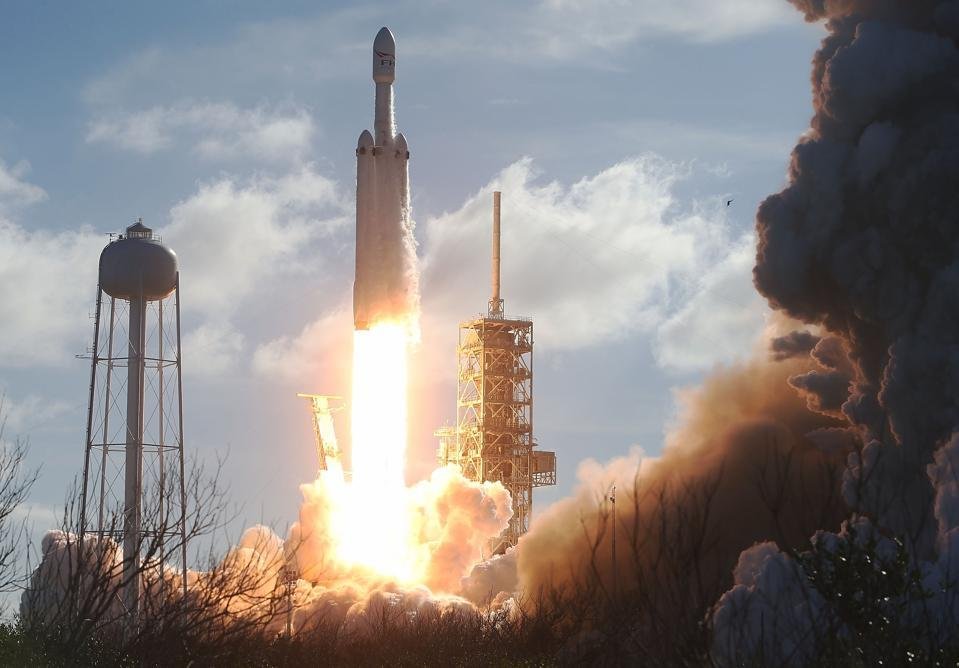
The telescope is named after Nancy Grace Roman, a pioneering NASA astronomer who played a major role in establishing the agency’s space astronomy programs.
Roman was instrumental in the development of the Hubble Space Telescope program and became known as the “mother of Hubble.”
Naming NASA’s next major space observatory after her reflects the connection between generations of space astronomy.
Hubble changed astronomy by giving scientists an unprecedented view of the universe.
Roman is designed to build on that legacy while taking a very different approach.
What Could Roman Discover That Nobody Expected?
This may be the most exciting question surrounding the mission.
Scientists know what they want Roman to investigate.
They have carefully designed the mission around dark energy, exoplanets, galaxies and other major scientific questions.
But history shows that powerful new instruments often discover things nobody predicted.
Hubble produced observations that transformed astronomy.
James Webb has revealed extremely distant galaxies and cosmic structures that have challenged some existing assumptions about the early universe.
Roman will open another window.
And whenever scientists gain access to a new window on the cosmos, unexpected discoveries become possible.
It could find unusual planetary systems.
Previously unknown types of stars.
Rare cosmic events.
Unexpected structures.
Or perhaps something that forces scientists to reconsider an established theory.
The most important discovery may be something researchers are not currently looking for.
The Search for Other Worlds
Roman is not specifically designed to detect extraterrestrial life.
But its exoplanet discoveries could become important for future searches.
Before scientists can determine how common potentially habitable planets are, they need to know how many planets exist and what kinds of planetary systems are common.
Roman will help build that statistical picture.
Are small rocky planets common?
How frequently do stars have multiple planets?
How diverse are planetary systems?
How often do planets exist at distances where liquid water could potentially exist?
Roman will not answer all of these questions by itself.
But it can provide an enormous amount of information that future missions can build upon.
The Launch Is Only the Beginning
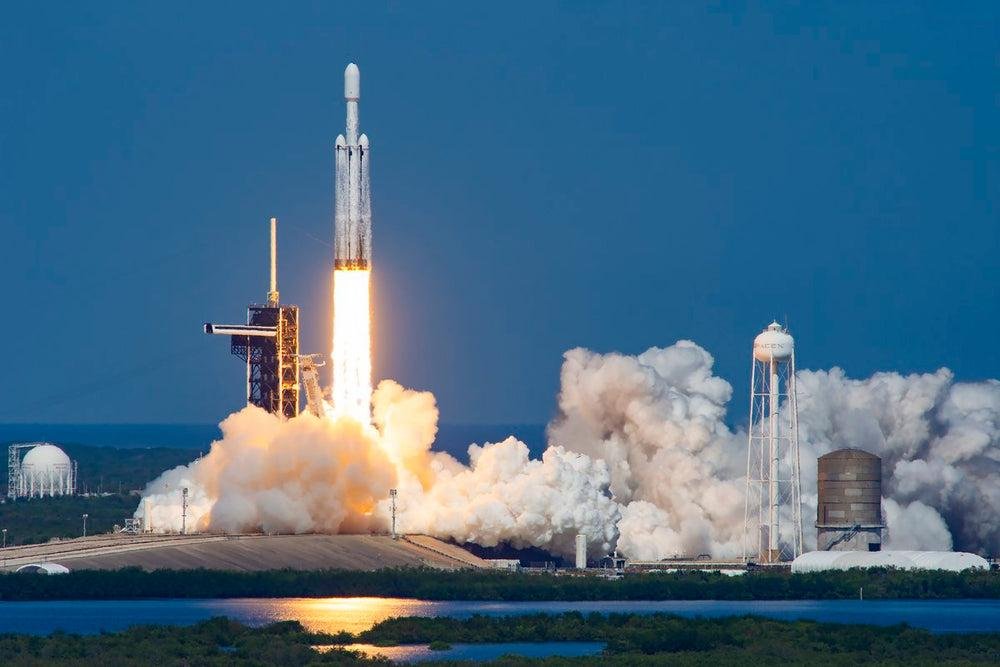
The launch itself will be one of the most visible moments of the mission.
But getting Roman into orbit is only the first major step.
After launch, engineers will need to activate and test the spacecraft’s systems.
The observatory will have to reach its operational configuration.
Its instruments will need to be calibrated.
And scientists will have to verify that the telescope is functioning as expected.
Only then will the real mission begin.
The scientific community will finally be able to point Roman toward the sky and begin collecting observations.
A New Era of Wide-Field Space Astronomy
The significance of Roman is difficult to summarize with a single number.
Its huge field of view matters.
Its infrared capabilities matter.
Its exoplanet research matters.
Its dark-energy investigations matter.
But the biggest change may come from putting all of these capabilities together.
For decades, astronomers have relied on different observatories to answer different questions.
Roman is designed to conduct massive surveys that can connect those questions.
A better understanding of galaxies can improve our understanding of cosmic evolution.
A better map of the universe can help scientists investigate dark energy.
A larger exoplanet catalog can reveal how planetary systems form.
And all of those discoveries can provide targets for other telescopes.
The technology industry is currently dominated by artificial intelligence, chips, smartphones and increasingly powerful computing systems.
But some of the most important technological achievements are happening far beyond Earth.
The Nancy Grace Roman Space Telescope represents a different kind of technological ambition.
It is not designed to make our phones faster.
It is not designed to generate more content.
It is designed to answer questions that humanity has been asking for centuries.
How did the universe become what it is?
What is driving its accelerating expansion?
How many worlds exist beyond our Solar System?
And perhaps most importantly:
What else is out there that we have never seen?
If today’s launch goes according to plan, Roman will begin a journey that could reshape astronomy for years to come.
The telescope may confirm some of our theories.
It may destroy others.
And it may reveal entirely new mysteries.
That is the real promise of space technology.
The better our instruments become, the more we realize how much there is left to discover.