The robot crossed the line in 9.39 seconds
For more than 17 years, Usain Bolt’s 9.58-second 100-meter world record has represented the absolute limit of human sprinting.
Now, a humanoid robot has gone faster.
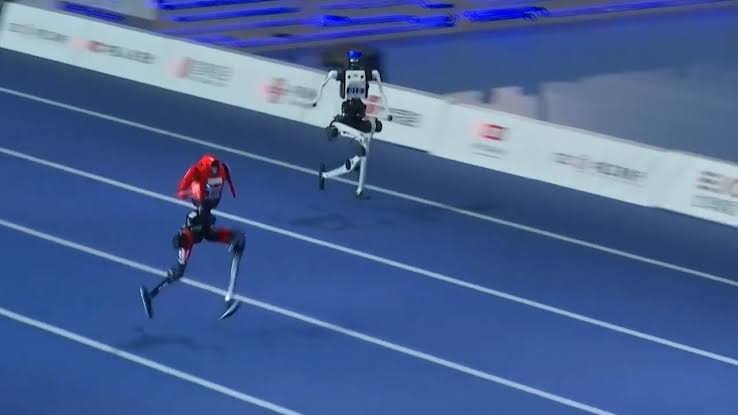
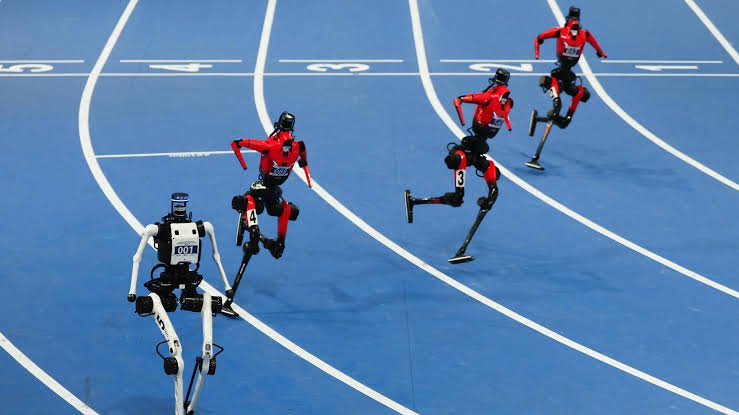
At the World Humanoid Robot Games in Beijing, China’s Tiangong Ultra completed a 100-meter preliminary heat in 9.39 seconds, beating Bolt’s human record by 0.19 seconds.
The performance immediately became one of the most talked-about robotics stories of the year.
Reuters, AP and multiple international technology and news outlets reported the result as humanoid robots competed in Beijing in an event designed to showcase advances in robotics, artificial intelligence and physical control.
But there is a major detail behind the headline.
The robot may be faster than humans over 100 meters. That does not mean humanoid robots are ready to replace humans.
In fact, the race itself demonstrated just how much work remains.
Tiangong Ultra was not the only robot to beat Bolt
Tiangong Ultra, developed by the Beijing Humanoid Robot Innovation Center, was not alone.
Another humanoid robot, Lightning, developed by smartphone maker Honor, also completed the 100 meters faster than Bolt’s record, recording 9.47 seconds.
Tiangong Ultra initially trailed Lightning but accelerated toward the end of the race and eventually crossed the finish line first.
Both machines therefore posted times below the 9.58-second mark set by Bolt at the 2009 World Athletics Championships in Berlin.
That makes the result more significant than a single lucky run.
Two different humanoid platforms managed to cross the same benchmark.
But there was another detail that quickly went viral.
The robots could run faster than Bolt — but they struggled to stop
The finish was very different from a human Olympic sprint.
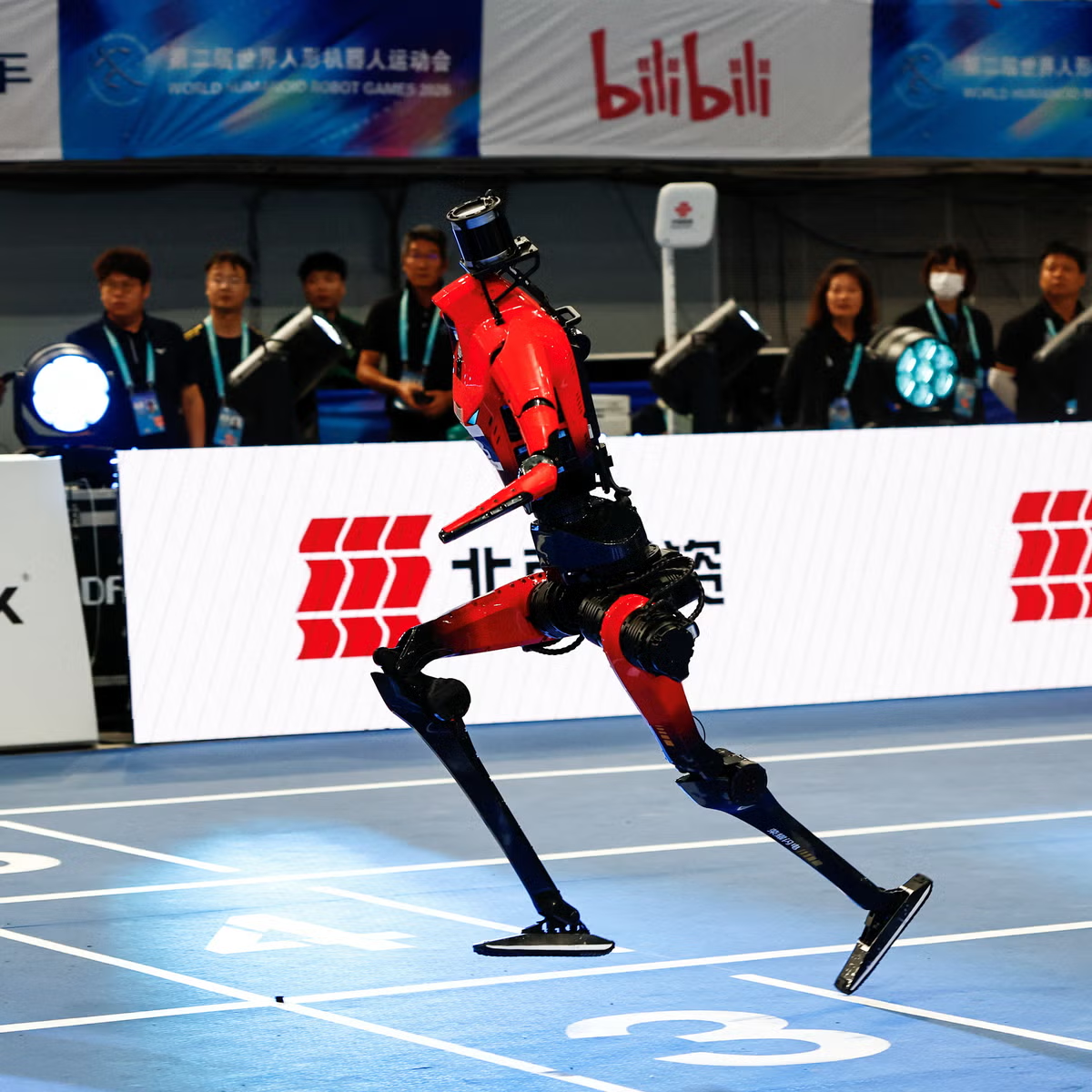
After crossing the line, the robots struggled to slow themselves down.
Instead of smoothly decelerating like a human athlete, they crashed into thick protective mats positioned beyond the finish line.
Reuters reported that both robots had difficulty stopping after their high-speed runs, with Tiangong Ultra losing balance and moving toward the side of the track.
Videos and images of the robots falling after their record-breaking runs added an unexpected element to the story.
They looked extraordinarily fast.
But they did not yet look particularly graceful.
And that distinction matters.
This is not really about running
The biggest significance of the event is not whether a robot can beat a human sprinter.
Robotics researchers are much more interested in how the machines control their bodies.
Running on two legs is an extremely difficult engineering problem.
A humanoid robot must continuously calculate balance, foot placement, acceleration and body movement while dealing with the physical forces generated by every step.
A small error can cause the entire machine to fall.
That is why the progress from last year’s competition is particularly striking.
Reuters reported that Tiangong Ultra had previously completed the 100 meters in 21.50 seconds during the 2025 edition of the competition.
One year later, the robot recorded 9.39 seconds.
That is an enormous improvement.
The speed demonstrates how rapidly engineers are improving motors, batteries, sensors, control systems, software and AI-assisted movement.
More than 2,000 robots are competing
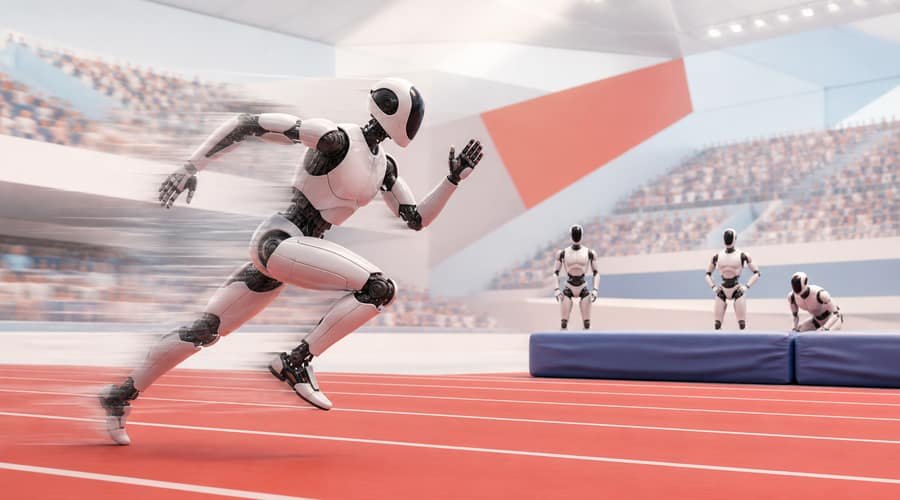
The Beijing event is much bigger than a single sprint.
The second World Humanoid Robot Games feature more than 2,000 robots, representing hundreds of teams from multiple countries. The competition includes 51 events, ranging from athletic competitions to activities designed to test robots in practical environments.
Robots are competing in activities including:
- Sprinting
- Football
- Table tennis
- Boxing
- Jumping
- Obstacle events
- Industrial tasks
- Object manipulation
- Other real-world scenarios
This is important because the future of humanoid robots will not be determined by how quickly they can run.
It will be determined by whether they can actually do useful work.
Can a robot actually work like a human?
That is the much harder challenge. Imagine a humanoid robot working inside a factory.
It may need to walk across an unfamiliar environment, recognize an object, pick it up, identify where it belongs, connect cables, recover after making a mistake and continue working.
That requires far more than speed.
It requires perception.
Reasoning.
Dexterity.
Balance.
Planning.
And the ability to respond when something unexpected happens.
Reuters reported that many of the competition’s scenario-based events are designed around precisely these kinds of practical abilities. More than 40% of those tests require a high degree of autonomy.
That could ultimately be much more important than the 9.39-second sprint.
China is betting heavily on humanoid robots
The event also highlights China’s increasingly ambitious humanoid-robot industry.
Chinese technology companies and robotics startups are investing heavily in machines that could eventually operate in factories, warehouses, offices, homes and other environments. The government has identified humanoid robotics as an important strategic technology sector.
The World Humanoid Robot Games therefore serve two purposes.
They are entertainment.
But they are also a technology showcase. The competition gives engineers a place to test hardware and software under pressure while giving investors, companies and the public a visible demonstration of how quickly the technology is developing.
Reuters has described the event as part of China’s broader push to turn humanoid robotics into an economically important industry.
There is still a long way to go
The spectacular sprint should not hide the limitations.
The robots still struggle with stability.
They can fall.
They can have difficulty stopping.
They require significant engineering and energy.
And performing a controlled sprint on a prepared track is very different from navigating a crowded factory, climbing stairs, handling fragile objects or working continuously for hours.That is why the most important part of the Beijing competition may not be the fastest time.
It may be the tests that look much less spectacular. Can a robot pick up the correct object?
Can it recognize a cable?
Can it plug something into the right socket?
Can it recover after making a mistake?
Can it understand its surroundings?
Can it perform a task repeatedly without human intervention?
Those are the benchmarks that will determine whether humanoid robots move from impressive demonstrations into everyday life.
The future is getting faster
Still, the 9.39-second run is an extraordinary signal.
Just one year after recording 21.50 seconds, Tiangong Ultra has cut more than half the time from its previous 100-meter performance.
That pace of improvement is exactly what makes humanoid robotics one of the most important technology stories of 2026.
AI is becoming better at reasoning.
Robots are becoming better at moving.
Sensors are becoming more sophisticated.
Motors are becoming more powerful.
And increasingly capable AI systems are beginning to connect perception with physical action.
The combination could eventually create machines that do not simply answer questions on a screen but physically interact with the world.
That is the real story behind the robot that just beat Usain Bolt.
It is not that machines have suddenly become better athletes than humans.
It is that the boundary between artificial intelligence and the physical world is moving faster than many people expected.
And if the progress seen in Beijing continues, today’s strange-looking sprinting robots could eventually become the early prototypes of machines that are doing real work all around us.