

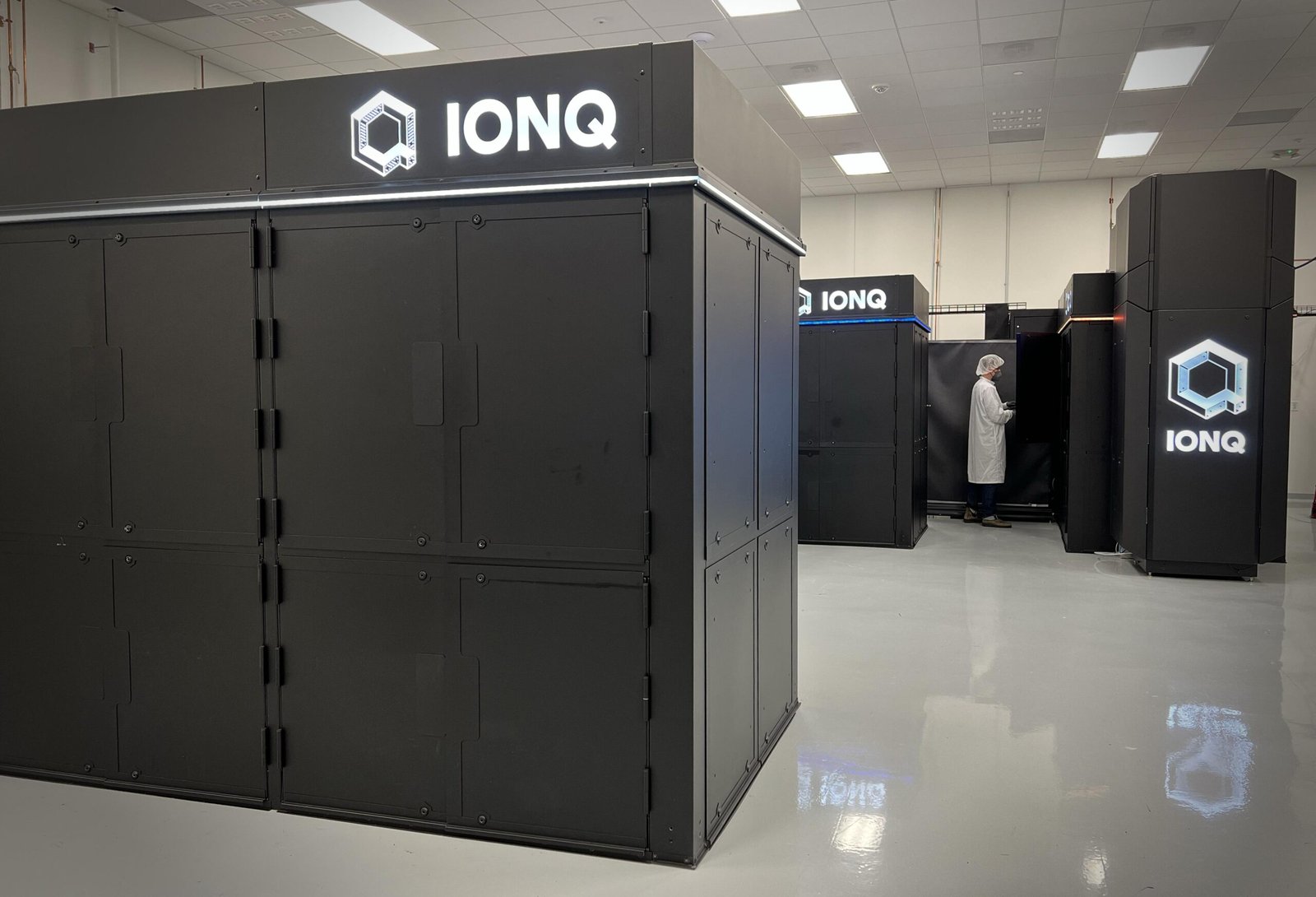
The quantum computing company reported 336% year-over-year third-quarter revenue growth and raised its full-year forecast to $505–$515 million. But a large portion of the reported revenue comes from its newly acquired semiconductor manufacturing business, while adjusted operating losses remain substantial.
Quantum computing company IonQ has raised its full-year 2026 revenue outlook to between $505 million and $515 million, citing strong demand across its quantum computing, networking, sensing and manufacturing businesses.
The company announced the updated guidance on November 5 alongside its third-quarter financial results. Revenue for the three months ended September 30 reached $173.8 million, up 336% from the same period a year earlier.
The figures mark a major expansion for a company operating in a sector that is still working to turn scientific progress into repeatable commercial applications. They also highlight how IonQ’s business is changing following its acquisition of semiconductor manufacturer SkyWater Technology.
A record quarter — with an important distinction
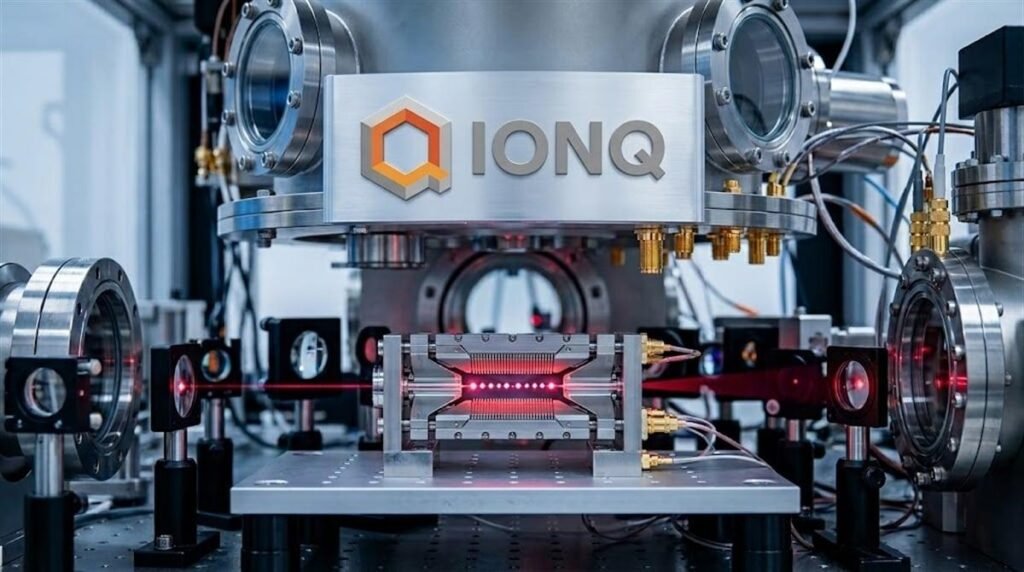
IonQ reported $173.8 million in third-quarter revenue. Its IonQ Platform segment generated $90.3 million, an increase of 127% year over year. SkyWater Foundry Services contributed another $83.5 million.
That distinction matters. The headline revenue figure does not come exclusively from quantum computing systems and services. It includes semiconductor foundry operations, which broaden the company’s business but make direct comparisons with quantum-computing-only competitors more complicated.
IonQ’s revised full-year guidance of $505 million to $515 million represents a significant increase from the $450 million to $460 million forecast it issued in September.
The company also said it expects quantum computing revenue to grow 110% year over year in 2026.
Contracts and deployments point to commercial interest
The company highlighted several customer agreements and deployments during the quarter.
Among them was a $33 million multi-product contract with SDT involving the Superion 256 quantum computer and a quantum memory platform. IonQ also announced a $25 million agreement with Florida International University for a Superion 256 deployment.
The company said it had signed an $8.2 million agreement with Congruity360 for post-quantum cryptography and quantum key distribution solutions. It also reported a $28 million contract through the US Defense Advanced Research Projects Agency’s It’s About Time programme to deliver optical atomic clocks.
These contracts demonstrate that the commercial opportunity extends beyond running calculations on a quantum processor. Timing, secure communications, sensing and research infrastructure are also part of the market IonQ is pursuing.
However, announced contract values should not be treated as revenue already recognised. Deliveries, contract milestones and accounting schedules determine when that money appears in financial statements.
Nvidia connection brings quantum and classical computing closer
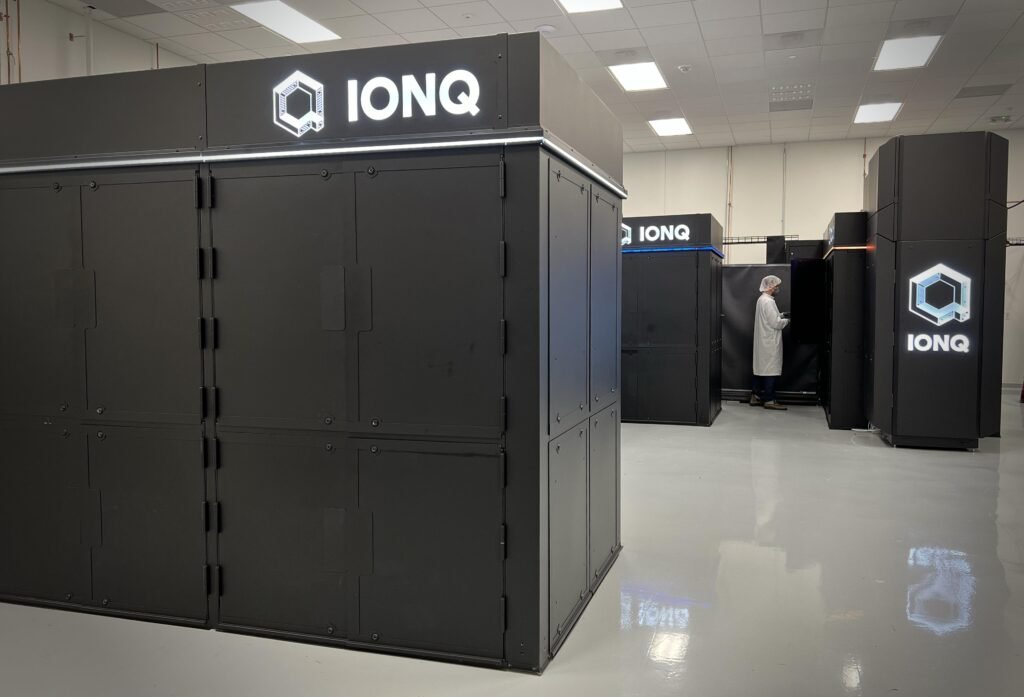
IonQ said its Superion 256 system will become the first on-premises quantum computer at Nvidia’s Accelerated Quantum Research Center.
The deployment is notable because it points toward a hybrid computing model. Quantum processors are not expected to replace conventional computers across general workloads. Instead, researchers are exploring ways to connect quantum systems with classical high-performance computing resources for specialised tasks.
That approach could eventually support research in areas such as materials science, chemistry and optimisation. But the commercial usefulness of these systems will depend on performance, reliability, error rates and the ability to demonstrate advantages over conventional computing.
Revenue growth does not yet mean profitability
The headline growth figures need to be read alongside the company’s costs.
IonQ reported an adjusted EBITDA loss of $133.6 million for the third quarter. Its reported GAAP net income of $564 million was heavily affected by a non-cash mark-to-market impact involving warrants. It should not be interpreted as evidence that the company’s core operations generated comparable cash profits.
IonQ said it had $1.7 billion in cash, cash equivalents and investments at the end of September. Including a $2 billion equity offering that closed on October 16, its pro forma figure was $3.7 billion.
The financial position gives the company substantial resources to invest, but it also raises questions about the pace at which revenue growth can translate into sustainable margins.
What happens next?
Investors and customers will be watching whether IonQ can turn its expanding backlog into completed deployments and recurring revenue.
The company reported remaining performance obligations of $1.2 billion, more than double the previous level. That figure is an indicator of contracted future business, but it is not the same as cash already received or revenue guaranteed in a particular quarter.
The next tests will include delivery schedules, system performance, customer adoption and the integration of SkyWater into the wider business.
Quantum computing is entering a commercial test — not a victory lap
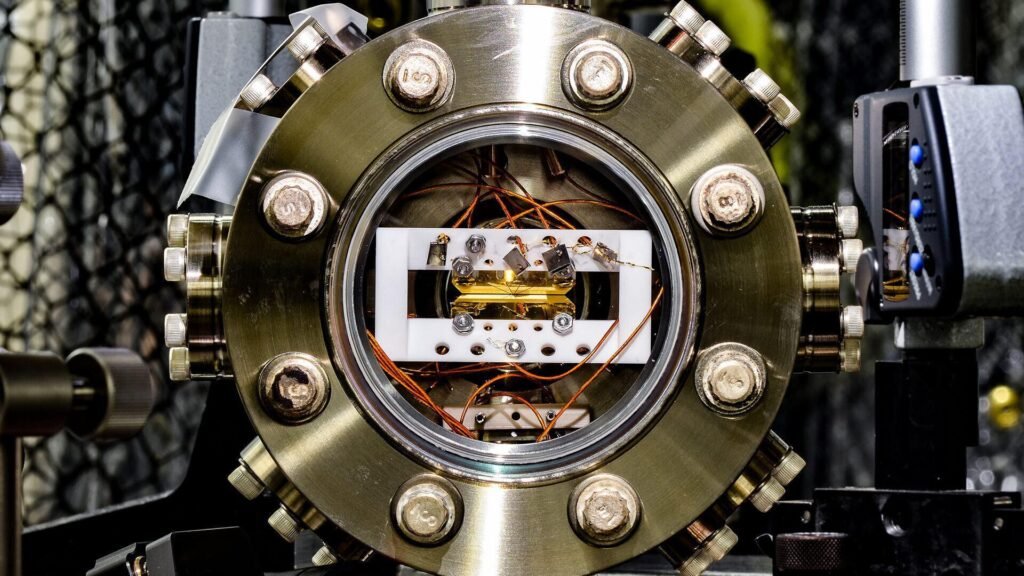
IonQ’s latest results suggest that the quantum computing market is moving beyond a phase defined almost entirely by research announcements. Customer contracts, hardware deployments and manufacturing capacity are becoming central parts of the competitive story.
But revenue growth alone does not prove that quantum computers have reached broad commercial usefulness. IonQ’s results combine several business lines, including a semiconductor foundry, and its adjusted EBITDA loss shows that scaling the business remains expensive.
The Nvidia research-centre deployment is worth watching because hybrid quantum-classical systems may offer a more realistic path to early adoption than promises of general-purpose quantum machines replacing conventional computers.
For the industry, the question is no longer simply whether quantum computers can be built. It is whether they can solve valuable problems reliably, at a cost customers are willing to pay — and whether the companies building them can turn that demand into durable profits.


