

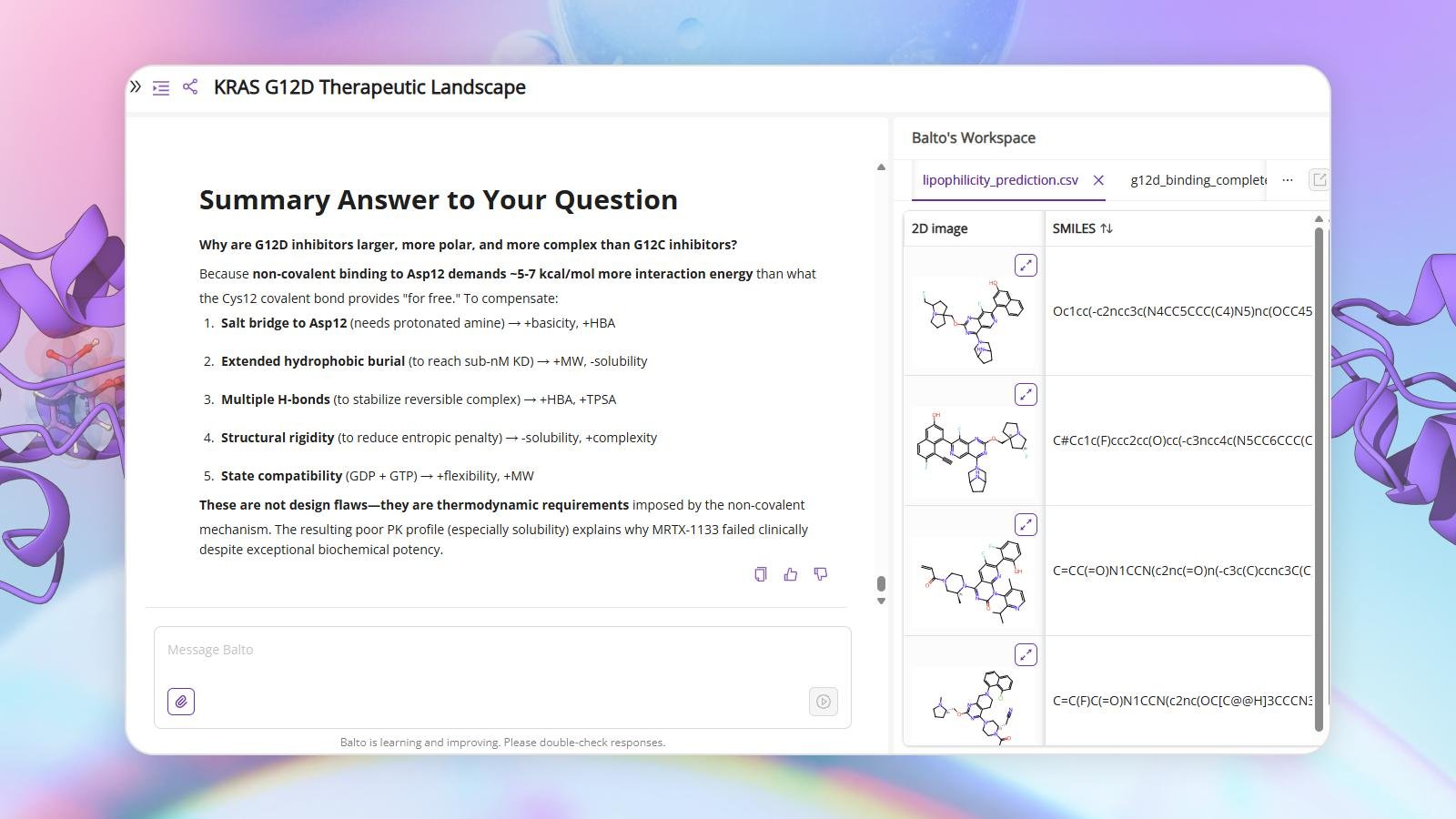
Google DeepMind has introduced new chemistry capabilities for its Antigravity platform, allowing AI agents to search scientific literature, analyse chemical compounds, build predictive models and suggest potential molecular designs. The demonstration points to a new role for AI in scientific research — but it does not mean a new medicine has been discovered.
Artificial intelligence is moving beyond writing, coding and answering questions. Google DeepMind is now demonstrating how AI agents can assist scientists with some of the time-consuming stages of early drug research.
In a technical announcement published on November 3, Google introduced new Cheminformatics Skills for its Antigravity platform. The tools are designed to help researchers collect chemical information from scientific publications and databases, compare molecular structures, analyse experimental data and propose candidate molecules for further investigation.
In Google’s demonstration, an AI agent searched through thousands of compounds associated with existing lung cancer treatments, organised the information, performed chemical comparisons and suggested new molecular designs with possible synthesis routes.
Google says the demonstrated workflow, which would traditionally involve several separate tools and multiple days of work, was completed in approximately one hour.
How the new scientific workflow works
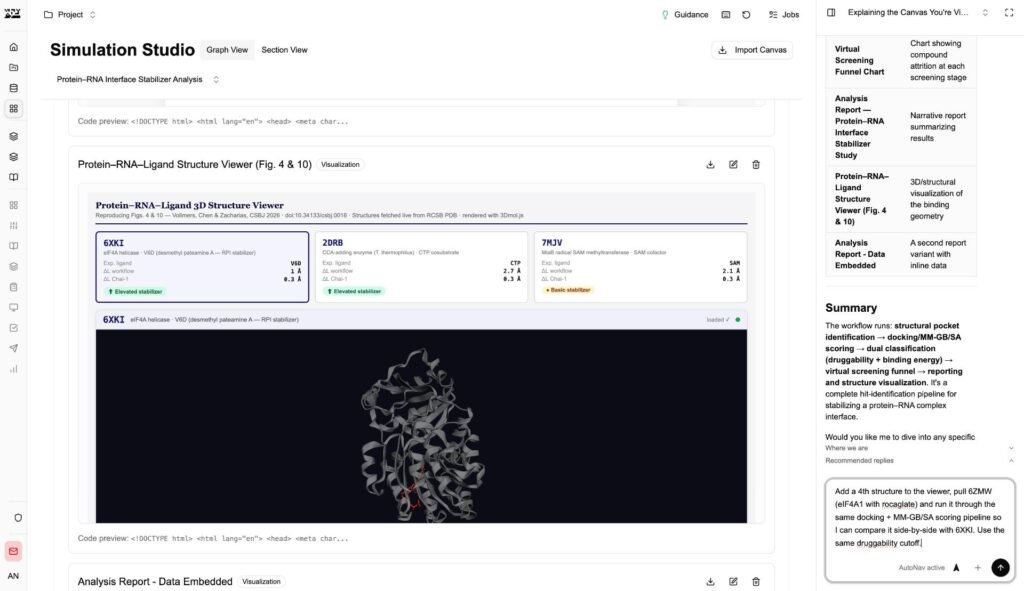
The system combines a language model with established chemistry software rather than asking an AI chatbot to perform every calculation on its own.
The language model coordinates the workflow, navigates databases, organises information and explains the analysis. Specialist tools perform the underlying chemical calculations.
The new skills use RDKit, an established open-source cheminformatics toolkit, and connect to scientific resources including ChEMBL and PubChem.
This division of labour is important. Chemistry is particularly sensitive to errors: changing a single atom or chemical bond can turn one compound into a completely different molecule.
By combining an AI agent with specialist software, Google aims to make complex research workflows easier to organise and inspect.
From thousands of compounds to potential designs
Google’s demonstration focused on two established lung cancer medicines: crizotinib and lorlatinib.
The agent searched scientific literature for these drugs and related compounds, extracted molecular information and organised the results for analysis.
It then compared molecules using a technique called matched molecular pair analysis. This method examines compounds that differ by a relatively small structural change, helping researchers investigate how that change may affect properties such as potency.
Google says the system also trained predictive models using experimental datasets and proposed new rigidified macrocycles, together with possible chemical reactions and synthesis routes.
The company presented interactive visualisation tools that allow researchers to inspect the compounds, explore relationships between molecular properties and review the agent’s recommendations.
The important distinction is that these are computational research proposals, not experimentally confirmed medicines.
Why this could matter for pharmaceutical research
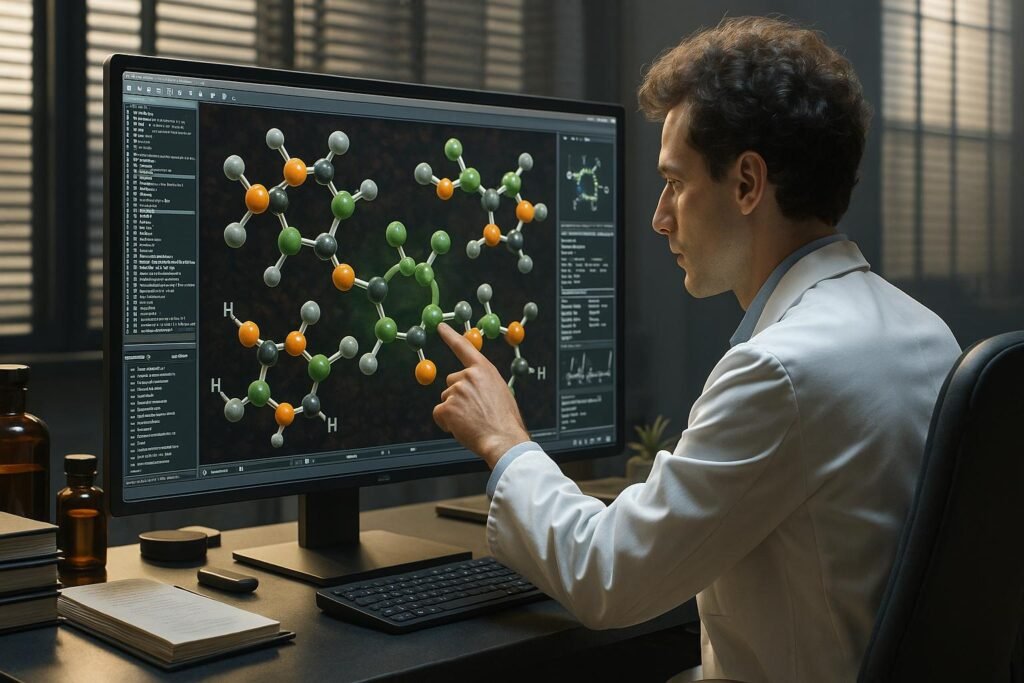
Drug discovery involves large volumes of scientific literature, chemical structures, experimental measurements and specialist software.
Researchers can spend substantial time finding relevant compounds, checking their identities, organising datasets and preparing analyses before they can even begin evaluating a new hypothesis.
AI agents could reduce some of this preparation work.
If the approach proves reliable, scientists may be able to investigate more research directions, compare more compounds and spend more time designing and evaluating experiments.
The potential benefit is not necessarily that AI replaces medicinal chemists. It is that researchers could spend less time moving information between disconnected tools and more time making scientific decisions.
The limitations: a promising molecule is not a medicine
Google’s own announcement makes an important qualification: computational designs are hypotheses that must be tested.
The company acknowledges that sparse data, differences between laboratory measurements and limited experimental ranges can affect the accuracy of predictive models.
A molecule that receives a promising computational prediction still needs to be synthesised, tested in laboratory experiments and evaluated through the appropriate development and safety processes.
Google has not announced that the newly proposed molecules have demonstrated clinical effectiveness, nor has it presented an approved drug resulting from this workflow.
The demonstration also does not establish, through an independent benchmark, that the entire process is consistently more accurate or productive than existing scientific workflows.
Access for researchers
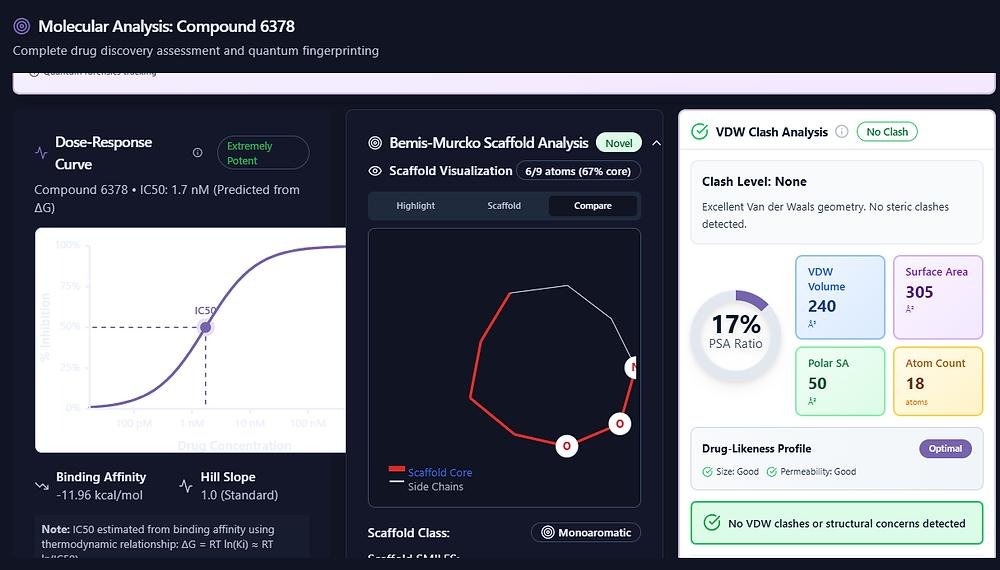
Google says the Cheminformatics Skills are available through the Science plugin in the Antigravity application.
The company is also offering up to 10,000 scientists access to its highest Antigravity usage tier for six months, subject to eligibility, capacity and selection. Applications are being accepted on a rolling basis.
The availability of the tools does not mean that every researcher automatically qualifies for the free programme.
What happens next?
The next important step is independent scientific evaluation.
Researchers will need to establish whether the agent can consistently retrieve correct molecular information, preserve chemical structures accurately, produce reproducible analyses and propose compounds that remain promising after laboratory testing.
The more scientific decisions an AI agent can coordinate, the more important it becomes to preserve the sources, assumptions and calculations behind its recommendations.
TheTechSpot Take
Google’s chemistry demonstration is interesting because it shows a different direction for AI: not simply generating scientific explanations, but coordinating a workflow that connects literature, databases, specialist software and molecular analysis.
That could make early-stage research more efficient. However, speed is only one part of scientific progress. Accuracy, reproducibility and experimental validation matter much more than an impressive demonstration.
The real breakthrough will not be an AI agent proposing a molecule in an hour. It will be a system that repeatedly helps scientists identify better candidates, produces results that independent researchers can reproduce and ultimately contributes to medicines that work in real patients.
For now, Antigravity is an emerging research assistant — not an automated drug-discovery laboratory.


