A nearly two-century-old mystery has finally been resolved.
An international team of researchers has determined that a famous railway incident in Exeter, England, long dated to October 18, 1841, actually took place on October 18, 1848.
The correction is more than a historical footnote. It changes the timeline of some of the earliest documented cases of solar activity interfering with human technology. According to the new study, the earliest credible known example is an incident involving telegraph systems on Britain’s Midland Railway in March 1847.
A train delayed by 16 minutes
The story begins in Exeter, southern England.
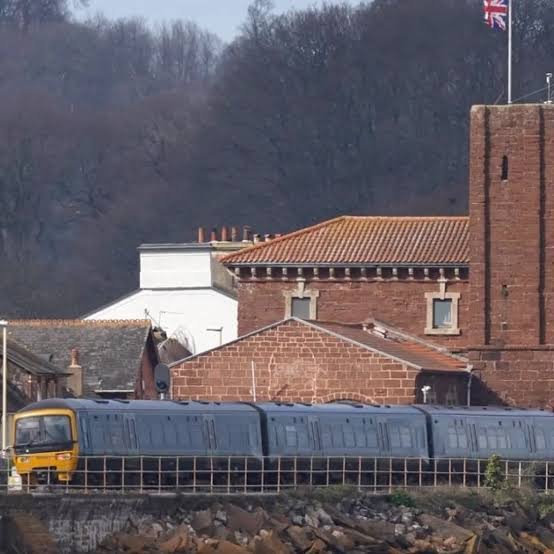
A report published in Nature in 1871 described an incident in which the 10:05 p.m. express train could not leave on schedule because railway operators could not determine whether the track ahead was clear.
The problem was not the locomotive or the weather.
It was the electrical signaling system.
A strong magnetic disturbance interfered with the telegraph equipment used to communicate between railway stations. The train was delayed for 16 minutes.
At the time, electric telegraphy was still a relatively new technology. Railways were using it to communicate whether sections of track were occupied and to help prevent collisions.
But there was a major problem with 1841

Researchers noticed something that did not fit.
The report said the incident occurred on October 18, 1841.
But the railway line mentioned in the account did not yet exist in 1841.
Historical records show that its construction was authorized only in 1844, while the relevant section opened in May 1846. A train therefore could not have been delayed on that railway line in 1841.
The story became an archival investigation.
Researchers needed to establish not only a different date, but whether the event itself had really happened.
The evidence points to October 18, 1848
The team compared several types of evidence:
- historical railway timetables;
- contemporary newspapers;
- sunspot observations;
- aurora reports;
- magnetic recordings from Greenwich Observatory;
- railway company records.
The result was striking.
On October 18, 1848, there was indeed a 10:05 p.m. train departing Exeter toward the Starcross area.
On the same day, Greenwich magnetic instruments recorded a strong geomagnetic disturbance.
Reports from Britain and elsewhere in Europe also described auroral activity and solar observations.
Together, the evidence strongly suggests that 1841 was a typographical error and that 1848 was the correct year.
What is space weather?

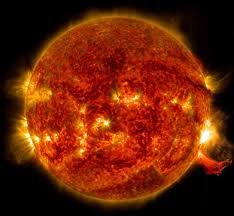
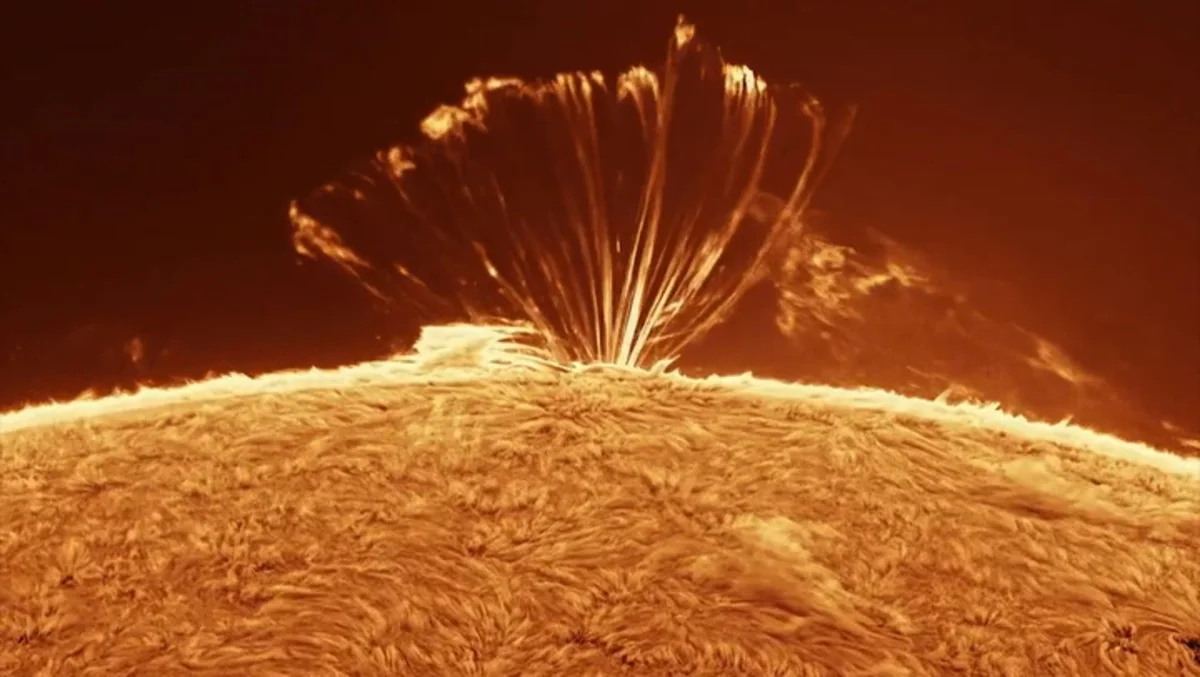
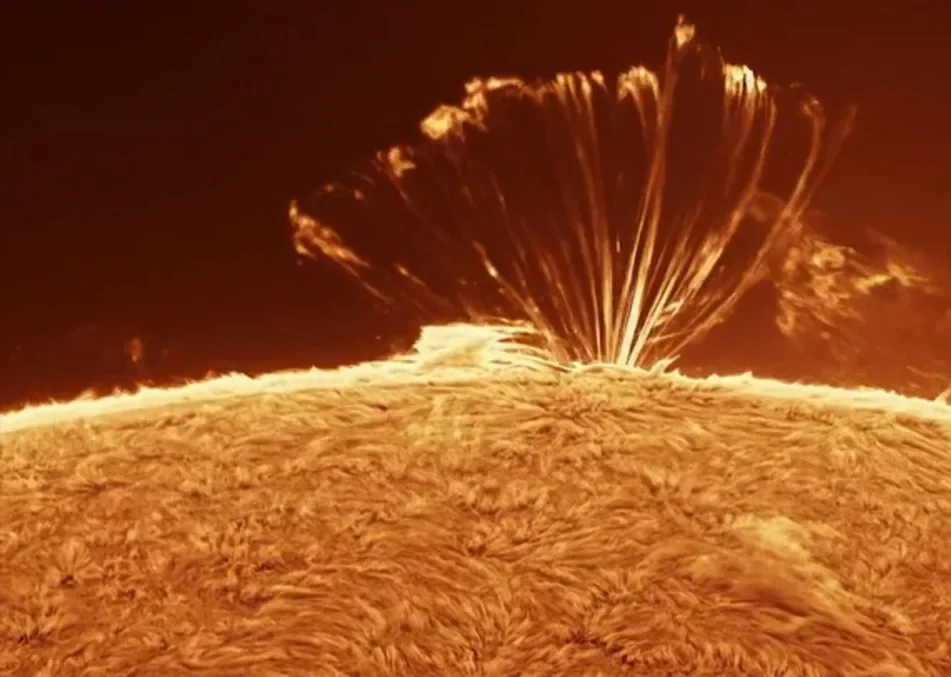
“Space weather” describes the effects of solar activity on Earth’s near-space environment.
Solar flares and coronal mass ejections can disturb Earth’s magnetic field and produce geomagnetic storms.
When these disturbances are strong enough, they can induce electrical currents in long conductors, including power lines and other infrastructure.
In the 1840s, telegraph systems were among the most exposed technologies.
Today, technology is vastly more advanced — but society is also far more dependent on electrical and electronic infrastructure.
1847 now stands as the earliest credible case
The research did more than correct the 1841 date.
It also changes how the early history of space-weather impacts is understood.
According to the authors, the earliest credible documented case currently known occurred on March 19, 1847, when “spontaneous electrical currents” interfered with telegraph systems on the Midland Railway during a strong auroral display.
The Exeter incident in 1848 nevertheless remains one of the earliest clear examples of solar activity affecting critical infrastructure.
From a Victorian train to modern satellites
This is what makes the story relevant today.
In the 1840s, a geomagnetic storm could interfere with a telegraph or railway signaling system.
Today, technology-dependent infrastructure is much larger:
- power grids;
- satellites;
- GPS and navigation systems;
- radio communications;
- signaling systems;
- telecommunications networks.
An extreme geomagnetic storm can disrupt some of these systems. Researchers emphasize that studying historical events helps scientists assess modern infrastructure risks.
That does not mean a future solar storm will necessarily “shut down the internet” or produce any particular catastrophic scenario. The actual impact would depend on the storm’s strength, orientation, duration and the infrastructure exposed to it.
Why does the historical correction matter?
The study illustrates a broader point: technology’s vulnerability to the space environment is not a 21st-century problem.
It emerged almost at the same time that humans began building large-scale electrical and communications networks.
In the 1840s, a telegraph operator had to understand why an instrument was suddenly behaving abnormally.
Today, a similar disturbance could affect a satellite system, power network or navigation service.
The difference is scale.
What does it mean for users?
For ordinary users, space weather is not an everyday hazard.
But much of the infrastructure people use every day depends on technologies that can be affected by solar activity.
That includes GPS navigation, satellite communications, electrical grids and some aviation and transportation systems.
Monitoring the Sun is therefore not only an astronomical activity.
It is part of protecting digital and energy infrastructure.
What happens next?

Researchers will continue using historical archives to build better records of past geomagnetic storms.
That serves two purposes.
First, scientists can better estimate how frequently extreme events have occurred.
Second, historical observations can help improve space-weather models and forecasting.
The research team also emphasizes the importance of preserving old records. A railway timetable, a 19th-century newspaper or a magnetic recording can become part of the evidence used to understand technological risks in the future.
A train delayed for 16 minutes in Exeter was not simply a forgotten incident from the Victorian era.
It is one of the earliest examples of how solar activity can interfere with human technology.
After 178 years, researchers have corrected the date: the event almost certainly occurred on October 18, 1848, not October 18, 1841.
And the story demonstrates why space weather is not merely an astronomy topic. As society becomes increasingly dependent on electricity, satellites, navigation and electronic communications, understanding what happens when the Sun becomes unusually active becomes increasingly important.
Sources
- Space Weather, American Geophysical Union — original research study.
Editorial Verification:
- The 1848 date is supported by the peer-reviewed study and institutional sources.
- Historical evidence confirms that the relevant railway line did not exist in 1841.
- The 1847 Midland Railway event is presented as the earliest credible case according to the study authors.
- Modern impact scenarios are clearly separated from established historical facts.
- No claim is made that a future solar storm will necessarily cause a global technological blackout.