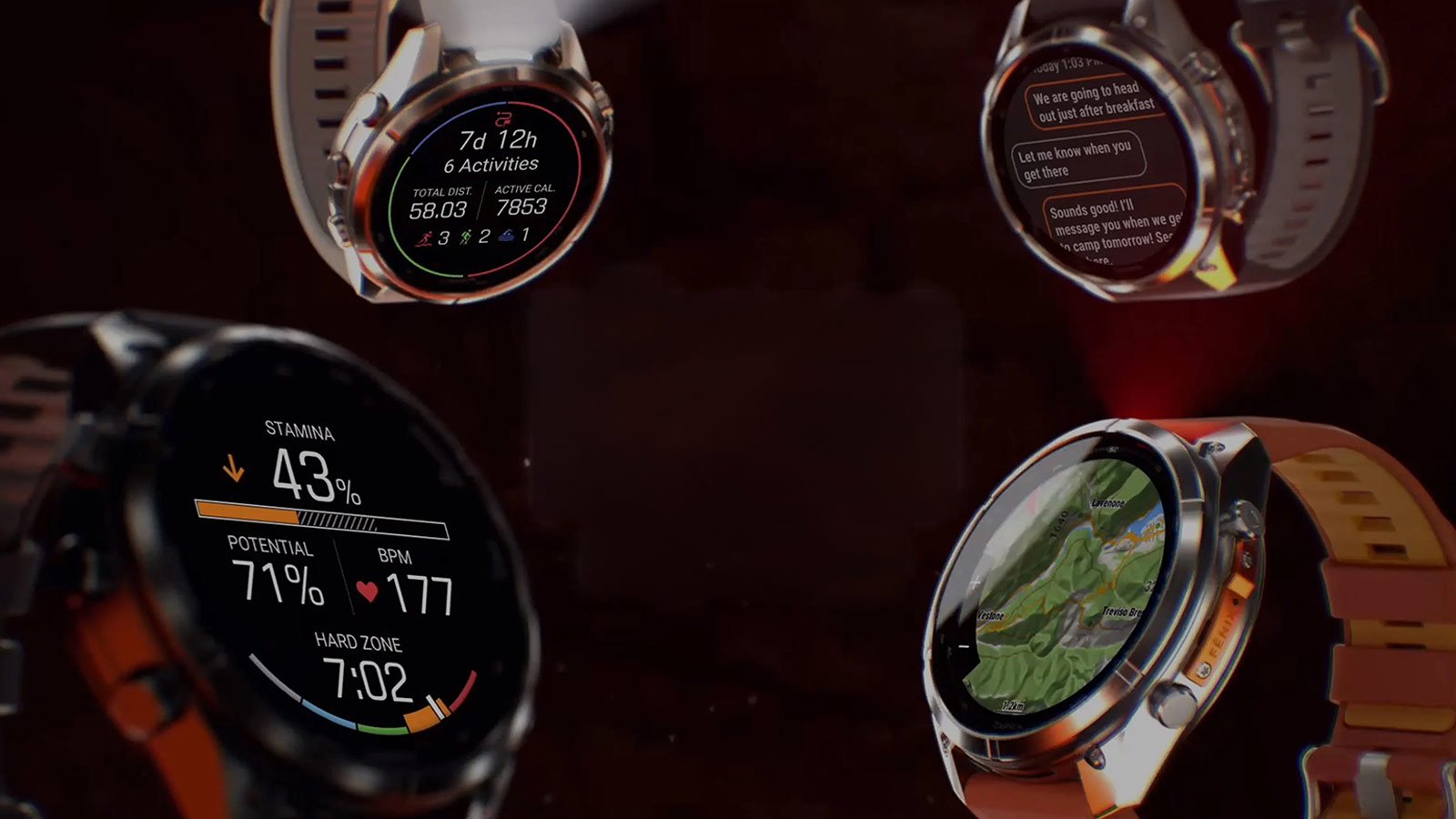
Garmin has officially unveiled its next generation of premium outdoor smartwatches, the fēnix 9 and fēnix 9 Pro, bringing brighter displays, faster navigation, improved training tools and a major design upgrade to the company’s flagship adventure lineup.
For the first time in the fēnix family, the Pro model features a titanium case, while selected versions add LTE and satellite connectivity for communication directly from the wrist.
The launch arrives as competition in the premium smartwatch market continues to intensify.
Apple and Samsung are pushing further into fitness and outdoor features, while Garmin remains focused on athletes, runners, hikers, climbers and users who need their watch to work far beyond the city.
But the fēnix 9 is more than a simple specification upgrade.
Garmin has changed several of the most important parts of the experience.
An AMOLED Display That Can Reach 3,000 Nits
One of the biggest improvements is the display.
The new fēnix 9 lineup introduces significantly brighter AMOLED screens, while the Pro models can reach up to 3,000 nits of brightness.
That matters because outdoor watches have a very different challenge from ordinary smartwatches.
A screen can look excellent indoors but become difficult to read under direct sunlight.
Garmin has specifically designed the new displays to make maps, training statistics and navigation information easier to see outdoors.
The 51mm fēnix 9 Pro also features the largest AMOLED display ever used on a fēnix smartwatch.
The fēnix 9 Pro Finally Gets Titanium
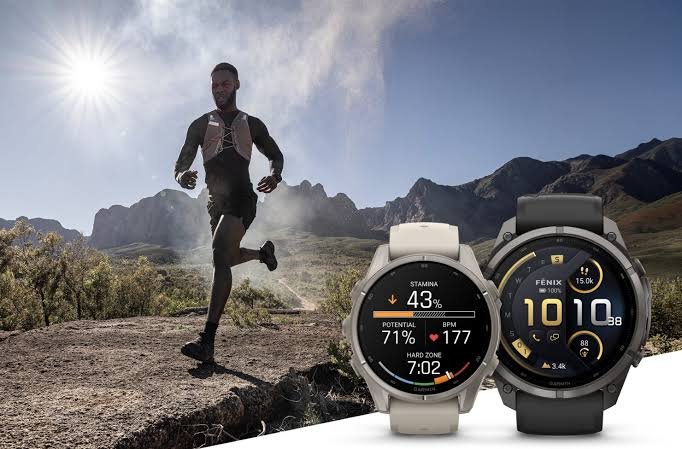
The Pro model introduces another major change: a titanium case.
Garmin uses nano-molding technology to combine metal and other materials into a construction designed to remain both strong and relatively lightweight.
That is particularly important for a watch designed to survive demanding environments.
The fēnix 9 also includes a scratch-resistant sapphire lens and is rated for diving to 40 meters.
This makes it clear that Garmin is not simply trying to build a fashionable premium smartwatch.
The goal is to create equipment that can survive serious outdoor use.
Communication Without a Phone
One of the most important features of the fēnix 9 Pro is its optional connectivity.
Pro models offer LTE and satellite connectivity through Garmin inReach, enabling messaging, voice communication, LiveTrack and SOS functionality depending on the configuration and subscription.
That could become extremely useful when users travel into areas without conventional cellular coverage.
For hikers, climbers and adventurers, communication from the wrist can be more than a convenience.
It can become a safety feature.
Garmin has also introduced Garmin Locate, allowing selected users to share their location with family and friends through Garmin Messenger when LTE connectivity is available.
Up to 57 Days of Battery Life
Battery life remains one of Garmin’s biggest advantages.
The standard fēnix 9 can deliver up to 29 days of smartwatch battery life in the largest size.
The fēnix 9 Pro can reach up to 31 days, while solar-charging models can reach up to 57 days under Garmin’s specified testing conditions.
Real-world battery life will obviously depend on GPS usage, screen settings, LTE, satellite communication and health tracking.
Still, these numbers highlight Garmin’s different approach to smartwatch design.
The company wants the watch to be something users can take on a multi-day adventure without constantly thinking about charging.
Garmin Epic Turns Activities Into Stories
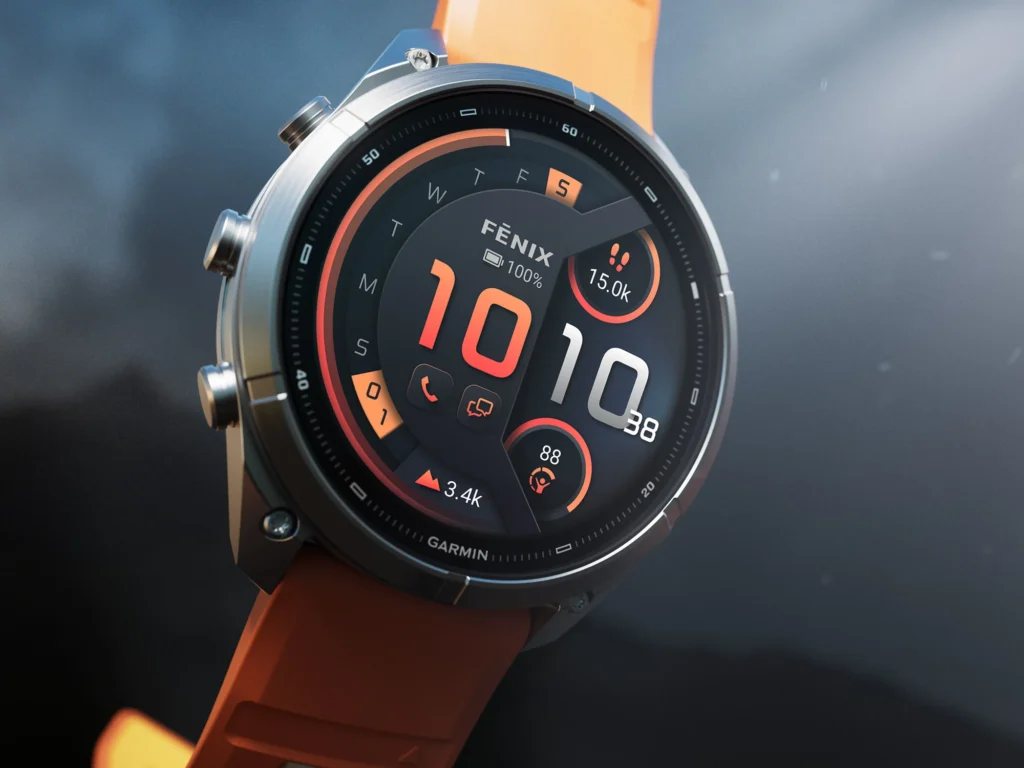
Another interesting new feature is Garmin Epic.
Instead of treating every workout as a completely separate activity, Garmin Epic can combine multiple activities into a single story inside Garmin Connect.
That could be particularly useful during multi-day adventures.
A long trip might involve hiking, cycling, running and other activities.
Rather than looking at dozens of separate recordings, users can see the broader adventure as one connected experience.
It reflects a broader change in fitness technology.
The question is no longer simply:
“How many miles did I run?”
It is increasingly:
“What did I accomplish?”
Faster Maps Could Be a Bigger Upgrade Than They Sound
Garmin has also upgraded the navigation system.
The fēnix 9 includes 50% more RAM than its predecessor and a new map engine.
Garmin says map panning can be up to 30% faster.
That may sound like a minor specification improvement, but it can make a major difference during real-world navigation.
When you are moving through unfamiliar terrain, waiting for a map to render is not ideal.
Faster navigation means less distraction and more immediate information.
The watch also includes 64GB of storage, allowing users to download more maps and store up to 7,000 songs according to Garmin.
Rucking Gets More Attention
Garmin is also expanding the fēnix line’s rucking capabilities.
Users can change pack weight during an activity and establish specific targets for metrics such as calories burned.
That makes the watch particularly interesting for people involved in weighted hiking, military-style training and recreational rucking.
Garmin has also introduced new endurance and stamina metrics.
Indoor rowing users can access additional performance information such as VO2 Max and power curves when using compatible equipment.
A Green Flashlight Joins the Watch
One of the smaller but surprisingly useful additions is the integrated flashlight.
The fēnix 9 Pro includes multiple lighting modes, including white, red and green light.
The red light can be useful at night when users want to preserve their night vision, while the new green option adds another low-light capability.
It is exactly the type of feature that may not look spectacular in a product announcement but could become extremely useful during a late-night hike.
Pricing Starts at $999.99
All of this technology comes at a premium.
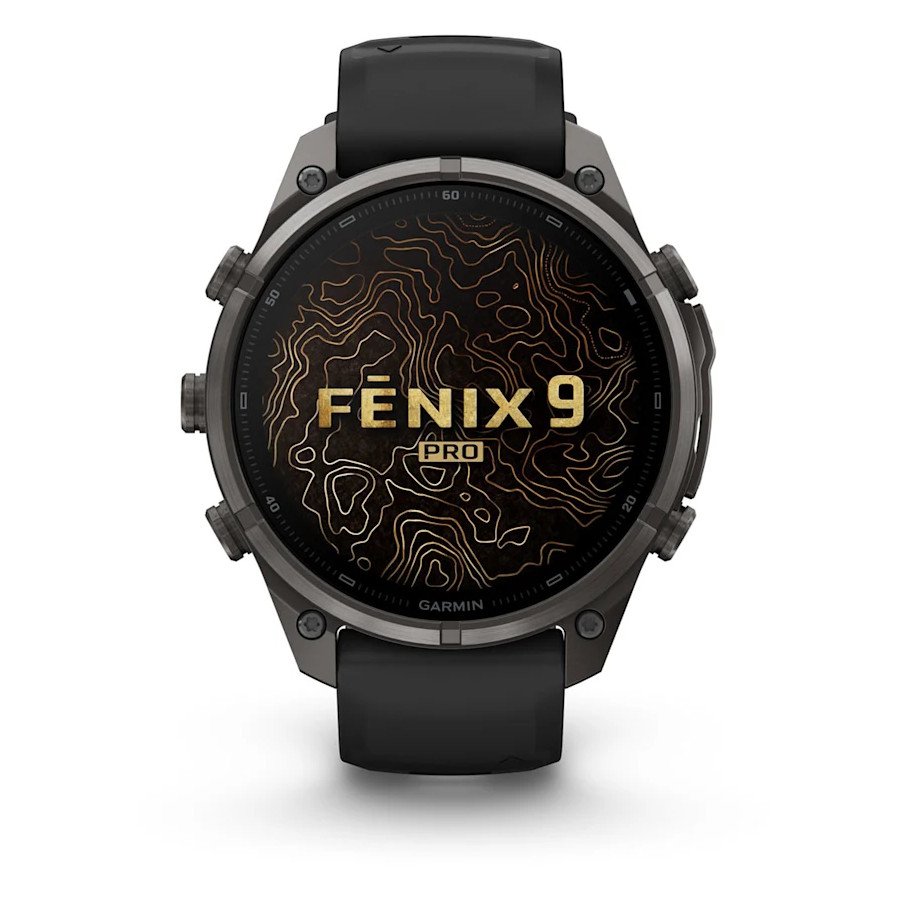
The fēnix 9 starts at $999.99, while the fēnix 9 Pro starts at $1,099.99.
Higher-end solar and inReach configurations can cost considerably more.
That puts the watch firmly into premium territory.
Garmin is not trying to compete with budget smartwatches.
The target audience is people who treat their smartwatch as serious sports and outdoor equipment.
That also raises an obvious question:
Is it worth upgrading?
For a fēnix 8 owner, the answer is not automatically yes.
The previous generation remains highly capable.
But users who want a brighter display, faster maps, titanium construction, satellite communication and the newest training features have considerably more reasons to upgrade.
Garmin Is Building More Than a Smartwatch
The most interesting part of the fēnix 9 launch may actually be Garmin’s overall strategy.
The company is not simply trying to beat the Apple Watch feature for feature.
Instead, Garmin is building a different kind of device.
It is simultaneously:
a smartwatch + GPS navigator + fitness tracker + satellite communicator + safety device.
That explains why the fēnix family has developed such a loyal audience.
It is not necessarily the watch everyone needs.
It is the watch you may want when you are far away from the city.
When your phone has no signal.
When you need detailed navigation.
When you are running an ultramarathon.
When you are climbing a mountain.
Or when you simply want a smartwatch that does not need to be charged every night.
The fēnix 9 and fēnix 9 Pro are among Garmin’s most significant product launches of 2026, with ordering beginning August 28 in markets where the devices are available.
And as the smartwatch industry increasingly turns watches into tiny smartphones for the wrist, Garmin is taking a different approach:
building a watch that can help you get away from your phone rather than become even more dependent on it.