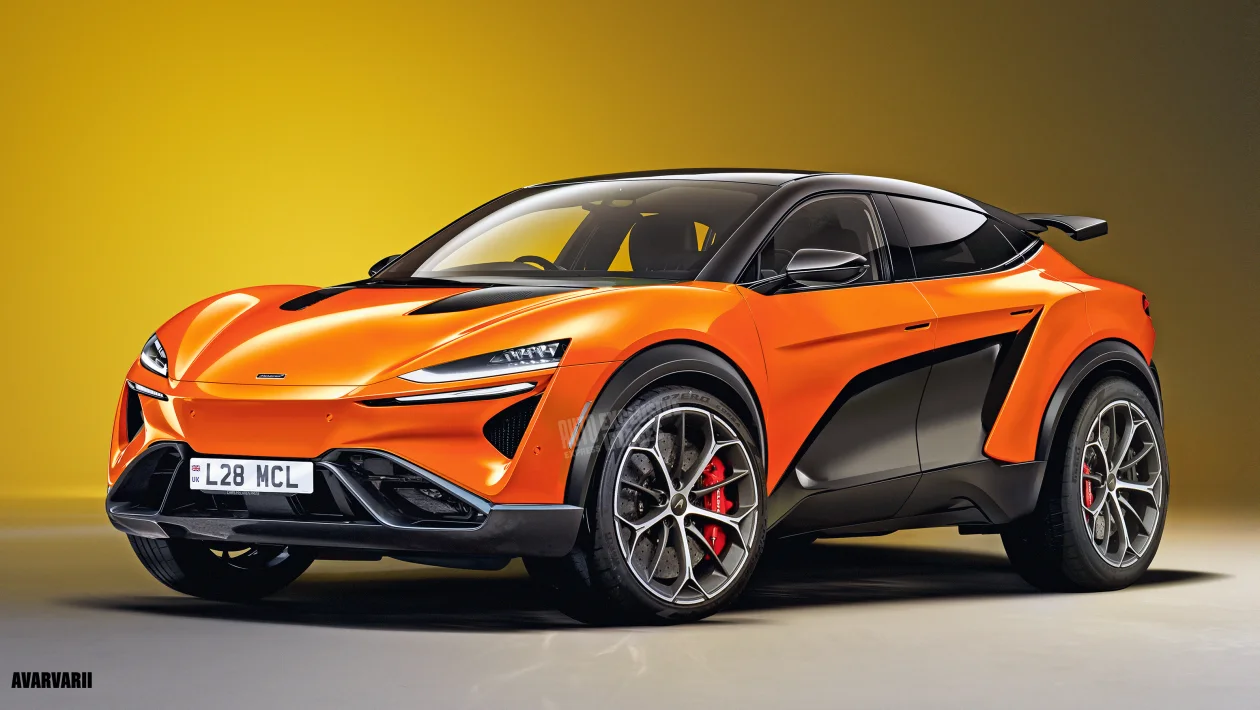
McLaren is changing one of the strongest assumptions surrounding its identity as a performance-car manufacturer.
The British automaker has announced a £500 million investment, roughly $675 million, to expand its UK manufacturing, engineering and operational capabilities.
The biggest announcement is the official confirmation that McLaren will build its first-ever SUV.
The company says the programme is expected to create at least 1,000 new jobs by 2032, while its Abu Dhabi-based owner L’IMAD has committed around £1.5 billion over five years to the broader McLaren programme.
From supercars to SUVs
McLaren has traditionally been associated with lightweight, high-performance sports cars and supercars.
The SUV changes that formula.
Reuters reports that the new model will expand McLaren’s product range into a segment where Ferrari, Lamborghini and other luxury manufacturers have already established products.
McLaren has not yet released the SUV’s complete official technical specification.
But the strategic direction is clear: the company wants a more practical vehicle without abandoning its performance identity.
Hybrid, not fully electric — for now
One of the most interesting aspects of the strategy is that McLaren is not immediately moving to an all-electric lineup.
According to Reuters, the company currently has no plans for a fully electric vehicle, saying customer demand for one is not yet sufficient.
That puts McLaren in an interesting position.
The automotive industry continues to invest heavily in electrification, but some luxury manufacturers are using hybrid systems as an intermediate technology.
For McLaren, that means combining:
- combustion engines;
- electric motors;
- batteries;
- electronic control systems;
- software;
- energy-recovery technology.
For a performance-focused brand, hybridization can provide additional power and efficiency without immediately moving to a fully electric architecture.

The £500 million investment goes beyond the SUV
The investment is not only about the new SUV.
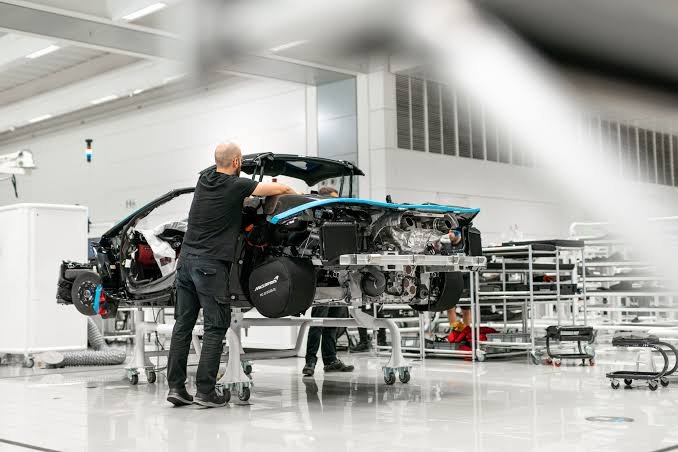
The programme includes expanded UK manufacturing and engineering operations, a new vehicle assembly facility and the development of future engines and transmissions in-house. McLaren is also expanding operations in Woking and South Yorkshire.
That matters because controlling core powertrain technology is increasingly important for premium automotive manufacturers.
The investment could give McLaren greater control over:
- powertrain development;
- manufacturing;
- vehicle electronics;
- materials;
- performance software;
- production engineering.
Why does McLaren need an SUV?
The main reason is strategic and economic.
Luxury SUVs have become one of the industry’s most important premium segments.
Ferrari, Lamborghini and other high-end manufacturers have entered the category to expand their customer base and create additional revenue streams.
McLaren’s challenge is different.
An SUV needs to be practical enough for everyday use while still delivering the performance and engineering characteristics customers associate with the brand.
The real question is therefore not simply:
“Can McLaren build an SUV?”
It is:
“How can McLaren make an SUV feel like a McLaren?”
What technology could be inside?
McLaren has not yet released the complete official specification.
Industry reports point toward a hybrid powertrain and increased in-house development of engines and transmissions.
However, there is an important distinction between confirmed information and reported specifications.
Confirmed:
- McLaren’s first SUV is part of the new product strategy;
- the company is investing £500 million in the UK;
- manufacturing capacity will expand;
- future powertrain technologies will be developed in-house;
- at least 1,000 jobs are expected by 2032.
Reported by automotive publications:
- the SUV is expected to use hybrid technology;
- it is expected to have four doors and five seats;
- all-wheel drive has been reported as part of the expected configuration.
Those technical details should be treated as reported information until McLaren officially confirms them.
A major move for British manufacturing
The investment also matters for the UK automotive industry.
McLaren intends to keep future vehicle design, engineering and manufacturing activities in Britain.
At least 1,000 jobs are expected by 2032, while the wider supply-chain effect could be larger.
That means additional demand for:
- engineers;
- software specialists;
- battery experts;
- electronics engineers;
- materials specialists;
- manufacturing technicians;
- automation experts.
The story is therefore about much more than a new vehicle.
McLaren is also changing its production model
The company has moved toward a more build-to-order approach, producing vehicles based more closely on customer orders instead of maintaining large dealer inventories.
Reuters says the strategy is intended to help protect vehicle residual values and improve the economics of the business.
For a luxury manufacturer, that can be important.
Instead of simply pursuing high production volume, McLaren can use personalization, technology and order-based manufacturing to preserve its premium positioning.
What does this mean for the market?
McLaren’s entry into SUVs adds another competitor to one of the most important segments of the luxury-car market.
But the impact will not be immediate.
The SUV must first be developed, tested, manufactured and accepted by customers.
At the same time, McLaren will have to manage investment, production expansion, technology development and product diversification.
That makes the strategy significant, but also demanding from an execution and capital perspective.
What happens next?
The key developments to watch are:
1. Development of McLaren’s first SUV.
2. Expansion of UK manufacturing capacity.
3. Development of new engines and transmissions.
4. Workforce expansion.
5. Release of official technical specifications and pricing.
6. Testing and eventual production launch.
McLaren is making a significant strategic shift.
A company known for lightweight, performance-focused supercars is investing hundreds of millions of pounds to expand its product range, increase in-house technology development and enter the SUV market.
The decision to focus on hybrid technology rather than immediately moving to full electrification makes the strategy particularly interesting.
If the plan is executed successfully, McLaren will no longer be positioned simply as a small-volume supercar manufacturer.
It will have a broader product portfolio, larger manufacturing capabilities and a technology strategy combining combustion engines, electrification and software.
The bigger story, therefore, is not simply that McLaren is building an SUV.
McLaren is redesigning what it wants to be as an automotive technology company.