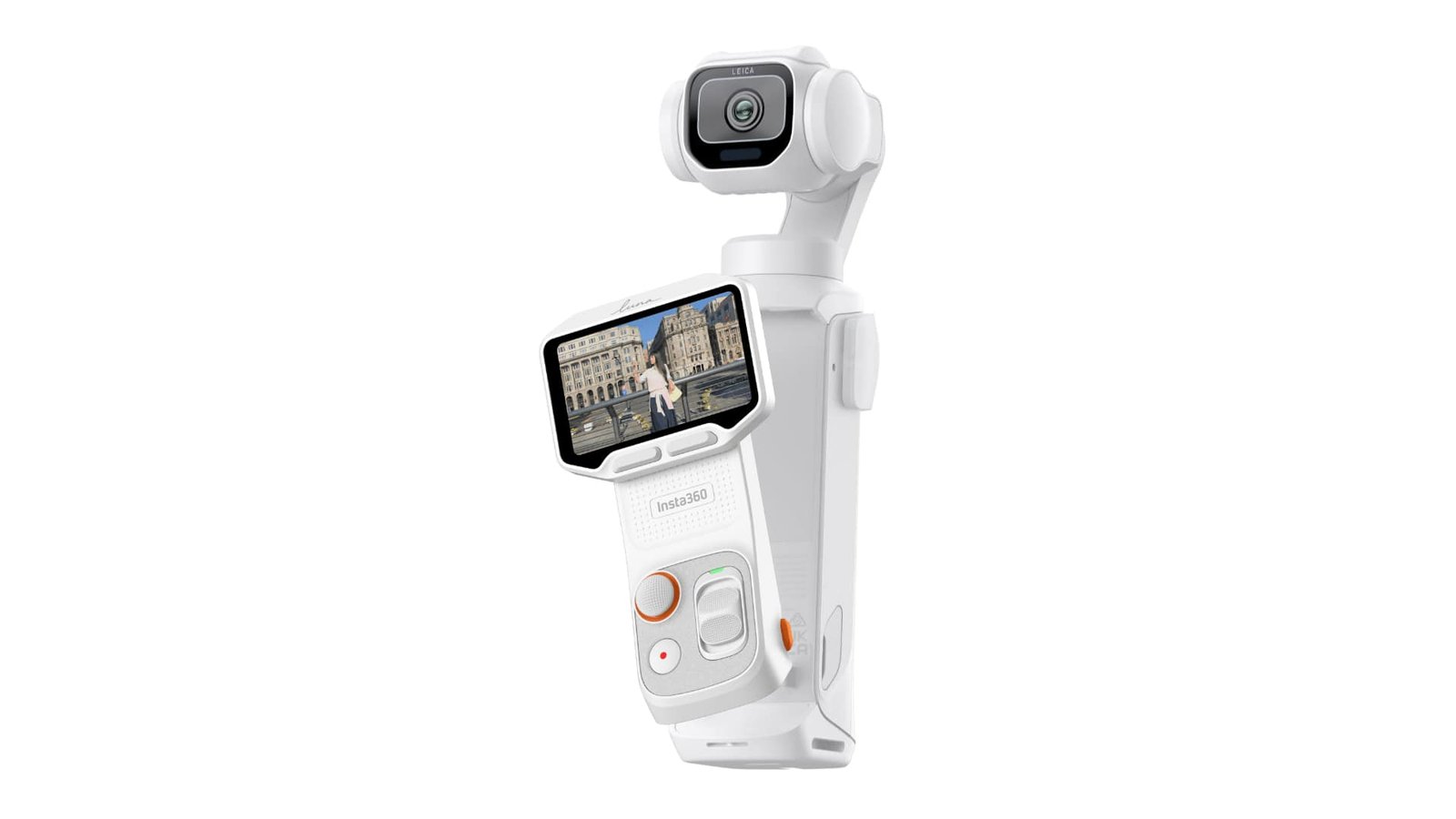
Insta360 takes aim at DJI’s compact camera territory
The compact creator-camera market has become one of the most competitive areas in consumer video.
DJI’s Osmo Pocket line has established a strong position, but Insta360 is now pushing deeper into the category with the Luna Pro, combining a large sensor, mechanical stabilization and Leica optics in a relatively small body.
The Luna Pro was released on September 10, 2026, and sits below the dual-camera Luna Ultra in Insta360’s lineup. Unlike the Ultra, the Pro does not include a dedicated telephoto camera, allowing Insta360 to make it smaller and less expensive.
The screen can be detached
The Luna Pro’s most distinctive feature is its detachable 2-inch OLED touchscreen.
The screen can be removed from the camera and used as a wireless remote, allowing the user to monitor framing and control the camera while standing away from it.
The OLED panel has a resolution of 318 × 564 pixels, a brightness rating of up to 1,000 nits and a 60Hz refresh rate.
That opens up more flexible shooting setups for solo creators, travel videos and group recordings.
A 1-inch sensor records 8K
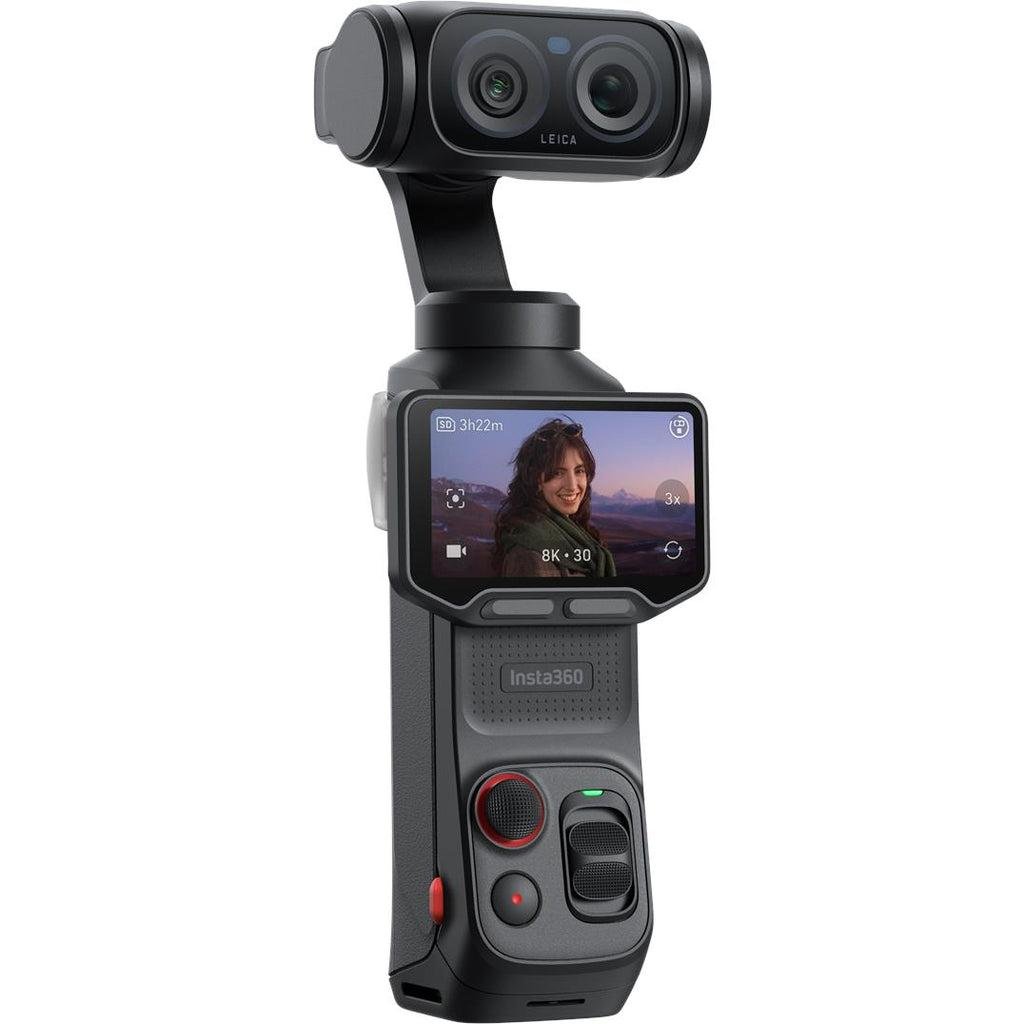
The main camera uses a 1-inch sensor with roughly 50 megapixels of effective resolution.
It can record 8K video at 30, 25 and 24fps, while 4K recording reaches up to 120fps. At 1080p, the camera can record up to 240fps for slow-motion footage.
The combination of a large sensor and 8K recording places the Luna Pro well above conventional entry-level vlogging cameras.
Leica optics
The main lens was developed in cooperation with Leica.
The camera uses a Leica Summicron lens with an f/1.8 aperture and an approximately 20mm full-frame-equivalent focal length.
Insta360 also supports Leica-inspired color profiles and 10-bit I-Log recording, giving creators more flexibility when grading footage in post-production.
Three-axis mechanical stabilization
The Luna Pro uses a three-axis mechanical gimbal, rather than relying entirely on electronic stabilization.
The system is designed to keep footage smooth while walking, moving or shooting handheld.
According to Insta360’s specifications, the gimbal can move at up to 210 degrees per second, with a wide range of controlled movement.
The mechanical system is combined with software-based subject tracking.
AI tracking keeps subjects in frame
Insta360’s Deep Track technology is designed to automatically follow a subject and keep it within the frame.
That is particularly useful for creators who shoot alone.
Instead of repeatedly repositioning the camera, the system can track a person as they move through the scene.
For YouTube, TikTok, Instagram and travel creators, that functionality may prove more useful day to day than simply having a higher resolution.
Native 4K vertical video
The Luna Pro also targets short-form video creators with native 4K vertical recording.
It can record 4K at 30fps in a 9:16 format, avoiding the need to crop a horizontal recording for TikTok, Reels or Shorts.
The camera can also record 4K at up to 120fps in supported modes, providing high-resolution slow motion.
47GB of built-in storage
The Luna Pro includes 47GB of internal storage and supports microSD cards up to 2TB.
That is particularly useful for a camera capable of recording 8K video, where storage can disappear quickly.
Files can be transferred over USB-C 3.0, while wireless connectivity is available for supported control and transfer features.
Up to four hours of battery life
The main camera uses a 1,550mAh battery, while the detachable screen remote has a separate 210mAh battery.
Insta360 rates the system for up to four hours of use, while charging can reach around 80% in 23 minutes under the company’s specified conditions.
Actual endurance will vary depending on resolution, frame rate, stabilization and screen usage.
Smaller than the Luna Ultra
The Luna Pro weighs approximately 215–218 grams, depending on color, and measures roughly 52.78 × 155.7 × 38.47 mm.
The reduced size is partly a result of the simpler single-camera configuration.
The Luna Ultra adds a dedicated telephoto camera with a 1/1.3-inch sensor, while the Pro relies on its 1-inch main camera.
That makes the Pro the simpler and cheaper option, while the Ultra remains the more versatile model for users who need longer-range framing.
Pricing starts at $599.99
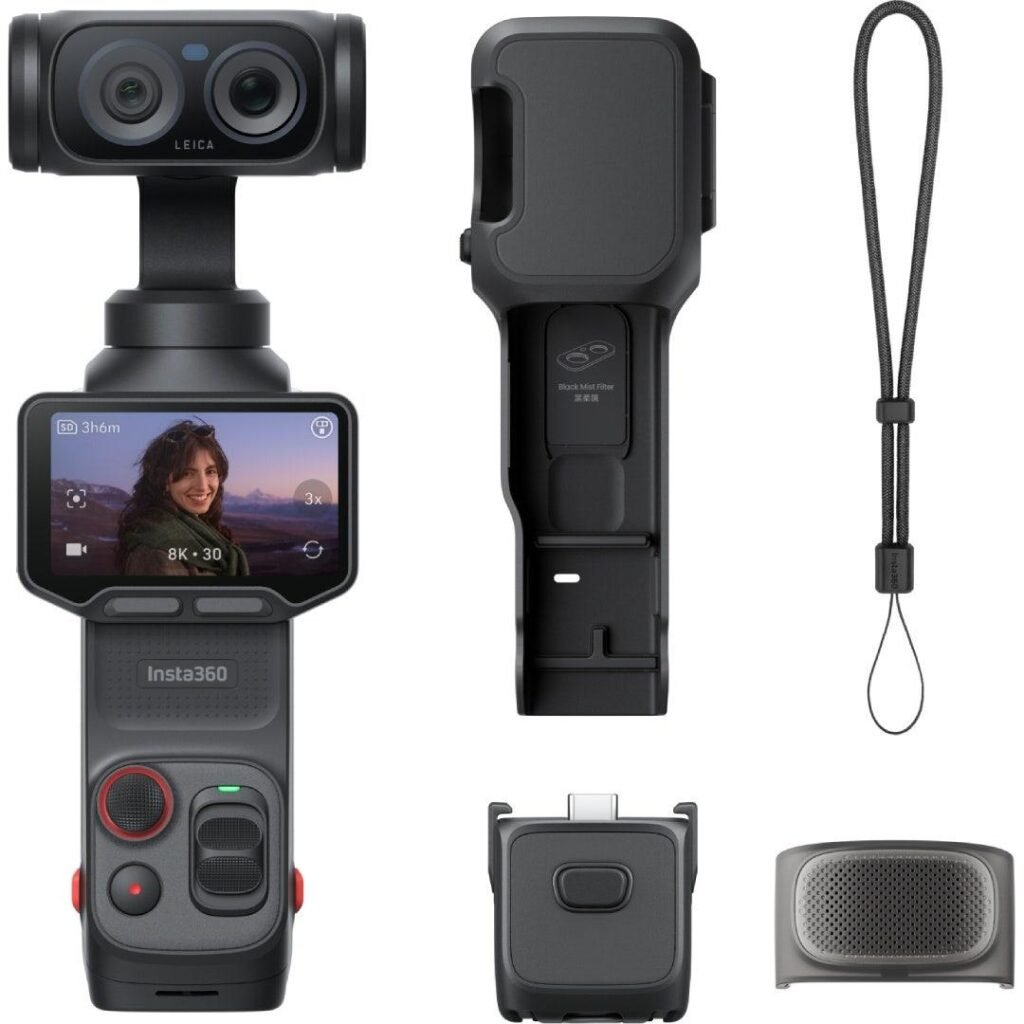
The Luna Pro Standard Bundle is listed at $599.99 on Insta360’s US store.
In several European markets, the official price is €549.
Insta360 also sells several bundles, including versions with a fill light, additional battery handle, microphone transmitter or POV head tracker.
A serious new competitor in compact cameras
The Luna Pro is more than another small vlogging camera.
With a 1-inch sensor, 8K recording, Leica optics, mechanical stabilization, a detachable OLED display and native 4K vertical video, Insta360 is trying to combine several professional-style features into one compact device.
Its $599.99 starting price puts it directly into a competitive part of the market.
But the company’s pitch is clear: instead of competing purely on resolution, the Luna Pro is designed to make filming more flexible.
The camera can be placed away from the user, the screen can remain in the operator’s hand, and AI tracking can keep the subject in frame.
For creators producing content across YouTube, TikTok, Instagram and travel platforms, that combination may be the feature that makes the Luna Pro stand out.
Insta360 has launched the Luna Pro, a compact three-axis gimbal camera built around a 1-inch sensor, Leica-developed optics and up to 8K video at 30fps. Its most unusual feature is a detachable 2-inch OLED touchscreen that can work as a wireless remote, while 4K recording reaches 120fps and native vertical video is available at 4K/30fps.