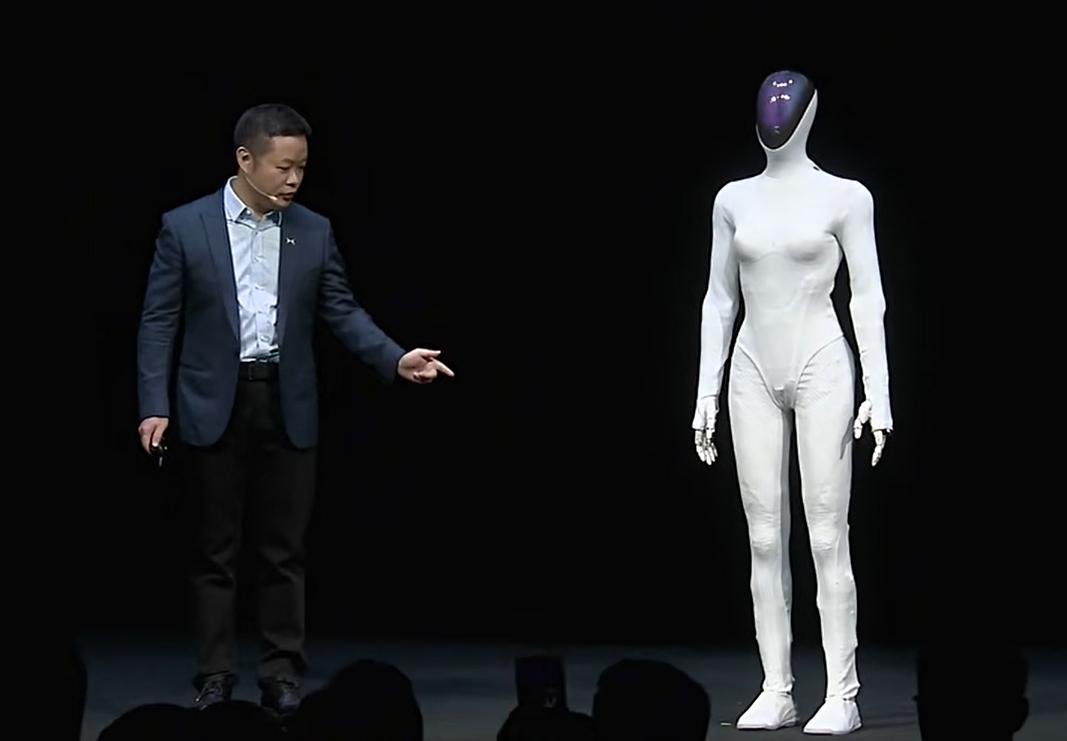
Chinese electric vehicle maker XPENG has taken a major step in its humanoid robotics program, moving its IRON robot from development and demonstrations into dedicated manufacturing.
The most striking part of the announcement came after assembly was completed: the first IRON built on the new production line walked away from the line under its own control.
XPENG announced on September 8, 2026, that its humanoid robot production lines in Guangzhou had officially entered operation. The company sees the facility as a bridge between robotics research and scalable manufacturing.
From prototype to production
The significance of the announcement goes beyond a robot taking a few steps.
Humanoid robotics companies have spent years demonstrating prototypes in controlled environments. The harder problem is turning those prototypes into products that can be manufactured repeatedly, inspected consistently and eventually produced at commercial scale.
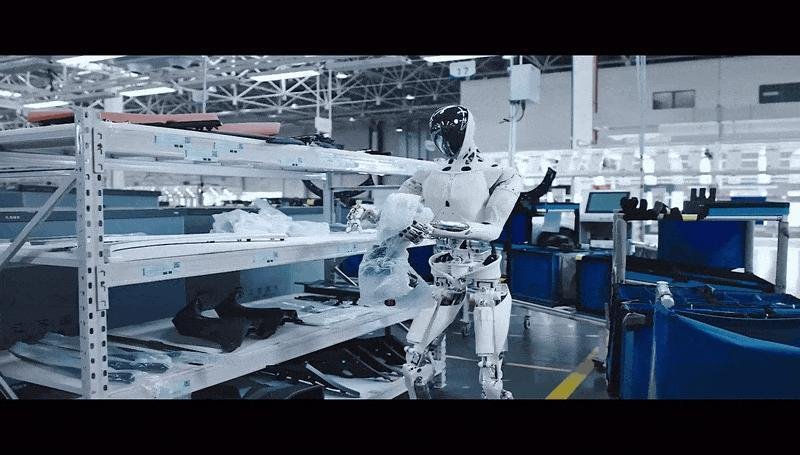
XPENG says its new facility applies manufacturing and quality-control systems developed for its intelligent electric vehicles to humanoid robots.
According to the company, more than 80% of the core processes on the new production lines are automated. XPENG says the system was designed for precision, flexibility and future capacity expansion.
That could prove more important than the robot’s ability to walk.
XPENG is effectively applying the manufacturing philosophy of the automotive industry to a completely different machine: a robot designed to operate in human environments.
IRON is moving beyond the demo stage
XPENG positions IRON as a general-purpose humanoid robot designed to perform different tasks in real-world environments.
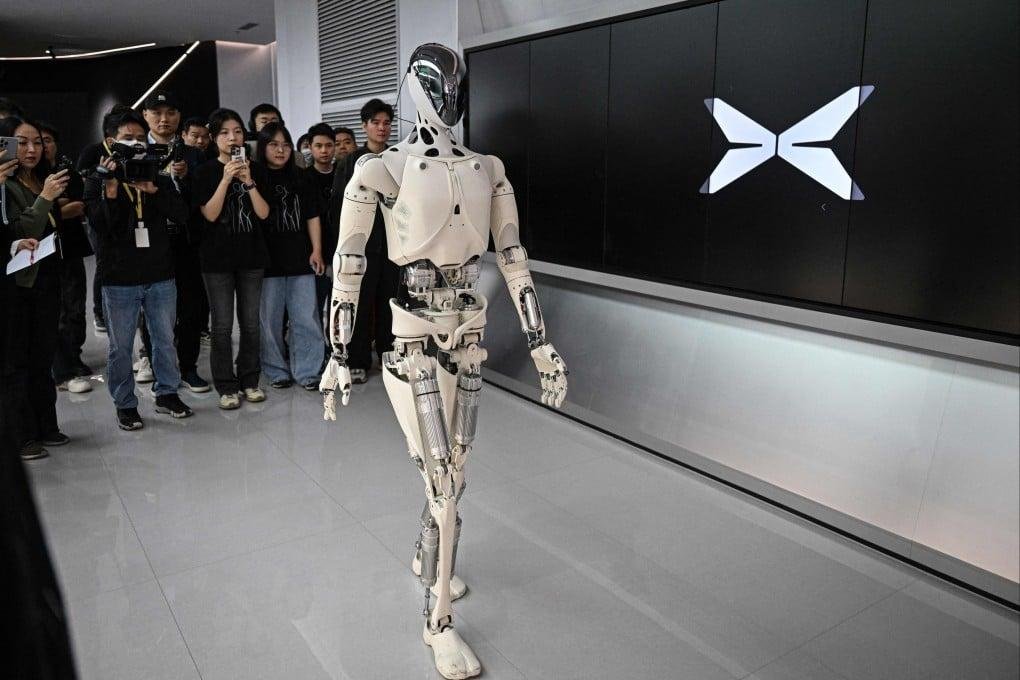
The company says IRON uses its Physical AI technology to perform complex tasks autonomously, with AI processing performed directly on the robot. XPENG argues that this approach can reduce latency and dependence on remote operation.
But there is an important distinction.
These remain XPENG’s claims and development goals, rather than proof that IRON can already perform a broad range of household or industrial jobs reliably.
Humanoid robots still face significant challenges, including battery endurance, safety, reliability, cost and the ability to deal with situations that were not anticipated during training.
Mass production is targeted for 2026
XPENG says the next step is not another prototype.
The company plans to begin mass production by the end of 2026, initially deploying robots in controlled environments such as its own stores and campuses.
The first commercial launches and deliveries in China and international markets are planned for 2027.
That suggests a cautious rollout rather than an immediate consumer launch.
XPENG can first use IRON internally, collect operational data and refine the hardware and software before expanding into wider commercial applications.
A new battlefront for automakers
XPENG’s move puts it into an increasingly competitive humanoid robotics market alongside companies such as Tesla, Figure AI, 1X and several Chinese robotics manufacturers.
XPENG’s advantage is its existing industrial base.
The company already has experience with mass production, batteries, electronics, sensors, autonomous systems and complex supply chains through its automotive business.
That matters because building a capable humanoid robot in a laboratory is only one part of the problem.
Producing thousands of them reliably is a completely different challenge.
The robot-at-home era is still not here
It would be premature to assume that IRON is about to become a household appliance.
XPENG has ambitious plans for humanoid robots, but IRON is not yet a mainstream consumer product.
The company has not publicly disclosed a final consumer price or a detailed production-capacity figure for the commercial version.
There are also unanswered questions about reliability, maintenance, safety and what tasks the robot will actually be able to perform without human intervention.
For now, the most important development is more practical.
Humanoid robots are moving from laboratories toward factories designed to manufacture them at scale.
What happens next
If XPENG stays on schedule, 2027 could become the year when IRON moves from technology demonstration to real commercial deployment.
The factory is already operating. The first robot has completed production and walked away from the line autonomously.
Now comes the difficult part: producing large numbers of robots, making them reliable and proving that they can perform useful tasks at a cost businesses and consumers are willing to pay.
That makes XPENG’s latest announcement more significant than another viral robot video.
The humanoid robot race is moving from the stage and the laboratory to the factory floor.