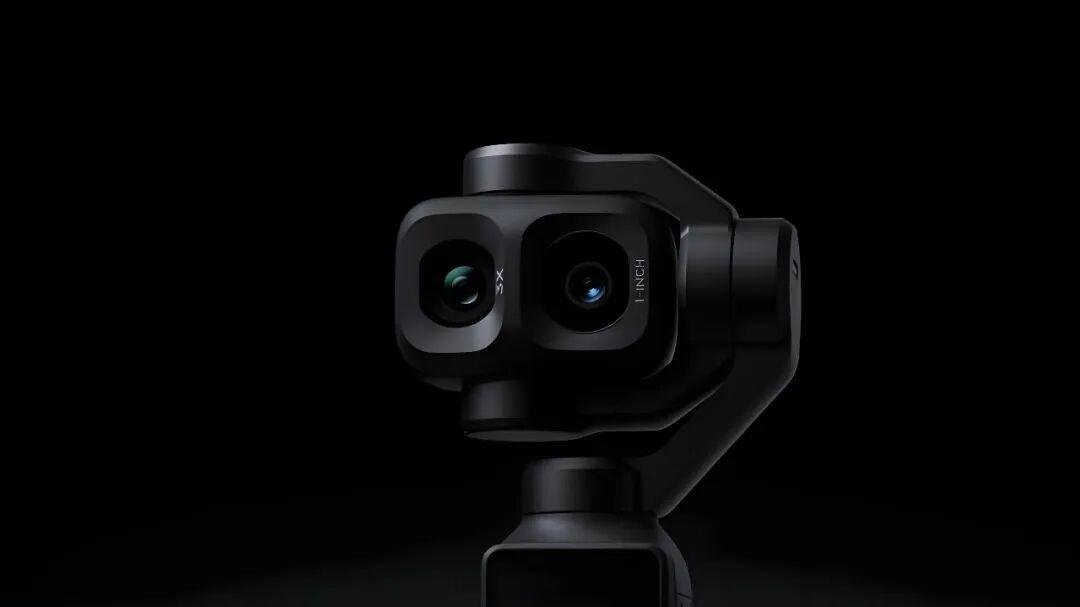
The Chinese lidar specialist is expanding beyond automotive sensors with a system designed to turn physical environments into detailed 3D data — a potentially important step toward robots that can perform more useful work.
Robots can be impressive in a carefully controlled demonstration. Getting them to perform reliably in an unfamiliar room, factory or busy public space is a much harder problem. One obstacle is the quality of the information they use to understand their surroundings.
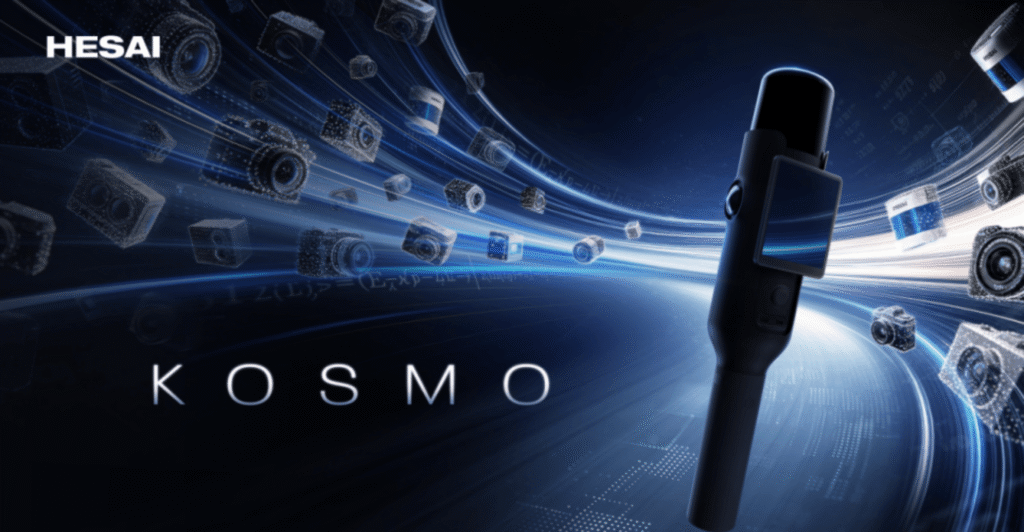
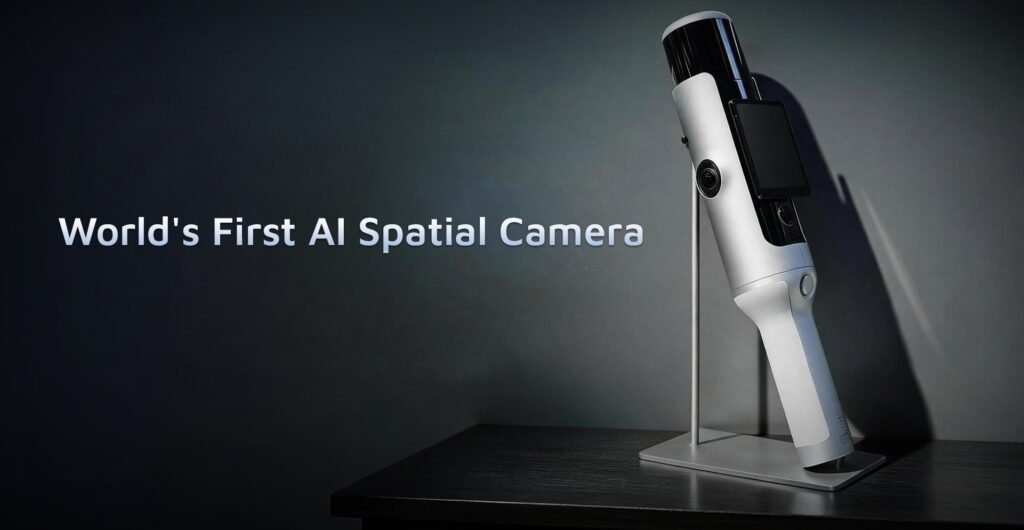
Chinese technology company Hesai Group is targeting that challenge with Kosmo, a new spatial-mapping system announced on October 14. The platform combines a handheld camera that captures three-dimensional information with software designed to convert real environments into digital models. Its intended applications include training robots, developing spatial AI systems and creating digital representations of physical spaces.
The launch signals a broader ambition for Hesai: to apply its experience in lidar — a sensing technology that uses laser light to measure distances — beyond vehicles and into the emerging market for robotics and what the industry calls physical AI.
Why 3D data matters for robots
A photograph provides information about colour and appearance, but a robot also needs to understand distance, geometry and the position of objects relative to one another. Those details can determine whether a machine can safely reach for an object, move around furniture or carry out a task in a changing environment.
Hesai’s Kosmo One combines lidar sensing with camera imaging to capture spatial information. The company says its broader Kosmo platform can transform captured environments into detailed, editable 3D digital assets.
That type of data could help developers build training environments for robots without relying exclusively on manually created digital scenes or repeated physical tests. It could also support simulation, industrial planning and other applications that require a digital representation of a real place.
The underlying challenge is not simply producing a realistic-looking model. A useful model must preserve the spatial relationships and details relevant to the task. Whether Kosmo can deliver that consistently across different environments will be an important test of its practical value.
From car sensors to robotics infrastructure
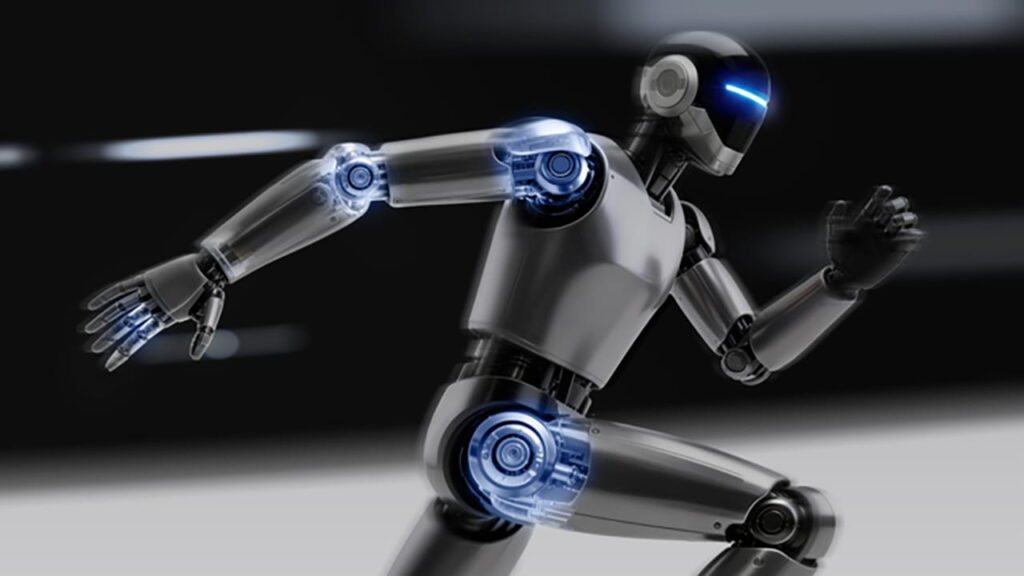
Hesai is already known for lidar technology used in the automotive industry. Its move into spatial mapping represents an attempt to expand from supplying individual sensors to providing a broader set of tools for collecting and processing real-world data.
That shift matters because the development of capable robots depends on more than the robot’s mechanical design or AI model. Developers also need reliable information about how the physical world looks, how objects are arranged and how environments change.
Hesai announced partnerships with robotics companies Galbot and Dexmal as part of the Kosmo launch. It also presented potential applications beyond robotics, including digital content creation and location-related services.
The company is positioning Kosmo as a platform rather than a standalone camera. Its commercial prospects will therefore depend on whether customers find value in the complete workflow: capturing a space, converting it into usable digital data and integrating that data into their own software and development processes.
What has actually been demonstrated?
Hesai has described technical performance figures for Kosmo, including the ability to scan a typical 100-square-metre indoor space in approximately 15 minutes. It also claims its reconstruction process can be up to around five times faster than comparable products under certain conditions.
These are company-provided figures, and results can vary with the environment, hardware, data volume and required level of detail. They should not be interpreted as independently verified performance across all real-world conditions.
A separate demonstration involving the Sharpa Wave robotic hand offers an example of the wider ecosystem developing around these technologies. Reuters reported that the robot had been used to serve ice cream autonomously at a Dairy Queen location in Shanghai. Hesai said detailed mapping helped the system achieve a 99% task success rate.
That figure should be treated as a reported result from a specific demonstration, not proof that robots can achieve the same reliability across other jobs or environments. Serving a defined task in a controlled setting is different from working safely and independently in a busy factory or home.
The limitations behind the promise
Turning a physical environment into a digital model is only one part of the robotics problem. A robot must also interpret the model, plan actions, control its movements and respond when people or objects move unexpectedly.
There are additional questions about cost, integration and the effort required to capture and update spaces. A model that becomes outdated as a factory changes may lose value unless it can be refreshed efficiently. Developers must also determine whether the data improves performance enough to justify the added equipment and processing.
Hesai has not provided revenue projections for Kosmo, according to Reuters. That leaves the commercial scale of the new business uncertain, even as the company reports agreements with robotics firms.
What comes next?
The next meaningful measure of success will be adoption beyond launch demonstrations. Relevant indicators include the number of customers deploying the system, the range of environments it can map, the quality of data delivered to robotics developers and whether that data produces measurable improvements in real tasks.
If the platform proves useful, spatial mapping could become an important part of the infrastructure behind physical AI — alongside sensors, computing hardware, simulation tools and robotic control systems.
For now, Kosmo is best understood as a new tool aimed at one of robotics’ practical bottlenecks: giving machines better information about the physical world. Its significance will depend less on the launch claims than on how well the technology performs once customers put it to work.
Key takeaways
- New platform: Hesai has introduced Kosmo, combining a spatial camera with software for creating 3D digital environments.
- Target market: The company is expanding from automotive sensing into robotics and physical AI.
- Potential applications: Robot training, simulation, industrial planning and digital content creation.
- Performance claims: Scanning times and reconstruction-speed figures come from the company and may vary in practice.
- Open question: Customer adoption and measurable improvements in real-world robotics will determine the platform’s long-term value.
TheTechSpot Take
Robotics needs more than powerful AI models. Machines must also receive accurate information about the spaces in which they operate. That makes spatial data an increasingly important part of the technology stack.
Hesai’s move is worth watching because it connects established sensing hardware with the software and data requirements of modern robotics. But a compelling product demonstration is only an early milestone. The real test is whether developers can use the platform to make robots more reliable, useful and economical outside controlled environments.
For the industry, the key question is no longer just whether a robot can perform a task once. It is whether the complete system can repeat that task safely and consistently in the real world.